


Have you ever pondered why winter nights can be surprisingly chilly even when the sun has bathed the earth in warmth during the day? This phenomenon can be elucidated through the quintessential tenets of greenhouse gases and their profound impact on climate change. As we navigate the complexities of this subject, it is necessary to delve into the science that underpins the greenhouse effect and the role these gases play in altering our climate.
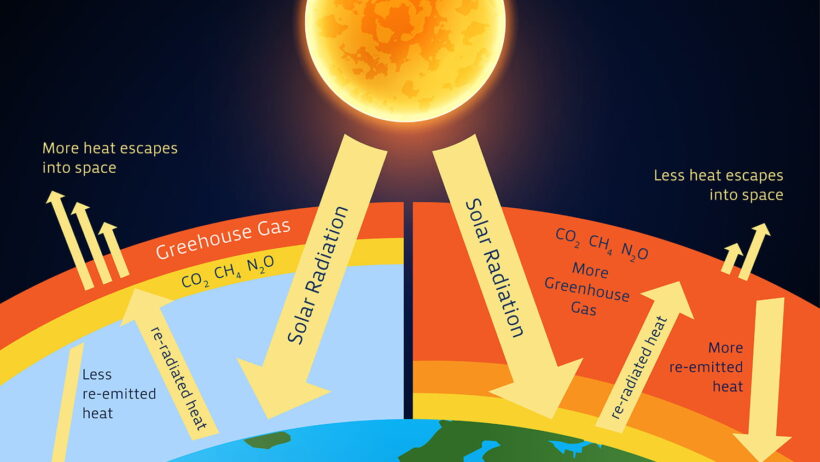
The greenhouse effect is a natural process that warms the Earth’s surface. When the sun’s energy reaches the Earth, some of it is reflected back to space and the rest is absorbed, raising the Earth’s temperature. In turn, the Earth emits this energy in the form of infrared radiation. Greenhouse gases (GHGs), including carbon dioxide (CO2), methane (CH4), and nitrous oxide (N2O), absorb some of this radiation and trap heat in the atmosphere. Without these gases, our planet would be inhospitably frigid, with average temperatures plummeting to around -18 degrees Celsius. Yet, as delightful as a cozy, habitable Earth might sound, there exists an insidious overabundance of these gases that is accelerating climate change.
So, what accounts for the escalation of greenhouse gases in our atmosphere? The Industrial Revolution marked a significant turning point. An unprecedented surge in fossil fuel consumption, deforestation, and agricultural practices catalyzed an increase in CO2 concentrations from approximately 280 parts per million (ppm) to over 400 ppm today. This alarming trend presents a paradox: while these gases are essential for maintaining heat, their excess accumulation acts like a thickening blanket, ultimately leading to global heating.
To grasp the ramifications, consider this: each type of greenhouse gas displays a uniquely pronounced heat-trapping ability. Methane, albeit less prevalent than CO2, is approximately 25 times more effective at trapping heat over a century. Moreover, it has a much shorter atmospheric lifetime of about a decade compared to CO2, which lingers for centuries. These differing characteristics complicate our understanding of climate dynamics, thus calling for nuanced strategies to mitigate their impact. An intriguing question arises: Should we prioritize the reduction of long-lived gases like CO2 or focus on short-lived gases like methane? The answer is multi-faceted and requires an equilibrium approach.
As the atmosphere becomes increasingly saturated with greenhouse gases, the ramifications extend beyond rising temperatures. Alterations to weather patterns manifest in catastrophic forms: more intense droughts, fierce storms, and shifting rainfall patterns are becoming commonplace. These disturbances jeopardize agriculture, biodiversity, and water resources while accentuating socio-economic disparities globally. Would you appreciate the irony if a technologically advanced society crumbles due to climate-induced crop failures? This absurdity can be averted through tentacles of proactive measures against GHG emissions.
The current trajectory invites ethical considerations regarding climate justice. Wealthier nations, which predominantly contribute to GHG emissions, may bear a lesser brunt of climate change compared to developing nations already grappling with their impacts. These nations often possess limited resources to adapt to changing climatic realities, resulting in a multifaceted moral conundrum. Consequently, addressing climate change equates not only to reducing greenhouse gas emissions but also to ensuring equity in our responses. Therein lies the challenge: can we dismantle the webs of injustice intertwined with climate change while taking decisive action against greenhouse gases?
To tackle greenhouse gas emissions, a technologically entrenched society is at our disposal. Innovations in renewable energy, electrification of transportation, and improvements in energy efficiency can significantly curb emissions. Transitioning to a low-carbon economy necessitates a collective mobilization of individuals, businesses, and governments alike. However, the momentum for change is rooted in fostering a substantial cultural shift toward environmental stewardship. Are we prepared to shake off complacency and embrace sustainability in our daily lives? A receptive culture will accelerate the momentum necessary for systemic changes.
Moreover, natural solutions must not be overlooked. The implementation of reforestation and afforestation efforts can absorb CO2 from the atmosphere, allowing ecosystems to act as carbon sinks. Wetlands, grasslands, and forests are critical in sequestering carbon and replenishing biodiversity, thereby establishing a holistic approach to climate action. Utilizing these ecosystems as allies signifies a paradigm shift in our relationship with nature. Yet still, the question remains—while we can leverage the earth’s natural mechanisms, will we dedicate ourselves to preserving these environments, or will we succumb to the relentless march of urbanization and exploitation?
In conclusion, the implications of greenhouse gases on climate change are profound and intricate, demanding our immediate attention. They are not simply numbers on a chart; they symbolize a looming crisis that calls for assertive action. Awareness and education are paramount, leading to informed decision-making at both individual and collective levels. Through concerted efforts, bolstered by innovative technology and sustainable practices, we can counteract the adverse effects of greenhouse gases and catalyze a transition to a more resilient future. The road may be arduous, but the potential rewards—a balanced climate, thriving ecosystems, and social equity—represent an endeavor worth pursuing with unwavering determination.