


In recent decades, the discourse surrounding climate change has burgeoned, morphing into one of the most pivotal issues of our era. Public perception concerning the causative factors of global warming is multifaceted and often contentious. The question “Do people really believe that global warming is caused by humans?” serves as a fulcrum for various perspectives that reflect deep-seated values, beliefs, and understandings.
Statistical surveys and polls chronicle an amalgamation of beliefs held by the global populace. A significant number of individuals, particularly in more industrialized nations, acknowledge the anthropogenic factors that contribute to climate change. This recognition, however, is not universally embraced, leading to a matrix of viewpoints on the issue. The United Nations has highlighted that a majority of scientists converge on the consensus that human activity—primarily through the combustion of fossil fuels and deforestation—accounts for an alarming portion of the increase in greenhouse gases in our atmosphere.
Mainstream narratives often perpetuate the idea that public belief in climate change hinges on clear and concise scientific education. Yet, the intricacies of this belief system reveal that knowledge is but one of the many elements at play. Cognitive biases, cultural narratives, and media portrayals can skew perceptions, often painting a picture at odds with scientific evidence. For example, the framing of climate change discussions in popular media can greatly influence individuals’ beliefs, overemphasizing uncertainty or creating dichotomies that do not reflect the prevailing scientific consensus.
Conversely, skepticism about anthropogenic climate change is not only prevalent but also deeply entrenched among certain demographics. Influenced by political affiliations or economic interests, these groups often espouse beliefs grounded in a skepticism regarding scientific authority or a resistance to change. This skepticism is bolstered by a plethora of misinformation proliferating through various channels, where individuals champion contrarian viewpoints to oppose mainstream climate science.
The sociopolitical climate undoubtedly affects personal beliefs on global warming. Countries with strong political movements opposing climate action tend to exhibit higher levels of disbelief in human-caused climate change. This correlation invites scrutiny into how political ideologies permeate public perceptions and the degree to which they obscure scientific realities. Utilizing climate change as a polarizing topic allows individuals to align themselves along ideological spectra, diverting attention from the need for collective action.
Nevertheless, the narrative is beginning to shift. Increasing occurrences of extreme weather events—hurricanes, wildfires, droughts—have thrust climate change into the public consciousness. Individuals who may have been indifferent or skeptical are finding themselves gravitating toward the reality of climate change as they experience firsthand the destabilizing effects of environmental degradation. This could be construed as a shift in perspective, as direct experiences provide tangible evidence that cannot be dismissed easily.
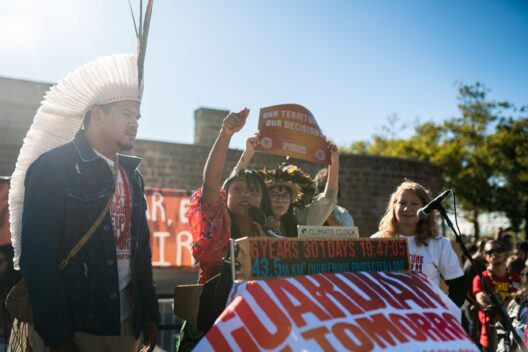
Moreover, the youth movement has rejuvenated the dialogue surrounding climate change. Young advocates are relentless in their pursuit of acknowledgment regarding the human role in climate phenomena. Armed with data, urgency, and unyielding passion, they challenge both policymakers and the larger public to confront the realities of anthropogenic climate change. Their voices are catalyzing a generational shift; traditional narratives are increasingly juxtaposed against the unbridled hope and tenacity of youth activism.
Furthermore, the advent of social media has transformed the landscape of information sharing and public discourse. Platforms used daily for interaction and news dissemination present both opportunities and challenges in shaping public beliefs about climate change. While misinformation can rapidly spread, the same platforms amplify voices advocating for climate action, enabling individuals to forge connections and raise awareness faster than ever before.
Education remains an invaluable cornerstone in shifting perceptions. Knowledge dissemination, targeting not just schools but entire communities, can foster a more profound understanding of the science behind climate change. Through comprehensive educational initiatives that clarify the causal links between human activity and environmental shifts, communities become better equipped to engage critically with the issue. This is about empowering populations to recognize their collective responsibility and the critical need for sustainable practices.
Undoubtedly, economic considerations play a significant role in this discussion. Detractors of anthropogenic climate change frequently leverage economic arguments suggesting that climate action would adversely impact jobs and livelihoods. Yet, the transition towards a sustainable, green economy presents new avenues for employment and economic revitalization. Emphasizing the potential for innovation in renewable energy sources and sustainable industries can illuminate paths toward collective prosperity rather than restraint.
The path forward relies on bridging the chasms that divide humanity’s understanding of climate change. Bridging scientific consensus with everyday experiences, fostering educational outreach, and harnessing the power of collective action could engender a more nuanced understanding of humanity’s impact on the planet. Public advocacy should not merely aim to debunk myths but must inspire hope and tangible action. As the interlacing narratives around climate change evolve, fostering dialogue that reconciles divergent beliefs with established science is vital.
In sum, the question of belief in human-caused global warming is complex and entrenched in a matrix of cultural, political, and personal narratives. Although progress is evident, extensive efforts remain necessary to create a shared understanding grounded in scientific reality. Each individual holds the potential to contribute positively to this dialogue, ultimately influencing not just beliefs but actions that can mitigate the looming crisis. Positioning climate change as a collaborative, collective journey of discovery may well be the key to engaging hearts and minds across global landscapes.