


In the intricate tapestry of contemporary discourse surrounding climate change, one resounding consensus emerges: scientists overwhelmingly agree that global warming is an irrefutable reality influenced chiefly by human activity. This assertion is bolstered by a multitude of studies, expert panels, and systematic investigations that collectively form a robust empirical foundation. Here, we delve into the compelling evidence, dissecting not only the scientific consensus but also the implications of this collective agreement.
The scientific community, often perceived as a disparate collective of experts, has unified in its understanding of climate change. Numerous organizations, including significant bodies such as the Intergovernmental Panel on Climate Change (IPCC) and the National Aeronautics and Space Administration (NASA), assert that at least 97% of climate scientists support the conclusion that the planet is warming, and human activities—particularly the burning of fossil fuels—are a major contributor. This statistic, while seemingly simple, encapsulates the culmination of years of research and observation, presenting a clarion call for action.
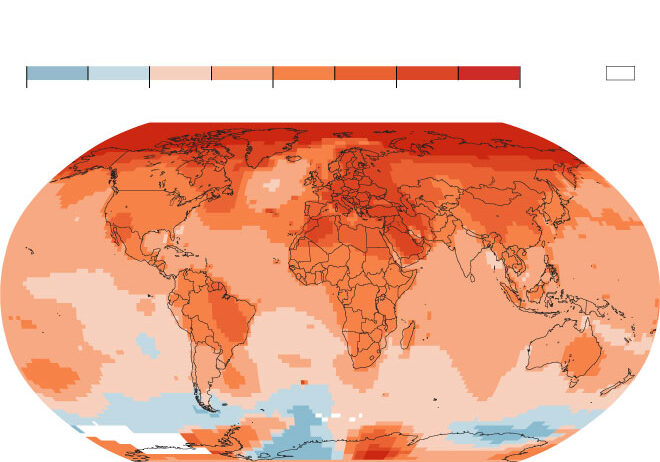
The evidence for global warming is multifaceted, drawing from various fields including climatology, oceanography, and environmental science. Among the most compelling indicators is the upward trend in global surface temperatures, which have increased by approximately 1.2 degrees Celsius since the late 19th century. Instrumental records reflect an inexorable rise in temperature, corroborated by satellite data that tracks variations in earth’s heat balance. This data is not merely a numerical abstraction; it translates into tangible changes in weather patterns, melting ice caps, and fluctuating biodiversity.
Moreover, the phenomena of ocean warming and acidification serve as critical corroborative evidence. The world’s oceans, which absorb a significant portion of atmospheric CO2, are experiencing warming that influences marine ecosystems and weather patterns. These changes result in harmful algal blooms, bleaching of coral reefs, and disruption of fish populations, ultimately endangering the livelihoods of millions who depend on the seas for sustenance and economic stability.
Further reinforcing the consensus is the documentation of retreating glaciers and rising sea levels. Glaciers worldwide are receding at alarming rates, contributing to increased sea levels that threaten coastal communities. Data collected from various monitoring stations illuminate this grim reality, highlighting that the rate of sea-level rise has accelerated dramatically in recent decades, bringing with it a suite of socio-economic challenges that will only intensify without immediate intervention.
Critics often contend that scientific disagreement exists within the field, pointing to a perceived lack of unanimity among experts. However, this argument fails to acknowledge the nature of scientific discourse, which thrives on debate and skepticism. While individual scientists may hold divergent opinions on specific phenomena or the minutiae of climate modeling, the overarching consensus remains intact. It is the product of rigorous peer review and a holistic understanding of the collective body of research that substantiates the claim that human-induced climate change is a well-established scientific fact.
In recent years, scientific methodologies have diversified, incorporating improved models and simulations that take into account various variables affecting climate systems. Advanced climate models predict continued warming, highlighting the potential consequences if current trends are left unchecked. Such projections, informed by historical data and future scenarios, reveal that failure to reduce greenhouse gas emissions will lead to untenable environmental and social ramifications. The magnitude of the predicted impacts necessitates not just acknowledgment, but urgent action.
The ramifications of global warming extend far beyond environmental degradation; they pose significant risks to public health, food security, and economic stability. Heatwaves, increasingly frequent and intense, contribute to health crises, particularly among vulnerable populations. Disruptions in agricultural production caused by altered precipitation patterns threaten food systems globally, exacerbating inequality and instigating social unrest. The economic implications are equally profound, with damage from extreme weather events and the cost of adaptation measures straining public resources and necessitating investment in sustainable practices.
This alarming trajectory invites a pivotal question: What steps can be taken to mitigate these effects? The scientific consensus advocates for immediate and systematic changes to energy consumption, land use, and transportation systems. Transitioning to renewable energy sources, implementing energy efficiency measures, and adopting sustainable agricultural practices represent essential strategies in combating climate change. International frameworks, such as the Paris Agreement, demonstrate an unwavering commitment among nations to collaboratively address this existential crisis, yet much work remains to align policy with science.
In conclusion, the preponderance of evidence corroborates the assertion that scientists agree on the reality of global warming, attributing its acceleration predominantly to anthropogenic factors. This consensus is a beacon of clarity amidst a milieu of misinformation, underscoring the imperative for societal action. The time is ripe for individuals and governments alike to galvanize efforts situating sustainability and environmental conscientiousness at the forefront of policy-making and communal behavior. Only through collective advocacy and informed action can there be a hope to avert the most catastrophic outcomes of this pressing global challenge.