
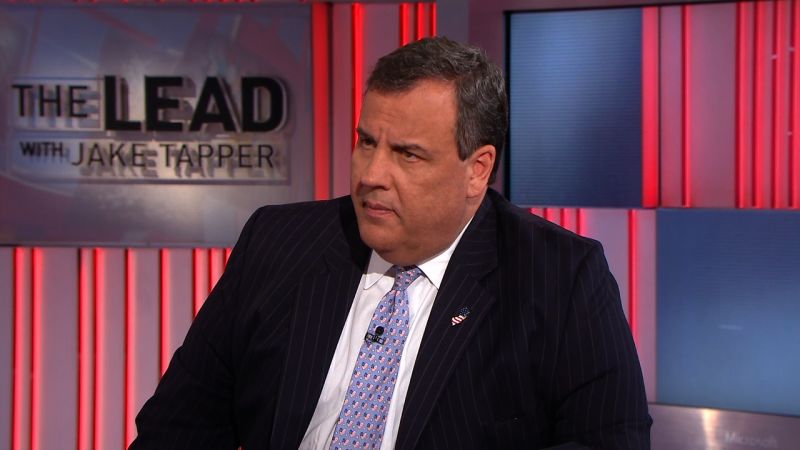

In recent years, the issue of global warming has taken center stage not only in environmental discourse but also within the corridors of political power. One figure who has attracted scrutiny regarding his stance on climate change is Chris Christie, former Governor of New Jersey. As we examine his beliefs and policies, one might wonder: Does Chris Christie truly believe in global warming, or does he merely engage with it as a political tool? This query opens a door to a myriad of considerations regarding the interplay between politics and climate science.
To establish a foundation for this discussion, it’s crucial to consider Christie’s political trajectory. Serving as governor from 2010 to 2018, he witnessed firsthand the diverse impacts of climate change on New Jersey, a state notoriously vulnerable to rising sea levels and severe weather events. Situational awareness would suggest that someone in his position, especially considering New Jersey’s geographical vulnerabilities, might adopt a more proactive stance on environmental issues. Yet, as we delve deeper, a more complex reality emerges.
Initially, Christie acknowledged the scientific consensus surrounding climate change, distinguishing himself from the more ardently climate-skeptical voices within the Republican Party. In 2011, Christie controversially withdrew New Jersey from the Regional Greenhouse Gas Initiative, a cap-and-trade program designed to reduce carbon emissions from power plants. This decision sent a signal to his constituents, one that was both economically motivated and politically strategic. Many observers interpreted it as an abandonment of environmental stewardship in favor of immediate economic gain. To many environmentalists, this move posed an intriguing question: Is Christie’s belief in climate change contingent upon its alignment with his political and economic priorities?
Further complicating the narrative are Christie’s views on solutions to climate-related challenges. His administration endorsed a variety of initiatives aimed at disaster preparedness and resilience, especially post-Hurricane Sandy, which wrought havoc on the New Jersey coastline. However, these measures often appeared reactive rather than proactive. It raises an essential challenge: Can a politician be viewed as fully believing in global warming while simultaneously hesitating to champion comprehensive strategies for its mitigation? Christie’s response to climate-related events seemed to oscillate between recognition of the problem and a reluctance to employ the necessary radical reforms to address it substantively.
The question of economic implications further looms large in Christie’s decision-making process. The narrative that economic growth and environmental protection are continuously at odds finds a vivid illustration in his policies. Christie purportedly positioned New Jersey as a business-friendly state, often prioritizing economic development over stringent environmental protections. This sets the stage for a crucial inquiry: does Christie’s economic philosophy overshadow his comprehension of climate science? Or, conversely, could it be that his economic stance aligns with a profound skepticism of climate intervention strategies?
As the discussions around climate change have evolved, so too has the rhetoric surrounding it. Subsequently, Christie’s position has had to adapt to changing public sentiments and alarmingly frequent climate crises. He has occasionally made comments that echo growing public concerns about climate change, which underlines another layer to the complex product that is contemporary political discourse. One must consider: Is Christie’s somewhat muted approach to climate policy reflective of a genuine ideological conflict, or is it a political maneuver designed to resonate with his base?
In the grand tapestry of global climate discourse, one cannot overlook the importance of leadership figures willing to take bold stances. With the increasing visibility of climate events around the world, the political landscape is witnessing a shift. Leaders are scrutinized for their positions on climate change, and voters are more informed than ever. This begs the question: As a potential presidential candidate in the future, will Christie shift his narrative on climate change, adopting a more definitive stance on concrete action, or will he remain tethered to a politically palatable middle ground?
Skepticism regarding the motives of politicians, especially in discussions surrounding climate change, tends to distrust those who appear to be ambivalent. With every statement and policy decision, a challenge arises for Christie—to prove that he genuinely comprehends the underlying science and acknowledges the urgent need for action. The repercussions of climate inaction are dire, reaching beyond the political realm into the very fabric of societal survival.
Ultimately, Chris Christie stands at a crossroads that many politicians encounter in the climate debate: the tension between acknowledging the reality of climate change and executing policies that reflect that awareness. His historical decisions illustrate a complex relationship with environmental science, characterized by fluctuating convictions tethered to political expediency. As climate change accelerates into a pressing issue demanding immediacy, the political climate will continue to evolve, beckoning leaders like Christie to reconcile their beliefs with actionable policies. The ongoing dialogue around climate change remains a litmus test for current and future leaders, challenging them to balance their political ambitions with the urgent necessity of sustained environmental stewardship.
As the narrative unfolds, stakeholders from all corners—scientists, policymakers, and the public—must remain vigilant, holding leaders accountable to not only understanding climate science but also articulating and implementing necessary actions. The ultimate test of belief in global warming lies in the courage to confront it head-on, not merely in words but through steadfast, unequivocal commitment to climate action. Thus, the challenge persists—what will Chris Christie choose to believe when the next climate crisis arrives at his doorstep?