


Global warming, as a term, often conjures images of rising temperatures and a general increase in warmth across the globe. However, there’s a compelling and intricate reality beneath the surface that warrants exploration. The assumption that global warming entails uniform temperature increases everywhere is not only simplistic but also misleading. The phenomenon of climate change, with its nuanced variations and geographical discrepancies, provides an opportunity to shift our perspective on what global warming truly entails.
To begin, it is crucial to understand the foundational concept of global warming. It refers to the long-term increase in Earth’s average surface temperature due primarily to human activities, particularly the burning of fossil fuels, deforestation, and industrial processes. This has led to an unprecedented accumulation of greenhouse gases in the atmosphere, intensifying the greenhouse effect, which subsequently drives climatic changes. Yet, the critical question arises: does this mean that every region on Earth is warming at the same rate or, indeed, warming at all?
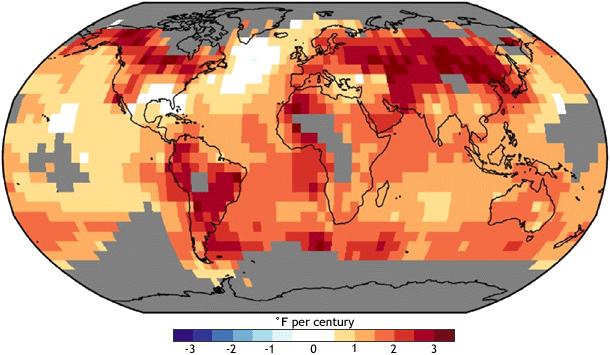
The short answer is no. The reality is that climate change manifests itself in diverse and complex ways across different geographical areas. While some regions may experience scorching heat and prolonged droughts, others may witness an increase in precipitation or even a dip in temperatures. This phenomenon is often explained by the term “climate variability,” which describes the fluctuations in climate patterns on various timescales—ranging from weeks to decades. As such, some places may exhibit cooling effects even in a world undergoing global warming.
To illustrate this complexity, consider the polar regions. Due to their unique climatic conditions, they are warming at a faster rate than many other areas on the planet. The Arctic, in particular, is experiencing astounding temperature increases—about twice the global average. This rapid warming leads to significant melting of ice sheets, rising sea levels, and altered ecosystems. Contrarily, certain areas of the northeastern United States have recorded prolonged periods of unseasonably cold temperatures, with frigid winters punctuated by severe snowstorms. Such contrasting conditions can confound public understanding of climate trends.
Moreover, global warming has induced a phenomenon known as “climate change feedback mechanisms,” which further illustrates the non-linear relationship between rising global temperatures and regional climate variability. For instance, the reduction of ice cover in the Arctic leads to a darker ocean surface that absorbs more sunlight, which exacerbates warming in that region. This has ripple effects, influencing atmospheric circulation patterns that can result in colder weather in other regions, illustrating the interconnectedness of climatic systems.
As we delve deeper into the geographical nuances of climate change, it becomes apparent that local factors also play a significant role. Urban heat islands, for example, are a direct consequence of human urbanization. Cities, with their concrete surfaces and asphalt, absorb and retain more heat than rural areas. Consequently, urban regions may experience heightened temperature increases compared to their rural counterparts, further underscoring that climate change is not a uniformly distributed phenomenon.
Additionally, platforms like the Intergovernmental Panel on Climate Change (IPCC) highlight the critical role of oceanic patterns in climate systems. Climate oscillations like El Niño and La Niña can lead to anomalous weather patterns across the globe. During an El Niño event, the warming of ocean waters can cause elevated temperatures and altered precipitation patterns in numerous countries, whereas La Niña may induce cooler ocean temperatures, leading to different climatic responses. The dichotomy created by such oscillations signifies that specific areas could experience temperature decline, contradictory to the overarching trends of global warming.
Furthermore, it is essential to consider the sociopolitical and ecological ramifications of these disparities. While some agricultural regions may benefit from extended growing seasons due to increased temperatures, others may confront challenges, such as droughts or flooding, threatening food security. Vulnerable communities, often in developing countries, are likely to bear the brunt of these erratic climate phenomena, tenuously juxtaposed against wealthier nations equipped with resources to adapt.
In light of this complexity, enhancing public awareness and fostering a deeper understanding of climate change is imperative. The narrative should not merely emphasize the notion of warming; it must reflect the intricate tapestry of climatic interactions and region-specific realities. Educational initiatives and clear communication about these disparities may help mitigate misinformation, cultivating an informed populace capable of recognizing both the urgency and intricacies of climate change.
Finally, acknowledging the multifaceted nature of global warming introduces a shift in perspective. It is an invitation to engage with climate science critically and thoughtfully, moving beyond alarmist rhetoric to comprehend the nuances that define our changing world. As we form solutions, understanding the local impacts of global warming is vital for crafting effective, targeted policies that address the specific needs of affected regions while striving for collective global action.
In conclusion, global warming does not equate to a uniform rise in temperatures across the globe. Rather, it unfolds through a lens of complexity, variability, and interdependence, evoking a deeper inquiry into the nature of climate change. The time has come to expand our narrative, embrace the curious contradictions, and seek out the knowledge that will empower us to forge paths toward sustainable solutions in an increasingly complex climate landscape.