
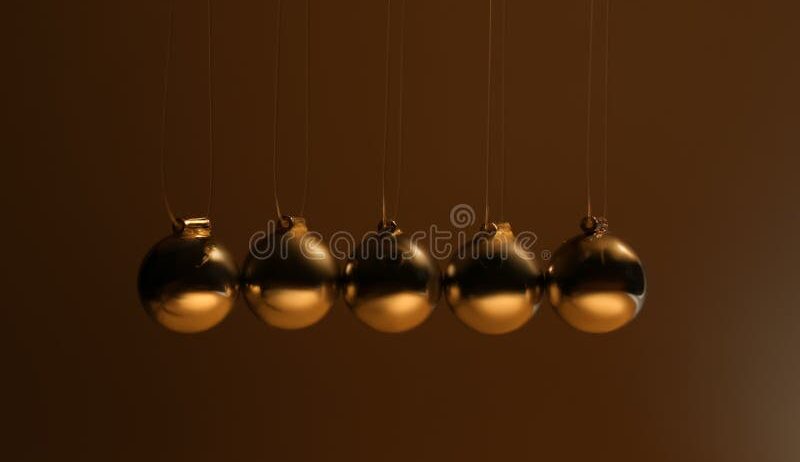

Newton’s cradle, often hailed as a captivating desktop toy, intricately demonstrates the principles of classical mechanics, particularly the law of conservation of energy. Observers are frequently enthralled by the elegant motion of the swinging spheres, where one ball lifted and released appears to transfer its momentum to the last ball in the series, creating a cyclic dance of kinetic energy that seems to play out indefinitely. However, the simplicity of this phenomenon belies its profound implications in physics.
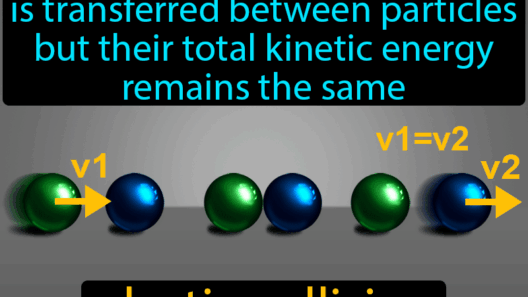
The law of conservation of energy posits that energy within a closed system remains constant; it cannot be created or destroyed, only transformed from one form to another. Newton’s cradle serves as a striking visual manifestation of this principle. When one ball strikes the stationary cluster of balls, it ostensibly exhibits an almost magical transfer of energy. The collision causes the last ball in the arrangement to swing upward with nearly the same height from which the first ball was released, suggesting that the energy has been perfectly conserved through the exchange.
Despite the apparent perfection of this demonstration, it is imperative to note that real-world conditions introduce complexities that dilute the idealized representation of energy conservation. In an ideal scenario devoid of external forces such as friction and air resistance, the system would indeed perpetuate the exchange of energy indefinitely. However, in reality, every collision in Newton’s cradle incurs a slight loss of kinetic energy, primarily due to inelastic collisions where some energy is converted into sound, heat, and slight deformation of the balls. This phenomenon subtly emphasizes a crucial observation: energy conservation is continual, albeit often marred by inefficiencies and external influences.
Newton’s cradle also serves as a platform for exploring the principles of momentum. Momentum, defined as the product of an object’s mass and its velocity, is similarly conserved in closed systems. The interaction among the balls exemplifies this notion. When one ball collides with the others, the momentum is transferred, allowing for the last ball to swing outward, but the total momentum of the entire system remains unchanged. This interplay further deepens the appreciation of the fundamental laws that govern motion and energy, making the cradle an educational tool as well as a source of aesthetic pleasure.
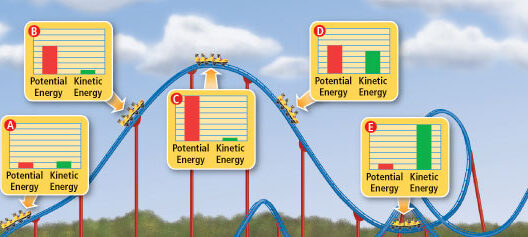
The fascination with Newton’s cradle transcends mere observation; it invites inquiry into the mechanics of the universe. The interplay between kinetic and potential energy within the device encapsulates a broader reality. As the balls swing, they convert gravitational potential energy into kinetic energy, and vice versa. When at rest, their energy is stored as potential, only to be released upon being lifted and allowed to fall. It symbolizes a cyclical nature of energy—a theme prevalent in many natural systems, from the orbits of celestial bodies to the rhythmic patterns found in ecological cycles.
Moreover, exploring Newton’s cradle from an environmental perspective unveils additional layers of relevance. The principle of conservation of energy is paramount in discussions about sustainable practices and renewable energy. Understanding energy conservation on a macroscopic scale, as exemplified by the cradle, sheds light on the imperatives of managing energy resources more efficiently in the context of climate change. It serves as a reminder that while we utilize energy, it is the transformations and losses along the way that often lead us to unsustainable practices.
The aesthetic quality of the cradle—its rhythmic motions and the mesmerizing visual patterns—invites not only enjoyment but also introspection. Human beings are drawn to the harmonic oscillations reminiscent of natural rhythms found in ecosystems. Whether observing the synchronization of fireflies in summer evenings or the gentle sway of trees in a breeze, the cradle encapsulates this innate affinity for rhythmic motion that echoes across the natural world. This intersection of art and science nurtures an appreciation for the laws governing our universe, propelling individuals toward a nuanced understanding of energy flows that extend beyond the confines of a simple mechanical device.
The broader implications of energy conservation, as underscored by Newton’s cradle, extend into discussions of technological advancements and innovation in energy efficiencies. As societies grapple with the impacts of climate change, the importance of adopting technologies that honor the principles embodied within the cradle is essential. Innovations aimed at harnessing renewable energy, optimizing energy use, and minimizing waste draw upon the fundamental understanding of energy transformations and conservation.
In conclusion, while Newton’s cradle might appear to be a mere toy, it stands as a profound illustration of the law of energy conservation, encapsulating essential principles of physics in an engaging manner. The delicate balance of energy and momentum within the cradle serves as a poignant reminder of the complexities surrounding energy exchanges, both in mechanical systems and within the environment. Understanding these foundational laws fosters deeper insights into sustainability and encourages the adoption of practices that reflect a commitment to responsible energy stewardship. As we continue to navigate an ever-changing world, the cradle’s elegant display of conservation invites continuous dialogue about our relationship with energy and the pressing need for an ecologically aware approach to progress.