


Understanding the intricate relationship between solar radiation and global warming is imperative for comprehending Earth’s energy balance. Esteemed scientists have long been probing the various elements that contribute to climate change, and solar radiation undeniably stands at the forefront of this discussion. Solar energy — the primary driver of Earth’s climate system — plays a critical role in how energy is absorbed, reflected, and redistributed across the planet. In this exposition, we will explore the mechanisms of solar radiation, the Earth’s energy balance, and the implications of human activities on global temperature rises.
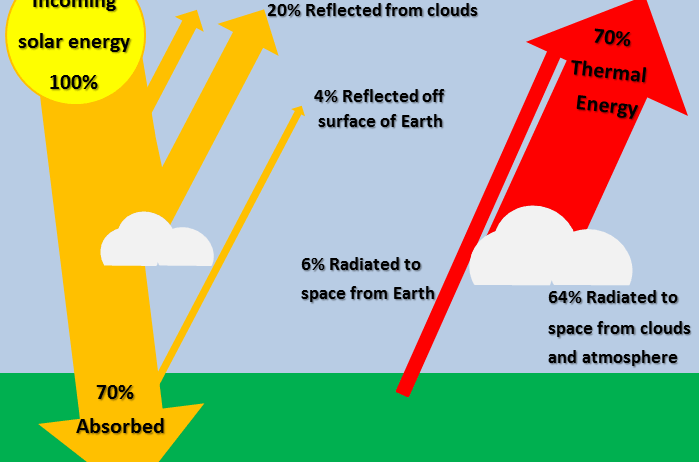
Solar radiation consists mainly of electromagnetic radiation emitted by the sun, encompassing a spectrum of wavelengths from ultraviolet to infrared. This solar energy travels approximately 93 million miles, impacting the atmosphere, oceans, and land. Upon striking the Earth’s surface, solar radiation can be absorbed, reflected, or transmitted. About 30% of the incoming solar energy is reflected back into space by clouds, atmospheric molecules, and the Earth’s surface. This albedo effect is critical in regulating global temperatures and plays a crucial role in Earth’s energy balance.
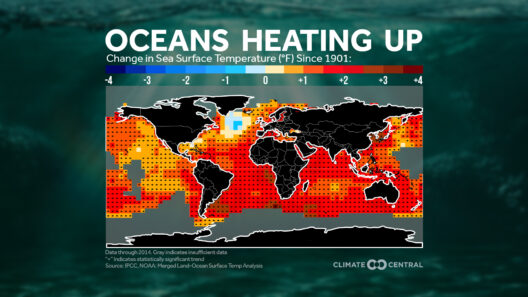
Upon absorption, solar energy warms the land and oceans, driving meteorological phenomena and hydrological cycles. The Earth, in turn, emits longwave infrared radiation back into space. However, not all of this energy escapes. Some of it is absorbed and re-emitted by greenhouse gases present in the atmosphere, including carbon dioxide (CO2), methane (CH4), and nitrous oxide (N2O). This process is known as the greenhouse effect, which results in a warming of the lower atmosphere. While the greenhouse effect is a natural phenomenon essential for sustaining life on Earth, human activities have significantly altered its dynamics, leading to heightened global temperatures.
The concept of Earth’s energy balance is vital for grasping how solar radiation contributes to global warming. The Earth operates on a delicate equilibrium whereby the incoming solar energy must equal the outgoing energy. If these two fluxes are not in harmony, discrepancies emerge, resulting in climate variations. Ideally, for a stable climate, the energy absorbed from the sun should equate to the energy radiated back to space. Yet, due to anthropogenic emissions of greenhouse gases, the outgoing energy diminishes relative to the incoming solar radiation.
Human activities have substantially increased the concentrations of greenhouse gases in the atmosphere. The burning of fossil fuels, deforestation, and agricultural practices contribute to the accumulation of greenhouse gases. As concentrations rise, the enhanced greenhouse effect exacerbates warming, causing an imbalance in the energy equation. Consequently, more solar radiation is trapped in the atmosphere than is emitted back into space, resulting in global warming.
The significance of solar radiation in climate dynamics cannot be overlooked. Solar variability, primarily linked to the sun’s natural cycles, influences climatic patterns and trends. However, the extent to which solar radiation contributes to recent global warming is less pronounced than the impact of greenhouse gas emissions. Studies have shown that while solar output underwent fluctuations, the influence of these changes on temperature is minimal when compared to the significant warming attributable to human-induced emissions.
In examining the outcomes of an altered energy balance, several consequential phenomena emerge. One of the most pressing issues is the increase in global mean temperatures, which has far-reaching ramifications for ecosystems, weather patterns, and sea levels. Heightened temperatures induce the melting of polar ice and glaciers, contributing to rising sea levels, which threaten coastal communities. Additionally, changes in precipitation patterns lead to more frequent and severe droughts and floods, wreaking havoc on agriculture and water supplies.
Moreover, the rise in temperatures exacerbates the frequency and intensity of extreme weather events, including hurricanes, heatwaves, and wildfires. Ecosystems are under siege as species struggle to adapt to rapidly changing environments or face extinction. These dynamics present complex challenges for biodiversity conservation and ecosystem resilience.
Moreover, addressing the issue of solar radiation’s role in global warming requires a multifaceted approach. Mitigating the effects of climate change hinges on reducing greenhouse gas emissions, transitioning to renewable energy sources, and improving energy efficiency. Fostering global cooperation on climate initiatives, such as the Paris Agreement, represents a critical step toward curbing emissions and promoting sustainability.
Enhancing our understanding of the Earth’s energy balance and its intricacies offers a foundation for informed decision-making. This knowledge is vital when developing policies and practices that can lead to sustainable outcomes. Further research into solar radiation and its effects also aids in elucidating the complexities of climate systems, ultimately assisting in predicting future climatic changes.
In summation, while solar radiation is a fundamental component of Earth’s energy balance, it is the anthropogenic influence on greenhouse gas concentrations that predominantly drives global warming. Understanding this relationship is essential for addressing climate change’s multifaceted challenges and fostering resilience in the face of an uncertain future. By recognizing and acting upon this knowledge, society can work towards mitigating climate change and protecting the planet for future generations.