

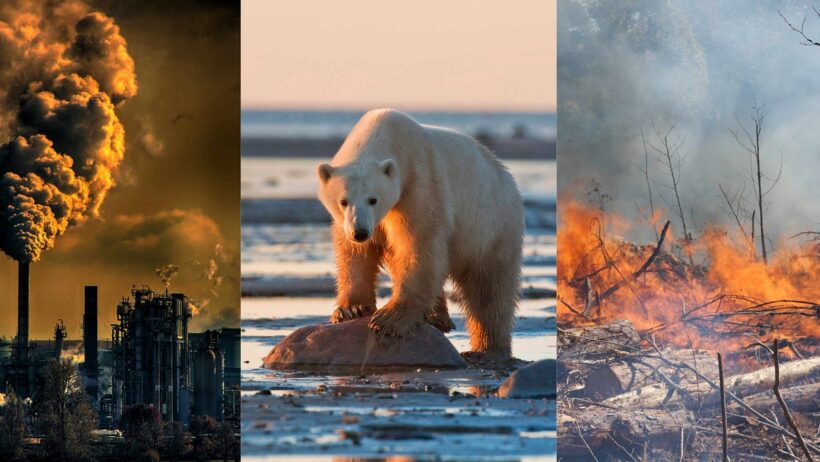

Global warming and climate change are not merely distant concepts confined to scientific journals—they are pressing realities that reverberate across continents, profoundly affecting lives in Jakarta and cities worldwide. The urgency to grasp the breadth of this phenomenon is paramount. The consequences of climate change extend beyond drastic fluctuations in weather; they infiltrate economies, displace communities, and threaten the delicate web of biodiversity.
The Indonesian capital, Jakarta, epitomizes the vulnerability of urban environments in the wake of climate perturbations. Straddling both the Java Sea and numerous rivers, Jakarta’s topography makes it especially susceptible to rising sea levels. Predictions suggest that by 2050, parts of the city may be submerged, displacing millions of residents and destabilizing local economies. This scenario is not just a localized dilemma; it serves as a microcosm of a global crisis where coastal cities grapple with similar fates, from New York to Miami, Shanghai to London.
Amidst the escalating risks, there exists an imperative to explore the intricate connections that bind us all in this shared predicament. The climatic upheaval manifests in erratic weather patterns, increased severity of storms, and prolonged droughts, transcending geographical boundaries. The warmth emitted by our industrial pursuits reverberates across continents, engendering a ripple effect that influences agricultural yields, food security, and water availability worldwide.
In the realm of agriculture, farmers in Jakarta face dwindling harvests due to erratic rainfall and temperature spikes. These local changes resonate globally, disrupting supply chains and inflation rates. The increased prevalence of droughts and floods leads to diminished crop yields, which, in turn, catalyzes food insecurity that impacts populations far removed from the original effects. As climate extremes worsen, the paradox is that the most vulnerable communities—often the least responsible for carbon emissions—suffer the most.
Beyond agriculture, the specter of climate change haunts human health, with implications as diverse as the rise of vector-borne diseases to respiratory ailments exacerbated by air pollution. Urban areas like Jakarta grapple with the dual burden of climate change and pollution, resulting in declining air quality that disproportionately affects low-income populations lacking access to healthcare. Allergies, asthma, and other chronic conditions escalate, highlighting a tragic irony: those who contribute least to environmental degradation face the harshest consequences.
As global temperatures continue to hydrate the atmosphere, the intensity and frequency of natural disasters amplify. Indonesia, nestled on the Pacific Ring of Fire, is already prone to earthquakes and volcanic eruptions, which may be further exacerbated by climate fluctuations. Every typhoon that ravages cities from Manila to Jakarta serves as a potent reminder of our interconnectedness—the invasive forces of climate impact do not halt at national borders.
One must also consider the silent, insidious threat posed by melting glaciers and rising ocean temperatures. These phenomena not only alter marine ecosystems but also jeopardize the livelihoods of communities reliant on fishing. Coastal erosion, spurred by rising sea levels and increasingly violent storm surges, threatens to consume homes and heritage sites alike. Indigenous communities, who have stewarded these lands for generations, are faced with the existential threat of displacement—another layer of the global narrative woven by climate change.
The impacts of climate change stimulate a need for innovative thinking and radical reimagining of proactive solutions. Decarbonization stands at the forefront as nations strive towards sustainable energy sources, yet this transition requires more than mere technological advancements; it demands a collective shift in sociopolitical frameworks and consumer behavior. The challenge lies not just in altering energy usage but also in rethinking economic models that have long prioritized short-term profit over environmental stewardship.
Transitioning to a greener economy necessitates the involvement of various stakeholders—governments, corporations, and individuals alike. Policy frameworks must incentivize sustainable practices while penalizing harmful emissions. Robust investments in renewable energy, infrastructure for electric vehicles, and public transportation systems can pivot us towards a sustainable future. In Jakarta, for instance, investments in green spaces and flood mitigation strategies can alleviate urban heat while enhancing resilience.
Moreover, education plays a critical role in fostering awareness of climate issues and cultivating a new generation equipped to tackle these pressing challenges. Grassroots initiatives can catalyze community involvement and empowerment, leading to localized solutions that combat larger systemic issues. As people become increasingly cognizant of their environmental footprint, there lies an opportunity for a cultural metamorphosis wherein sustainability becomes a fundamental societal tenet.
The narrative of climate change is ever-evolving, animated by the complex interplay of science, politics, and human experience. Recognizing the impact of our actions on the climate not only enhances individual awareness but also catalyzes collective action towards mitigating adverse outcomes. As Jakarta stands on the frontline of this ongoing crisis, other urban centers must heed the lessons gleaned from its struggles and resilience.
Ultimately, tackling climate change requires a radical rethinking of how we engage with our environment. From individual lifestyle choices to international policy-making, every action ripples through the fabric of our global community. Initiatives aimed at sustainability are not optional but imperative, as the future of not just our cities but the planet hangs in the balance. Let us coalesce our efforts and transcend geographical boundaries in this critical fight for our shared future—after all, in the battle against global warming, every degree matters.