
The discussion surrounding climate change is often dominated by industrial emissions, transportation, and energy production. Yet, an insidious contributor lurks in the shadows: agriculture. Often overlooked, the agricultural sector is a substantial source of greenhouse gases, leading to serious implications for climate change. Understanding the multifaceted nature of agriculture’s contribution to greenhouse gas emissions is critical for developing comprehensive strategies to mitigate climate impacts.
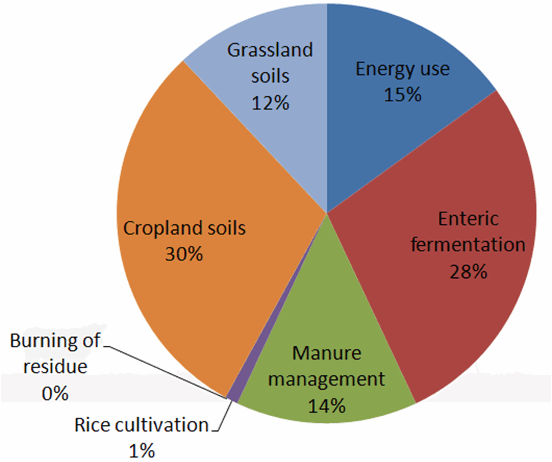
First, let’s dissect the types of greenhouse gases emitted by agricultural practices. Carbon dioxide (CO2), methane (CH4), and nitrous oxide (N2O) are the primary culprits. CO2 is released through various practices, including land-use changes and the fossil fuels consumed during agricultural operations. However, methane and nitrous oxide deserve particular scrutiny. Methane, with a global warming potential over 25 times that of CO2, is produced primarily through enteric fermentation in livestock and the decomposition of organic matter in rice paddies. Nitrous oxide, a gas with a potency nearly 300 times that of CO2, is primarily released from fertilized soils and manure management.
Next, we must analyze livestock farming, which stands out as a major contributor to the agricultural greenhouse gas portfolio. Ruminant animals, particularly cows, produce significant quantities of methane during digestion. This process, known as enteric fermentation, is exacerbated by the methods of intensive animal farming. As the global demand for meat continues to rise, so too does the need for livestock, creating a pernicious feedback loop that threatens climate stability.
In addition to enteric fermentation, manure management poses serious challenges. Manure can emit significant amounts of methane and nitrous oxide if not managed correctly. Conventional methods often involve aerobic or anaerobic decomposition processes that yield potent greenhouse gases. Transitioning to sustainable manure management techniques, including composting and anaerobic digestion, has the potential to reduce emissions significantly. However, adopting such practices requires systemic changes in farming operations and investment in new technologies.
Agricultural practices extend beyond livestock and encompass crop production. Fertilizer application is often cited as a major source of greenhouse gases, specifically nitrous oxide. The widespread use of synthetic fertilizers, essential to modern agriculture, has increased soil nitrogen levels, resulting in increased nitrous oxide emissions. The synthesis of these fertilizers is also energy-intensive, contributing to the overall carbon footprint of agriculture. Thus, reevaluating fertilizer application methodologies and transitioning toward precision agriculture could mitigate these impacts substantially.
Furthermore, some crop types have a more significant environmental footprint than others. For instance, rice cultivation is not only notorious for methane emissions but also significantly impacts water resources. The practice of flooding rice paddies, while beneficial for plant growth, creates anaerobic conditions that facilitate methane production. Innovations in rice cultivation, such as intermittent flooding or alternative wetting and drying, could offer a solution that mitigates emissions while maintaining yield.
Beyond specific farming practices, the larger issues of land-use change and deforestation are also intertwined with agricultural expansion. As forests are cleared for agricultural development, the stored carbon in trees is released into the atmosphere, exacerbating climate change. This deforestation often occurs in biodiverse regions, leading not only to increased greenhouse gases but also the loss of critical ecosystems and biodiversity. Sustainable management of our landscapes is vital to curbing emissions and preserving biodiversity.
Policy intervention is crucial in addressing the environmental challenges posed by agriculture. Governments must take an active role by incentivizing sustainable practices and implementing regulations that limit emissions. An example of effective policy could be carbon pricing, which places an economic value on greenhouse gas emissions, encouraging farmers to adopt greener practices. Similarly, subsidies for organic farming, agroforestry, and regenerative agriculture can shift market dynamics towards sustainable methods.
The consumer plays an equally important role in this equation. Each purchasing decision offers a chance to support sustainable agriculture. Local and organic products typically carry lower carbon footprints compared to mass-produced goods, as they often involve shorter supply chains and environmentally friendly practices. Furthermore, reducing meat consumption or choosing sustainably sourced meat can greatly lessen the demand driving livestock emissions. Public awareness campaigns and education initiatives can galvanize consumer support for sustainable agriculture, promoting behavior change that positively impacts climate outcomes.
In conclusion, agriculture emerges as a hidden climate culprit, contributing significantly to greenhouse gas emissions across various facets. Understanding its multifarious dimensions—from livestock and crop production to land-use changes—can inform better practices and policies. The intersection of agriculture with climate change presents a landscape ripe for transformation. By embracing innovative agricultural practices, implementing supportive policies, and fostering conscious consumer behavior, we can pave the way toward a more sustainable agricultural future. Ultimately, a concerted effort from all stakeholders—farmers, policymakers, consumers—can transform agriculture from a climate hindrance into a powerful ally in the fight against climate change.