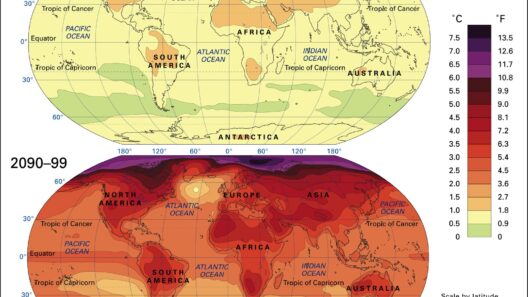

Global warming, an insidious specter creeping into the very seams of our environmental tapestry, threatens to unravel the delicate threads of the water cycle, a pillar of life on Earth. The intricate ballet of evaporation, condensation, and precipitation could become a dissonant symphony under the strenuous strains of rising temperatures. This essay delves into the multifaceted ramifications of climate change on the water cycle and subsequent weather patterns, drawing intriguing parallels that illuminate our understanding of these dynamics.
The water cycle is a quintessential choreography of nature, a circling dance that not only nourishes ecosystems but also regulates climate. Just as a musician relies on a metronome to maintain rhythm, the Earth depends on the balance of water elements to sustain life. Global warming, however, acts as a relentless perturbation of that metronomic stability. As average global temperatures rise due to proliferating greenhouse gases, the implications cascades throughout this cyclic system, engendering a host of anomalies.
Firstly, one cannot overlook the role of evaporation, which serves as the initial stage in this aqueous transformation. Warm air can accommodate more moisture, and as temperatures ascend, so too does the capacity for water vapor. This altered state quintessence manifests as increased evaporation rates from oceans, lakes, and rivers. In this scenario, even a seemingly benign rise in temperature can amplify atmospheric water vapor by approximately 7% for every 1°C increase, akin to pouring a little extra sugar into coffee. The sweetness remains, but the effects magnify the overall experience.
Consequently, a paradox arises: while some regions may be drenched in unprecedented rainfall, others are plunged into unrelenting dry spells. This uneven distribution evokes the notion of a weighty teeter-totter strained under varying burdens, leading to pervasive droughts in some areas and torrential floods in others. The amplification of this dichotomy not only disrupts local ecosystems but also jeopardizes food security, as agriculture becomes increasingly precarious amidst erratic precipitation patterns.
Moreover, the rise in temperatures can potentiate the intensification of storms and hurricanes, another alarming shift in our weather systems. The warmer ocean waters serve as a veritable fuel source for these meteorological giants, enabling them to flourish with unprecedented vigor. When energy is plentiful, storms may gain strength rapidly, transforming drizzles into deluges within mere hours. This impending tempest, characterized by more violent winds and violent rainfall, disrupts communities, inducing not just immediate peril but prolonged socio-economic ramifications, such as displacement and infrastructural disarray.
One must also consider the consequential shifts in snow and ice dynamics. The polar regions, where frozen landscapes once prevailed, are now becoming symbols of change. Warming temperatures lead to accelerated melting of glaciers and sea ice, which in turn impacts sea levels and freshwater availability. As glaciers recede, they expose the underlying bedrock, analogous to peeling away a protective layer of insulation; sensitive ecosystems that depend on glacial runoff face severe threats. In arid regions, the loss of snowpack, a natural reservoir, compromises water supply during crucial growing months, imperiling agricultural practices and exacerbating existing stressors on water resources.
This melting behemoth also finds resonance in its contribution to rising sea levels. The gradual inundation of coastal areas poses not just a physical threat but engenders a haunting metaphor: the encroachment of the sea, like an assertive tide reclaiming its territory, displaces communities, erodes cultural heritage, and exacerbates social inequalities. Millions of people may find themselves facing the unique plight of being climate refugees, forced to abandon their homes and livelihoods as water encroaches upon land once deemed secure.
In analyzing the overarching ramifications of climate change on the hydrological cycle and its implications for weather, one cannot discount the significance of feedback loops—self-perpetuating processes that exacerbate existing conditions. For instance, as climatic conditions render certain areas less hospitable due to heightened temperatures and altered precipitation, ecosystems that once thrived may face collapse. Deforestation and desertification ensue, resulting in the necessity for additional agricultural land. This, in turn, exacerbates carbon emissions, fueling an inexorable cycle of increasing global temperatures and heightened atmospheric instability.
This intricate interplay unveils a stark reality: our planetary bubble that once felt boundless is now fraught with peril and uncertainty, shaped by the very hands that have nurtured its beauty. Each drop of rain is now tinged with a consciousness of consequence, as humanity grapples with the enormity of its impact on Earth’s systems. This is where the narrative extends beyond the scientific—people must interject their agency into the unfolding story, advocating for sustainable practices and resilient policies to attenuate climate change’s impacts.
Ultimately, the specter of global warming looms ominously over the water cycle and its manifestations in our atmospheric experiences. The dance of water, once a serene waltz, now risks morphing into chaotic interludes of extreme weather phenomena. By recognizing the fragility of this cycle and engaging in thoughtful stewardship, society can endeavor to restore balance and secure a sustainable future for the generations to come. Each action taken today is a note in the symphony of our shared existence, resounding through time and space.