

The phenomenon of global warming, often framed within the broader context of climate change, has roots that extend deep into the fabric of scientific inquiry. Understanding how the concept emerged involves a journey through historical milestones, scientific revelations, and evolving societal perceptions. This narrative invites an exploration of the intertwined paths of physics, chemistry, and environmental science that ultimately crystallized into the contemporary acknowledgment of anthropogenic climate change.
The early seeds of the idea can be traced back to the 19th century. In 1824, French physicist Joseph Fourier articulated the greenhouse effect, suggesting that the Earth’s atmosphere could trap heat, akin to the way glass retains warmth in a greenhouse. This conceptualization was momentous yet remained largely theoretical for decades. Fourier’s proposition laid the groundwork for future explorations into atmospheric science.
Fast forward to the late 1850s, when the work of John Tyndall, a British scientist, brought Fourier’s ideas into sharper relief. Tyndall meticulously investigated the properties of various gases, discovering that certain atmospheric constituents—such as carbon dioxide (CO2) and methane (CH4)—possessed the remarkable ability to absorb and emit infrared radiation. His findings illuminated a critical aspect of the greenhouse effect, revealing that an increase in these gases was capable of enhancing the atmosphere’s heat retention capacity. This revelation marked a pivotal moment in understanding the potential for human activity to influence climate.
As the industrial revolution unleashed an unprecedented rise in CO2 emissions through the burning of fossil fuels, questions about the implications for climate began to gain traction. The work of Svante Arrhenius in the late 19th century expanded upon Tyndall’s discoveries. Arrhenius, a Swedish chemist, quantitatively assessed the relationship between atmospheric CO2 levels and global temperatures. He posited that a doubling of atmospheric CO2 could result in a significant increase in global temperatures. This proposition not only forecasted climatic shifts but also wove together the threads of human industrial activity and environmental consequence, suggesting an urgent need for introspection regarding energy consumption and planetary stewardship.
The early 20th century saw a gradual evolution in climate science. However, it wasn’t until the post-World War II era that the discourse on climate change began gaining momentum. The establishment of global weather observation networks and advancements in computational meteorology allowed scientists to gather and analyze unprecedented amounts of climate data. Researchers, including notable figures like Roger Revelle and Charles David Keeling, initiated longitudinal studies that would serve as harbingers for future inquiries into climate dynamics. Keeling’s meticulously gathered data from Mauna Loa Observatory in the 1950s provided irrefutable evidence of steadily rising CO2 levels, thereby catalyzing a more profound concern about the implications of fossil fuel combustion.
In tandem with evolving scientific understanding, societal attitudes towards climate began to shift. The 1970s heralded a decade of environmental awakening, characterized by pivotal events like the first Earth Day in 1970 and the establishment of the Environmental Protection Agency in the United States. Concurrently, the publication of influential reports and books, such as “Silent Spring” by Rachel Carson, garnered public interest in environmental issues. The scientific community’s warnings about the adverse effects of pollution—including its potential to influence the climate—began to resonate more with the populace.
The 1980s and 1990s saw the formalization of global climate governance, with the establishment of the Intergovernmental Panel on Climate Change (IPCC) in 1988. The IPCC emerged as a pivotal body for synthesizing scientific research and disseminating knowledge on climate change. Its assessments consistently highlighted the human contribution to global warming, synthesizing findings from myriad scientific disciplines while providing a platform for international discourse. This era marked a critical turning point, as the concept of global warming transitioned from a theoretical exploration to an urgent global warning.
Emerging from these evolving dialogues was the recognition that climate change was not merely a scientific concern but also an ethical and humanitarian issue. The intricate interplay between development, environmental justice, and sustainability began to dominate discussions. The notion of climate justice emerged—a paradigm asserting that those least responsible for climate change would disproportionately bear its brunt. This revelation spurred grassroots movements and led to broader calls for equitable climate policies, compelling global leaders to take action.
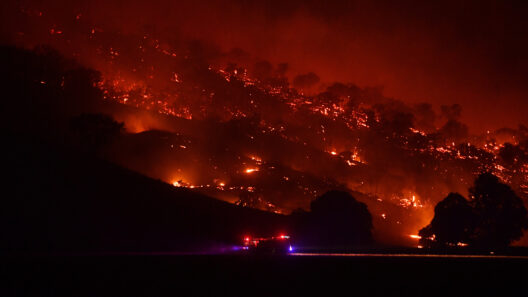
As the 21st century progressed, global warming increasingly infiltrated public consciousness. Extreme weather events, rising sea levels, and record-breaking temperatures underscored the urgency of addressing climate change. In 2015, the Paris Agreement marked a pivotal international commitment to combating climate change, aiming to limit global temperature rise to well below 2 degrees Celsius. With nations around the world recognizing the necessity for concerted action, the scientific narrative transitioned to one of hope and resilience.
Today, the discussions surrounding global warming continue to amplify. The scientific community relentlessly explores innovative solutions, from renewable energy technologies to carbon capture and storage. Public awareness campaigns strive to educate individuals on their roles in mitigating climate impacts. The discourse now traverses beyond mere acknowledgment; it emphasizes proactive engagement and systemic transformation toward a sustainable future.
Exploring the origins of global warming reveals not only its scientific underpinnings but also the broader social and ethical implications that have emerged over time. Understanding this evolution paints a vivid picture of the challenges and opportunities that lie ahead. The evolving narrative prompts us to reflect on the actions we can take today to ensure a healthier planet for future generations. Ultimately, the story of global warming is ongoing, an ever-unfolding saga of human ingenuity, responsibility, and the urgent necessity for collective action.