


The discourse surrounding global warming has burgeoned in recent years, prompting a critical examination of how Americans perceive climate change. The nuanced attitudes about this phenomenon reveal an intricate tapestry of beliefs, influenced by a confluence of social, political, and educational factors. After all, when it comes to global warming, is it merely an inconvenient truth, or are we grappling with an existential reality that requires immediate action?
To understand this multifaceted perspective, one must first acknowledge the historical context. The United States has a storied history with environmental issues, typified by landmark legislation in the 1960s and 1970s, including the Clean Air Act and the National Environmental Policy Act. Yet, as decades progressed, attitudes began to diverge significantly based on political affiliations and regional differences. This polarization poses an intriguing challenge: How do we reconcile these disparate views in the face of an undeniable scientific consensus?
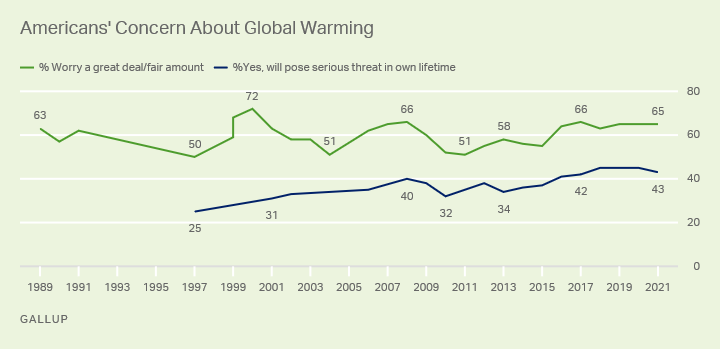
Recent surveys indicate that a substantial portion of the American populace recognizes climate change as a pressing issue. Yet, this acknowledgment doesn’t always translate into a shared sense of urgency. Indeed, many Americans express concern over the ramifications of global warming, with issues such as rising sea levels, extreme weather events, and ecological degradation at the forefront of their worries. However, an undercurrent of skepticism persists, particularly among certain demographics. The irony is palpable—while a majority may accept that climate change is occurring, far fewer believe that significant action is necessary.
This dissonance invites one to ponder: what drives such apathy in the face of overwhelming evidence? A major contributor appears to be the sensationalism surrounding climate discussions, which can generate fear rather than fostering proactive engagement. Additionally, a lack of access to comprehensive education on climate science can perpetuate misconceptions, leading to a populace ill-equipped to make informed decisions. Perhaps more aptly framed, how can we catalyze a paradigm shift from passive concern to active participation?
One salient observation is that Americans who consider themselves politically progressive typically exhibit heightened concern regarding global warming. Surveys reveal that Democratic participants are more inclined to view climate change as an urgent issue, advocating for robust government policies aimed at mitigation and adaptation. Conversely, Republican respondents often express doubt concerning the anthropogenic causes of climate change, focusing instead on economic implications of environmental regulations. This political dichotomy illustrates how deeply entrenched ideologies can shape individual perceptions of climate issues.
Within this complex landscape, regional variances also play a critical role in shaping attitudes. For example, individuals residing in coastal areas frequently report greater levels of concern about climate change, possibly due to their proximity to rising sea levels and climate-related disasters. In contrast, those living in landlocked regions may not experience the tangible effects of climate change in the same capacity, leading to diminished concern. This geographic disconnect raises yet another question: how can we bridge understanding between communities that face different climate challenges?
Furthermore, the influence of media cannot be overstated. The portrayal of climate change in popular media—be it documentary films, news outlets, or social media platforms—shapes public discourse and influences perceptions. Sensational headlines may grab attention but often fail to provide contextual understanding, leading to confusion. In some instances, discussions around global warming can devolve into pseudo-arguments that distract from actionable solutions. How can we leverage media to promote fact-based narratives that can galvanize collective action rather than division?
Public perception is also heavily influenced by the evolving landscape of climate activism. Movements led by youth, such as the Fridays for Future initiative, have captured national attention and fostered a sense of urgency regarding climate action. Young activists have become heralds of a new paradigm, demanding accountability and swift governmental responses. Their passionate pleas resonate widely, prompting a generational re-examination of climate responsibilities. This raises an essential consideration: what role do youth play in shaping the future of climate policy in America?
In light of these dynamics, it is imperative to explore the impact of education on public attitudes toward climate change. Educational institutions have a unique opportunity to shape critical narratives and provide students with the tools to engage meaningfully with climate-related issues. Integrating environmental science into curricula can cultivate an informed citizenry equipped to navigate the complexities of climate change. So, one might wonder, can educational reform serve as a catalyst for changing public perception and galvanizing concern into action?
Moreover, personal experiences with extreme weather events—hurricanes, wildfires, and floods—often catalyze individual attitudes toward climate change. As these phenomena escalate in frequency and intensity, they serve as poignant reminders of the realities of global warming. The visceral nature of such experiences can strengthen convictions and prompt calls for action among those directly affected. But how can we ensure that these personal narratives resonate with others who remain insulated from immediate impacts?
Ultimately, the way Americans view global warming is a reflection of shared concerns, political ideologies, regional experiences, and the effectiveness of educational initiatives. Bridging the gap between awareness and action remains a formidable challenge. By nurturing informed dialogue, leveraging the power of youth activism, and fostering community connections, there is a pathway toward reshaping perceptions and inspiring collective mobilization against climate change.
In conclusion, the question persists: how do we transform concern into concerted action? As the impending effects of climate change loom larger on the horizon, the imperative for a united front grows ever more urgent. Encouraging collaboration across regions and political affiliations is essential. The time for complacency has passed; now is the moment to galvanize a nation toward a sustainable future.