

Energy conservation is a fundamental principle in the realm of physics, particularly when studying the interplay between kinetic and potential energy. This relationship is often illustrated vividly through the motion of a pendulum. Have you ever pondered how a pendulum swings gracefully, seemingly defying the laws of gravity and motion, yet adheres strictly to them? This inquiry serves as the entry point to explore the elegant dance of energy conservation between kinetic and potential forms.
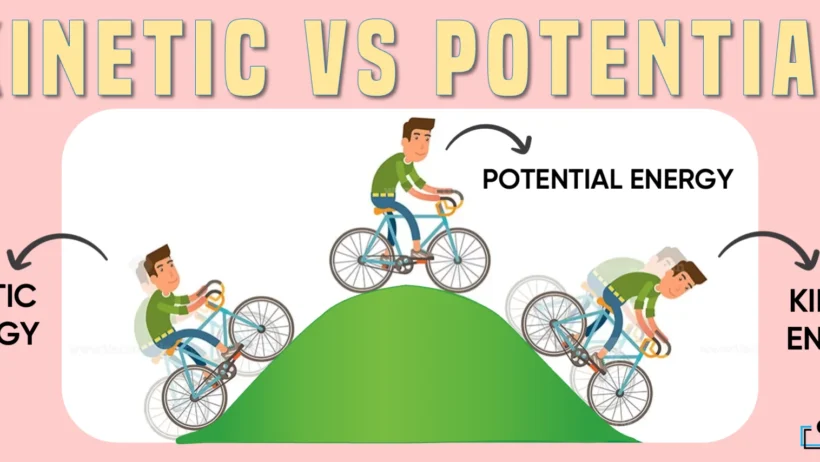
At its core, energy exists in several forms and can be transformed from one type to another. Kinetic energy is the energy of motion, quantifiable by the equation KE = 1/2 mv², where m represents mass and v is velocity. Potential energy, on the other hand, is stored energy based on the position of an object. The gravitational potential energy (PE) of an object is given by the formula PE = mgh, where g is the acceleration due to gravity and h is the height above a reference point. Together, these energies illustrate a fascinating interplay that reveals the mechanisms of the physical world.
The Pendulum Phenomenon
To observe these concepts in practice, one need look no further than a simple pendulum. When a pendulum swings, it transits through a spectrum of positions, each corresponding to different energy states. At the apex of its swing, the pendulum possesses maximum potential energy and minimal kinetic energy, as it momentarily pauses before changing direction. Conversely, at the lowest point in its arc, kinetic energy peaks while potential energy recedes to its lowest value. This rhythmic exchange is a classic illustration of the conservation of mechanical energy.
Consider, for a moment, a pendulum of length L, released from a height h above the ground. As it descends, gravitational force accelerates its mass downward, culminating in a velocity expressed as v = √(2gh) at the lowest point. Here lies the crux of the conservation principle: at the highest swing, all energy is potential; at the lowest, it is kinetic. What occurs, then, if friction or air resistance enters the equation? This introduces an intriguing challenge, as both friction and air resistance dissipate energy as heat, thus disrupting this perfect conservation dynamic.
Transformations in a Closed System
In a closed system devoid of external forces, the conservation of energy is upheld in its glorious simplicity. The total mechanical energy—the sum of kinetic and potential energies—remains constant. However, this ideal scenario rarely occurs in reality. As external forces like friction act upon the pendulum, energy transforms into thermal energy, reducing the total mechanical energy available for the system’s motion. This phenomenon accentuates the inevitability of energy dissipation and compels us to contemplate the environmental implications of our energy consumption and the efficiencies we pursue.
The analogy extends beyond pendulums to ecological dynamics. Energy transformations play a crucial role in facilitating life as we know it. Energy in biological systems, primarily derived from the sun, is transformed through photosynthesis into potential energy stored in plant matter. As herbivores consume these plants, and then predators chase the herbivores, energy spirals through various forms, ultimately manifesting as kinetic energy in movement. Yet, inefficiencies at each trophic level lead to energy loss, profoundly influencing ecosystem dynamics and, ultimately, biodiversity.
The Playful Dilemma of Real-World Applications
Consider the challenge posed by our demand for energy in the modern world. We are continually on a quest to harness energy efficiently while minimizing wastefulness. This is where the principles of kinetic and potential energy come into play in innovative technologies—like roller coasters that exploit gravitational potential energy, converting it into kinetic energy for thrilling rides, then using energy-absorbing technologies to recover some of that energy back. This playful engagement with energy conservation demonstrates that awareness and understanding of these principles can foster technological advancements yielding both enjoyment and sustainability.
Conclusion: Embracing the Dance of Energy
As we dissect the pendulum’s oscillation, we uncover the profound truths inherent in the conservation of energy. The elegant shift between kinetic and potential energy invites us to reflect not only on principles of physics but also on our role within a larger ecological framework. With energy conservation ingrained in the very fabric of nature, the challenge lies in applying these insights to mitigate the impacts of climate change.
By embracing the complexities of energy relationships and encouraging innovative solutions, society can stride toward a more sustainable future. Just as the pendulum swings, so too must we swing into action, striving for balance in our energy consumption, championing renewable sources, and ultimately cultivating a culture of responsibility toward our planet. The secret to unlocking energy’s potential—like the pendulum—is found not just in understanding its dynamics but in taking purposeful action that resonates across generations. The vibrant cycle of life and energy conservation stands as a reminder of our interconnection with the environment, urging us to harvest knowledge and inspire change.