


The realm of electromagnetism is like a vast ocean, teeming with complex currents and hidden depths. Within this intricate landscape lies Lenz’s Law, a principle that elegantly intertwines with the fundamental tenet of conservation of energy. To grasp Lenz’s Law is to appreciate the delicate ballet of forces that govern our universe, illustrating how energy flows, transforms, and ultimately finds balance.
At its core, Lenz’s Law articulates a fundamental truth about electromagnetic induction: a changing magnetic field induces an electromotive force (EMF) in a conductor, but this induced EMF always acts in a direction that opposes the change that created it. This opposition is not merely a reaction; it is an entrenched assertion of energy conservation. When an external force attempts to alter the magnetic environment, the induced current counteracts this force, preserving energy within the system.
To visualize this concept, consider a pendulum in motion, swinging back and forth with grace. When energy is imparted to the pendulum, it soars to a peak, only to be pulled back by gravitational forces. Lenz’s Law acts like the pendulum’s weight, ensuring that any joule of energy put into the system generates an equal and opposite response. Just as the pendulum completes its arc, so too does energy balance and flow through inductive processes.
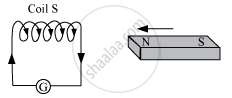
Exploring Lenz’s Law through the lens of conservation of energy unveils a fascinating interplay between mechanics and magnetic fields. When a magnet approaches a coil of wire, the changing magnetic flux through the coil generates an induced current. This current, guided by Lenz’s Law, creates its own magnetic field that opposes the original field from the incoming magnet. The result is a battle of magnetic forces, where the system seeks equilibrium. By resisting changes to the state of energy, Lenz’s Law upholds the integrity of conservation principles, reflecting Nature’s inherent proclivity for balance.
One can think of Lenz’s law as the universe’s built-in safety mechanism. When energy alters its course, the system reacts to stabilize the perturbation. This essential characteristic ensures that energy is neither created nor annihilated but transformed, echoing the law of conservation of energy. Energy circulates through various forms—mechanical, electrical, thermal—while maintaining a constant presence, a rhythm akin to a heartbeat in an otherwise chaotic world.
Transitioning from metaphors to applications, the significance of Lenz’s Law becomes paramount in technological innovations. Take electric generators and transformers, for example. These devices harness Lenz’s Law to optimize energy usage. In a generator, mechanical energy transforms into electrical energy through electromagnetic induction, while Lenz’s Law ensures that this transition does not deplete the energy but reclaims and redistributes it efficiently. Without this indispensable principle, the efficacy of such devices would be significantly diminished, underscoring the harmony between electromagnetic principles and energy conservation.
Moreover, this relationship extends into the realm of renewable energy. Wind turbines, solar panels, and hydroelectric systems all rely on the tenets of electromagnetic induction and Lenz’s Law. Wind turbines harness kinetic energy to rotate blades, which induce currents through coils. The opposition exhibited by the induced currents ensures that the mechanical system operates within the limits of energy conservation, thereby enhancing efficiency. Here lies a poignant illustration of Lenz’s Law in action: a dance of energy conversion that respects the universal law of balance.
Intriguingly, Lenz’s Law also illuminates our understanding of electromagnetic waves. As light travels, it interacts with varying mediums, demonstrating how changes in energy can lead to opposing forces that alter its trajectory. The cancellation of waves—interference patterns—serves as an embodiment of Lenz’s principle in a broader, more abstract context. Waves will reflect or refract, responding to changes in their environment, reiterating how energy is continuously transformed yet always conserved.
The concept of Lenz’s Law further extends to environmental considerations. In an era of climate change and ecological imbalance, understanding the conservation of energy can inspire innovative approaches to sustainable practices. As societies seek to minimize energy waste and transition towards greener technologies, principles such as Lenz’s Law remind us of Nature’s immutable laws. Harnessing energy wisely and efficiently not only curtails reliance on nonrenewable resources but also fosters a profound respect for the delicate interdependencies prevalent in our ecosystems.
In synchronization with the conservation of energy, Lenz’s Law acts as a beacon illuminating the intricacies of electromagnetic phenomena. By revealing the inherent relationships within energy systems—from mechanical constructs to renewable technologies—we glean insights that transcend physics. The law serves as a reminder that every action has an equal and opposite reaction, resonating beyond simple equations into ethical depths of sustainable living. Just as the pendulum must inevitably return to its center, so too must humanity seek equilibrium with its energy consumption, curtailing excess and embracing natural harmony.
Ultimately, Lenz’s Law is more than just a scientific principle; it is an allegory of balance and responsibility. As we navigate through unprecedented changes in our climate, it beckons us to reflect on how we harness energy in our daily lives. In tapping into the lessons imparted by Lenz’s Law, we can endeavor towards a future where energy is respected, conserved, and harmoniously integrated within the planetary systems that sustain us. Thus, the dance of energy, underpinned by forces of opposition and conservation, invites us to participate actively in the stewardship of our planet, ensuring that the rhythms of nature continue to thrive for generations to come.