


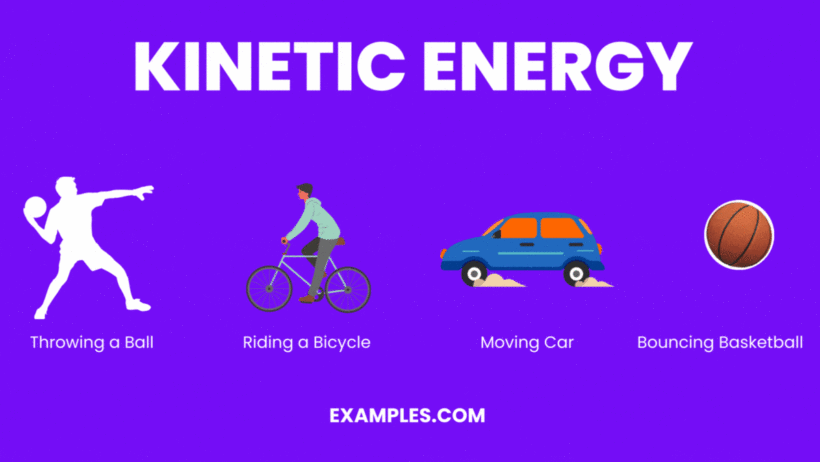

As the world grapples with the repercussions of climate change, understanding the principles of energy conservation has never been more imperative. One of the most intriguing aspects of energy physics is the concept of kinetic energy. Kinetic energy, defined as the energy possessed by an object due to its motion, is an omnipresent force in the natural and engineered world. By conserving kinetic energy, we not only enhance efficiency in our daily lives but also mitigate our carbon footprint, contributing positively to environmental preservation.
At the heart of kinetic energy is the equation that defines it: KE = 1/2 mv², where “m” represents mass and “v” represents velocity. This fundamental formula implies that even small increases in velocity can lead to significant increases in kinetic energy, leading to the observation that rapid motion requires substantial energy inputs. Thus, reducing or conserving kinetic energy can yield substantial ecological benefits.
One prevalent situation where kinetic energy conservation becomes relevant is in transportation. Vehicles, be they cars, buses, or trains, significantly depend on kinetic energy for their operation. The adoption of energy-efficient vehicles exemplifies the practical application of kinetic energy conservation. Electric and hybrid vehicles, for instance, capitalize on kinetic energy during motion and employ regenerative braking systems. These systems convert the vehicle’s kinetic energy back into stored energy when slowing down, thus maximizing energy utilization.
Another innovative method to conserve kinetic energy lies within the realm of urban design. Cities are increasingly embracing the concept of “shared mobility,” which prioritizes public transit systems over individual car usage. By encouraging masses to move together, the overall kinetic energy footprint per person reduces remarkably. Additionally, integrating bicycle lanes into urban infrastructure boosts kinetic energy efficiency, promoting eco-friendly transportation. The simplicity of pedaling translates kinetic energy into motion without the detrimental emissions associated with traditional vehicles.
Moreover, kinetic energy conservation extends beyond transportation to include kinetic energy harvesters in architectural design. Buildings that incorporate advanced materials and designs can harvest kinetic energy from wind and human activity. For instance, piezoelectric materials can convert mechanical stress into electrical energy. This technology not only exemplifies the physics principles in action but also signifies a sustainable approach to constructing the buildings of tomorrow.
A fascinating observation is the way kinetic energy is perceived in everyday life. Take, for example, the playful dynamics seen in children’s playgrounds. The swings and slides that induce joy also depict fundamental principles of kinetic energy and its conservation. When children swing back and forth, they convert and conserve energy through gravitational forces and their own kinetic motion, demonstrating how even simple play can illustrate complex physical concepts while fostering an understanding of energy dynamics.
The conservation of kinetic energy can also manifest through sports and athletic training. Athletes utilize techniques designed to maximize kinetic efficiency. Sprinters, for instance, focus on their form and technique to enhance their speed while minimizing energy expenditure. This focus not only enhances their performance but also provides insights into how conserving kinetic energy can lead to improved outcomes. As their bodies harness kinetic energy more effectively, they set a practical example of energy conservation in action.
In the realm of renewable energy, wind turbines epitomize another significant application of kinetic energy conservation. The turbines capture the kinetic energy of the wind, converting it into electrical energy. With global wind energy production on the rise, the potential for harnessing this kinetic energy source reflects a broader shift towards sustainable energy solutions. By utilizing the kinetic energy present in natural phenomena, we reduce our dependence on fossil fuels and promote a cleaner energy future.
Additionally, the principles of kinetic energy conservation find relevance in the world of engineering, particularly in machinery and industrial processes. Companies are increasingly integrating energy recovery systems within their operations to optimize production and reduce waste. By capturing and utilizing kinetic energy lost during operations, these companies not only enhance their efficiency but also lower their environmental impact, contributing to a greener industrial landscape.
The fascination with kinetic energy goes beyond its practical applications; it encompasses the artistry found in physics. The behavior of moving objects can be mesmerizing. From the graceful arc of a thrown ball to the rapid whirl of a spinning top, kinetic energy operates as a quintessential element of motion that captures interest and sparks curiosity. This creativity in motion is essential in education, where fostering an understanding of kinetic energy encourages future generations to seek innovative solutions for environmental challenges.
In conclusion, conserving kinetic energy is not merely a scientific principle; it is an overarching philosophy that permeates various facets of life and technology. Addressing the environmental crisis requires a multifaceted approach, and a substantial portion of this involves mastering the art of energy conservation. From transforming our transportation systems and urban landscapes to embracing cutting-edge technology, the common observation of kinetic energy conservation reveals profound implications. As society progresses, understanding and conserving kinetic energy remain vital, pointing toward a sustainable future where both the laws of physics and environmental stewardship coexist harmoniously.