



To embark on the journey of proving the conservation of energy, one must immerse themselves in the realm of virtual experiments and simulations. These innovative tools not only enhance understanding but also foster a new perspective on the principles governing our physical world. Herein lies an exploration of how virtual experiments can substantiate the conservation of energy, a fundamental concept in physics.
The law of conservation of energy posits that energy cannot be created or destroyed; it can only be transformed from one form to another. Whether in the form of kinetic, potential, thermal, or other types, energy is continuously in flux, shaping the very fabric of our universe. The beauty of this law is elegantly encapsulated in equations and principles that govern systems ranging from celestial dynamics to molecular interactions.
However, proving this law, while theoretically fascinating, poses challenges in practical scenarios. This is where virtual experiments, facilitated by sophisticated simulations, come into play. They provide an opportunity to visualize and manipulate complex systems, allowing for a more nuanced understanding of energy transformations. Instead of relying solely on theoretical calculations, one can engage directly with dynamic systems that replicate real-world phenomena.
Imagine a pendulum—a classic example often used to illustrate energy conversion between potential and kinetic forms. In a virtual simulation, one can easily adjust parameters such as the length of the pendulum, the mass of the bob, and the initial angle of release. By observing the pendulum’s motion, users can track the conversion of gravitational potential energy at the highest point into kinetic energy at the lowest point. The simulation vividly demonstrates that while energy changes form, the total energy remains constant, thereby exemplifying the conservation of energy principle.
The power of simulations extends beyond simple pendulums. Complex systems, such as roller coasters, can also be examined. In a virtual environment, one can design a roller coaster, altering heights and angles, and then observe how energy is conserved as the coaster maneuvers through various loops and drops. The energy transformations can be scrutinized at each significant point along the ride: as the coaster climbs, it gains potential energy, which then converts into kinetic energy as it descends. Importantly, these simulations allow for exploration beyond the confines of theoretical expectations, showcasing real-time energy dynamics.
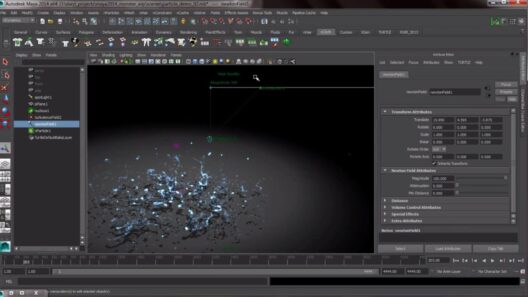
Advanced simulations can model multi-body systems, where numerous interacting objects exert forces and transfer energy amongst themselves. For instance, particles colliding in a closed system—like atoms in a gas—can be simulated to illustrate conservation principles at a microscopic level. By observing the distributions of kinetic energy among particles before and after collisions, one can derive insights into how energy is preserved through interactions. This level of analysis paves the way for understanding phenomena such as thermal equilibrium and energy dispersal in thermal systems.
Moreover, simulation platforms often possess tools that allow users to track energy quantitatively. Measuring energy at various points within a simulation provides empirical data that can validate the conservation of energy. Users can chart energy levels over time or in different configurations, receiving immediate feedback that reinforces theoretical concepts. This integration of data visualization fosters a learning environment that is both engaging and enlightening, piquing curiosity and encouraging further exploration.
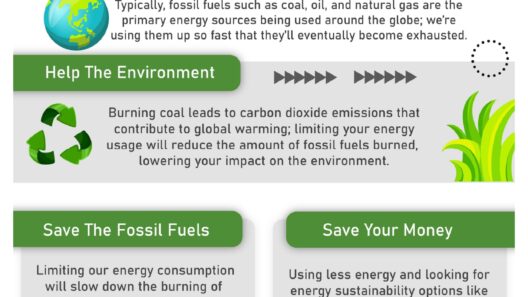
In the spirit of interdisciplinary approaches, the realm of renewable energy can also benefit from simulations that elucidate energy conservation. For example, virtual experiments can model solar panels capturing sunlight and transforming it into electrical energy. By adjusting variables such as light intensity and angle, users can witness firsthand how energy is harvested and conserved in the system. Such experiments highlight the importance of renewable resources and conscientiously illustrate how energy can be harnessed sustainably, reinforcing the relevance of these principles in today’s climate-conscious society.
As one delves deeper into the use of simulations for proving energy conservation, the concept of friction emerges as a pivotal factor. In real-world applications, no system is devoid of friction, which dissipates energy as heat. Virtual simulations can accommodate the introduction of frictional forces, allowing users to observe how energy losses affect the total energy budget of a system. By adjusting the coefficients of friction, one can study the implications of energy dissipation, thereby understanding the complexities of energy conservation in realistic contexts.
Participating in these virtual explorations not only serves to prove the conservation of energy but also fosters a greater appreciation for the interconnectedness of physical principles. Students and researchers alike are equipped to challenge their preconceived notions about energy and the systems that utilize it. This shift in perspective is invaluable for fostering innovation and encouraging a proactive approach to energy efficiency and sustainable practices.
In conclusion, the intersection of simulations and the conservation of energy offers not merely an academic exercise but a profound opportunity to engage with the fundamental laws of physics. By bringing complex phenomena into a virtual environment, one is positioned to explore and prove the constancy of energy through myriad transformations. The implications are far-reaching, spanning education, research, and real-world applications that advocate for a sustainable future. Through simulations, one can redefine their understanding of energy conservation—moving from theoretical abstraction to empirical awareness, thereby cultivating a generation that respects and understands the delicate balance of our natural world.