


As the sun rises over the Arctic, one cannot help but ponder: What happens when the ice caps disappear? The staggering visual impact of global warming is clearly manifesting in the relentless retreat of the planet’s polar ice. This phenomenon serves as a harbinger of grave consequences for ecosystems, weather patterns, and human societies worldwide. Understanding how these majestic ice formations are affected by rising temperatures illuminates the urgent need for environmental stewardship.
The polar ice caps, comprising the Arctic and Antarctic regions, play a vital role in regulating the Earth’s climate. They act as a thermostat, reflecting sunlight back into space and helping to maintain the planet’s temperature balance. Ice reflects approximately 80% of the sun’s rays, while land and water absorb much of the heat. Therefore, when the ice retreats, more sunlight is absorbed, exacerbating warming trends. This cyclical process, known as the albedo effect, may trigger a cascade of feedback loops, further escalating climate change.
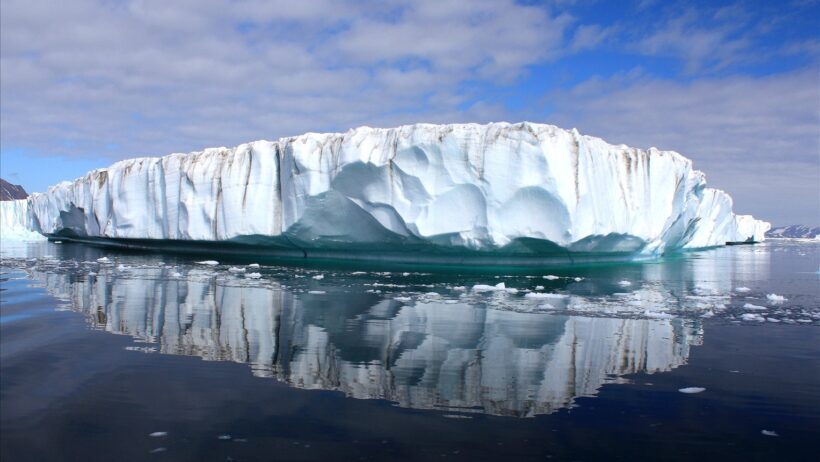
In recent years, satellite imagery and on-ground assessments have unveiled alarming statistics about ice loss. The Arctic sea ice extent has decreased by roughly 40% since the late 1970s, a stark revelation that indicates a rapid transformation of our environment. Notably, the once-thick ice sheets of Greenland are melting at an unprecedented rate, contributing significantly to rising sea levels. The information is staggering, perhaps more so when one considers that the Antarctic has also started to exhibit accelerated ice loss, with some studies suggesting that its ice sheet is shrinking at a rate of over 100 gigatons annually.
The ramifications of this melting ice are manifold. Firstly, rising sea levels pose profound risks to coastal communities. Low-lying nations such as the Maldives and Bangladesh face existential threats as their habitations are increasingly submerged. It’s a tangible risk, and one must ask: How long can we ignore the warnings of our warming world? Moreover, the displacement of people from their homes due to coastal flooding could lead to significant humanitarian crises and geopolitical tensions.
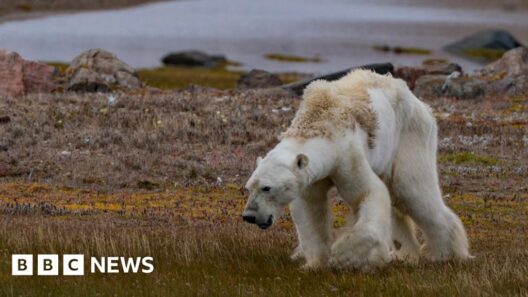
The environmental impact extends beyond human communities. Polar ecosystems, which rely on ice for habitat, have been severely disrupted. Species such as polar bears and seals, which depend on ice cover for hunting and breeding, are confronting existential threats as their environments dwindle. The food chains within these ecosystems are also showing signs of fragility. As ice-dependent species decline, marine life further down the food chain may also experience fluctuations, potentially unraveling entire biomes.
Furthermore, the melting ice caps have implications for global weather patterns. The Arctic is intricately linked to the jet stream, which influences climatic conditions across the Northern Hemisphere. As the Arctic warms, this delicate balance shifts, potentially leading to erratic weather events—such as severe storms, heatwaves, and floods—reverberating far beyond polar latitudes. Increasingly volatile weather can have disastrous effects on agriculture, infrastructure, and public health globally.
Would it be too far-fetched to assert that the visual changes of our ice caps could stir a sense of urgency among global citizens? The stark imagery of a once-pristine ice landscape melting away into the ocean can induce a visceral reaction, inspiring a collective call to action. Documentaries, social media campaigns, and educational initiatives harness these visuals to raise awareness about the ramifications of climate change. Yet despite these efforts, achieving global consensus and galvanizing action remains a formidable challenge. Faced with scientific data, emotional narratives, and unsettling visuals, one may wonder: Will visual impact alone be sufficient to inspire a change?
The science is irrefutable, and yet, individuals and nations alike exhibit inertia. Political will often gets undermined by economic interests, and the path towards sustainability seems obstructed. Incorporating diverse perspectives—indigenous knowledge, scientific expertise, and public opinion—could cultivate robust solutions. The challenge lies in unifying these voices in a chorus advocating for stringent climate policies, technological innovation, and a cultural shift towards valuing sustainability.
Educational institutions play a pivotal role in shaping the mindset of future generations. By integrating climate education into curricula from an early age, it becomes possible to foster an informed populace ready to embrace changes. Awareness leads to action, and as individuals grasp the interconnectedness of their choices and the health of our planet, the tides of behavior can shift. Initiatives promoting renewable energy, reducing carbon footprints, and encouraging sustainable consumption should be at the forefront of communal agendas.
Moreover, technological advancements offer hope amidst despair. Innovations in renewable energy, carbon capture, and sustainable agriculture present new pathways to mitigate climate change. Investing in research and development can yield breakthroughs that not only address the immediate crisis but also promote long-term resilience. The challenge lies not solely in inventing new technologies but also in implementing them effectively on a global scale.
To encapsulate, the retreat of our ice caps vividly illustrates the tangible consequences of climate change. It is not merely a phenomenon for scientists to study but a reality that calls for urgent, collective action. The challenge before us is indeed monumental, yet it is not insurmountable. By galvanizing global awareness, fostering education, and leveraging technology, the devastating trajectory of climate change can be altered. A united commitment to environmental preservation is not just vital for the ice caps but for the continuity of life on Earth itself.