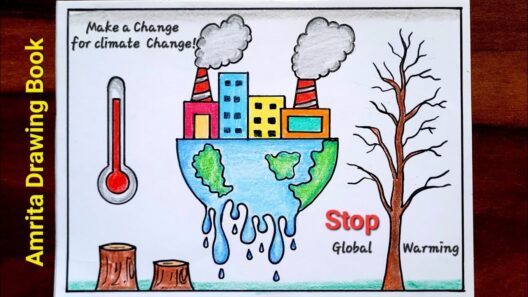



Climate change has emerged as one of the most formidable challenges facing humanity today. Yet, it is frequently framed as merely a variation or continuation of global warming. Is climate change merely global warming in disguise? This question invites a deeper exploration into the nuanced nature of climate phenomena and the myriad factors that contribute to Earth’s climatic systems.
At its core, global warming refers to the gradual increase in Earth’s average surface temperature due to rising levels of greenhouse gases, primarily carbon dioxide and methane, stemming from human activities such as fossil fuel combustion and deforestation. However, climate change encompasses this phenomenon and extends far beyond it. It includes shifts in precipitation patterns, increased frequency and intensity of extreme weather events, rising sea levels, and significant impacts on ecosystems and biodiversity. In other words, while global warming is a pivotal component of climate change, it is just one thread in a complex tapestry of interactions and consequences.
To clarify this distinction, consider the essential role of atmospheric dynamics. The atmosphere does not respond to temperature changes in isolation. Variations in heat distribution across the globe can lead to dramatic alterations in weather patterns. For instance, the warming of the Arctic region can disrupt established jet streams, resulting in anomalous weather patterns in temperate latitudes. As temperatures rise, the seemingly benign question of warmth reveals a more labyrinthine reality—climate variability becomes apparent. A single degree increase in average global temperature can have cascading effects that complicate the very fabric of our climate system.
Moreover, the effects of climate change manifest differently across various geographical regions. While some areas may experience increased warmth, others may face intensifying storms and flooding. Coastal cities are particularly vulnerable, grappling with the dual threats of rising sea levels and exacerbated storm surges. This geographic variability underscores the multifaceted nature of climate change and challenges the reductionist view that equates climate change solely with rising temperatures.
The intricate interdependencies within ecosystems create additional challenges. A paradigm shift in temperature may disrupt the delicate balance of ecosystems, resulting in species migration, phenological shifts, and even extinctions. For example, many species are attempting to adapt to changing temperatures by migrating toward the poles or to higher altitudes, yet this simple strategy is fraught with difficulties. The loss of habitat and the rapid pace of climate change may outstrip their capacity to adapt, leading to diminished biodiversity and ecosystem collapse. Hence, distinguishing between global warming and climate change becomes imperative for understanding our ecological responsibilities.
Another salient point of differentiation lies in the socio-economic ramifications of climate change. While global warming’s direct impact is primarily environmental, climate change engenders profound socio-economic consequences. Vulnerable populations—often least responsible for greenhouse gas emissions—suffer the most. Increased flooding, droughts, and changing agricultural yields contribute to food insecurity, displacement, and health crises. Framing climate change merely as global warming in disguise obfuscates these stark disparities and the urgent need for equitable climate solutions.
Can we then afford to diminish climate change to a talking point on global warming? The answer is a resounding no. It is essential to understand that the dialogue surrounding climate change also hinges on mitigation and adaptation strategies. Mitigating greenhouse gas emissions is vital; however, adaptation to the inevitable changes already in motion is equally critical. Strategies like sustainable agriculture, water conservation, and resilient infrastructure must be considered with the complexities of climate change in mind.
Addressing climate change effectively involves disparate sectors working synergistically to foster resilience and reduce vulnerabilities. Urban planners, policymakers, scientists, and communities must engage collaboratively, acknowledging that climate change—and not merely warming—is a multifarious challenge requiring comprehensive and innovative solutions.
Discussion also ripe for inquiry is the role of climate justice within the broader context of climate change. The disparity of effects begs the question of equity—who bears the brunt of the fallout from climate-related disasters? This facet enriches the dialogue surrounding climate change and underlines the urgency for inclusive policies that promote social equity. The notion of environmental justice—where marginalized populations have a voice and stake in climate discussions—must not be an ancillary consideration but rather a foundational aspect when developing responses to climate change.
Given the complexities inherent in climate change, presenting it solely as global warming oversimplifies a global crisis with far-reaching consequences, both immediate and long-term. Thus, rather than equating climate change to global warming in disguise, it is more productive to recognize them as distinct yet interconnected phenomena that together shape our understanding of climate dynamics.
In conclusion, while global warming undeniably contributes to the shifting climate, it is merely a singular symptom of a much broader and intricate ailment. The challenge lies not only in recognizing climate change as a multi-dimensional phenomenon but also in mobilizing concerted action to safeguard the planet for future generations. Only through a comprehensive understanding of climate change can we hope to confront and mitigate its expansive impacts effectively.