
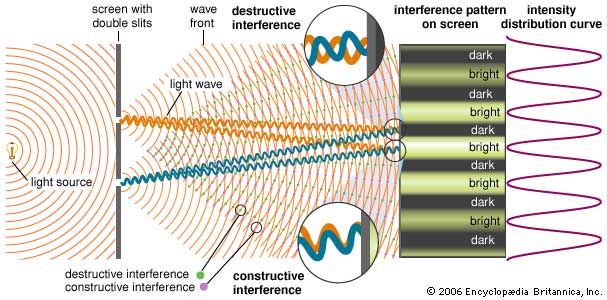

Destructive interference is a phenomenon that occurs when two or more waves combine in such a way that their amplitudes effectively cancel each other out. This results in a reduction of the overall amplitude at specific points in space, leading to regions of diminished intensity. A common example of destructive interference is observed in sound waves, where the overlapping of opposite phases can result in silence in areas where one would typically expect to hear sound. This interplay of waves raises intriguing questions regarding the conservation of energy, particularly in systems displaying destructive interference.
To grasp the nuances of energy conservation in destructive interference, it is essential to delve into the principles of wave behavior. Waves can be classified into several categories, including mechanical waves (such as sound and water waves) and electromagnetic waves (such as light). Each wave exhibits distinctive characteristics, such as frequency, wavelength, and amplitude. The principle of superposition governs the behavior of overlapping waves, where the cumulative effect is determined by the algebraic summation of the individual wave functions.
In the context of destructive interference, consider two identical waves traveling in opposite directions. When these waves interact, they may be perfectly out of phase, meaning the crest of one wave coincides with the trough of another. This creates a situation where the positive displacement of one wave cancels the negative displacement of another. The result is a net amplitude of zero at certain points, leading to regions devoid of wave energy. Through this lens, it may appear that energy is not conserved, as the waves seem to vanish where interference occurs.
However, examining energy conservation requires a more comprehensive understanding of the system as a whole. The cancellation of wave energy at particular points does not imply that energy is lost. Instead, the energy remains within the system, merely redistributed in different regions. In instances of destructive interference, the energy that appears to vanish is not annihilated; rather, it transitions to other areas, resulting in constructive interference elsewhere. For example, if two sound waves undergo destructive interference in one region, their energies are reallocated, intensifying sound in adjacent locales.
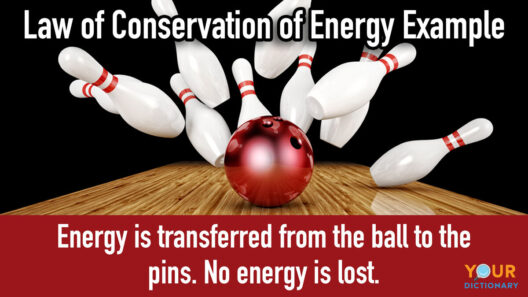
Furthermore, energy conservation in the broader context of physics adheres to the law of conservation of energy, which states that energy cannot be created or destroyed but can only transform from one form to another. This principle holds true even in complex wave interactions, ensuring that the total energy within a closed system remains constant. In practice, this implies that while destructive interference may reduce the amplitude of a wave in specific areas, it does not detrimentally impact the overall energy balance of the system.
Moreover, various applications of destructive interference further elucidate the energy dynamics involved. In noise-canceling headphones, for instance, microphones detect ambient sound waves and generate anti-phase signals that produce destructive interference. This method effectively cancels unwanted environmental sounds, demonstrating that the energy associated with these sound waves is not lost but systematically negated. As a result, users experience enhanced auditory clarity while the energy dynamics comply with the conservation laws of physics.
Optical devices, such as anti-reflective coatings on lenses, also capitalize on destructive interference. By layering thin films of materials with varying refractive indices, incoming light waves can be manipulated to undergo destructive interference at certain wavelengths. The consequence is reduced reflection and enhanced transmission of light through the lens. This approach explicitly illustrates conservation, as the energy does not vanish but rather is redirected, enhancing efficiency in optical applications.
Another domain where the implications of destructive interference and energy conservation are paramount is in the study of wave phenomena in natural settings. Ocean waves, for instance, can exhibit both constructive and destructive interference as they approach shorelines, influenced by factors such as wind and currents. Observing these interactions can provide insights into energy redistribution in marine environments, vital for understanding ecological dynamics and the potential impacts of climate change on coastal ecosystems.
In summary, while destructive interference may initially create an illusion of energy loss due to the localized cancellation of wave amplitudes, it is vital to recognize that energy conservation remains intact. The principles governing wave behavior and the law of conservation of energy clarify that energy is merely transformed or redistributed within the system. Applications in sound cancellation and optical technology serve to illustrate the practical utility of these principles, enabling advancements in a variety of fields.
This exploration of destructive interference extends our comprehension of wave interactions and reinforces the fundamental tenets of energy conservation. Recognizing the intricacies underlying this phenomenon not only enhances theoretical understanding but also provides valuable insights applicable to emerging technologies and natural phenomena. The conscientious examination of these principles fosters a deeper appreciation for the complexities of energy dynamics in both scientific and everyday contexts.