



The concept of energy conservation is a fundamental principle in physics, encapsulating the idea that energy cannot be created or destroyed, only transformed from one form to another. However, when it comes to orbital mechanics—specifically, the dynamics of celestial bodies and their movement through space—the notion of energy conservation becomes more nuanced, especially when considering changes in orbits. This exploration will delve into the intricacies of energy conservation during orbital transitions, examining both classical mechanics and relativistic aspects in a more profound context.
To begin, it is essential to understand what orbits are. An orbit is the curved path that an object takes around a celestial body due to gravitational forces. These paths can vary significantly based on the mass of the objects involved, their distances from each other, and their velocities. When an object, such as a satellite or a planet, alters its orbit—whether through propulsion mechanisms or gravitational assists—the energy dynamics of the system are at play. The question arises: Is energy conserved during these changes?
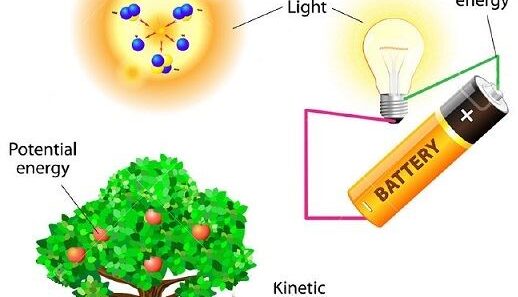
The answer does not lie within a simple yes or no; rather, it requires an analysis of the individual components of energy involved. At a fundamental level, the total mechanical energy of an orbiting object comprises kinetic and potential energy. Kinetic energy refers to the energy of motion, which is dependent on the object’s velocity, while potential energy is contingent upon the gravitational interaction between the orbiting body and the central body it revolves around.
As a body shifts from one orbit to another, say from a low Earth orbit to a higher geostationary orbit, the transformation affects both kinetic and potential energy. For instance, a satellite ascending to a higher orbit must increase its gravitational potential energy, which requires additional energy input often provided by rocket propulsion. Thus, in this case, the system does not conserve energy in the sense that it needs external work to influence the orbit. The kinetic energy may decrease as the satellite’s speed reduces while its height increases, demonstrating a direct relationship between the energy forms.
However, scenarios exist where energy is conserved on a broader scale. When a satellite descends into a lower orbit, it gains speed, increasing its kinetic energy while simultaneously reducing its potential energy. In this scenario, energy conversion occurs without extraneous forces acting on it. The apparent loss of potential energy is effectively transformed into kinetic energy, adhering to the conservation of energy within an isolated system. Thus, what might seem like an omnipresent variable is actually defined by the context of the interaction.
Furthermore, energy conservation in these transitions can also be viewed through the lens of the conservation of momentum. When considering the interactions of multiple bodies—such as moons and planets within a solar system—the gravitational forces lead to a redistribution of energy. The momentum of one body can cause alterations in the orbit of another, showcasing how energy conservation transcends individual systems and manifests in complex interstellar interactions.
In a broader astrophysical context, when considering celestial mechanics on a galactic scale, the principles of energy conservation take on further dimensions. For instance, during the formation of planetary systems, the exchanges of energy between colliding bodies and the resultant changes in trajectories illustrate the conservation laws at work. Accretion processes, where dust and gas coalesce under gravity, involve intricate transfers of energy that reaffirm the principles of conservation even as orbits and structures evolve.
Moreover, the advent of modern technology, such as the use of gravitational assists or slingshot maneuvers, showcases real-life applications of these principles. Spacecraft utilize the gravitational pull of larger celestial bodies to alter their trajectories efficiently, conserving energy in the sense that they gain additional speed without expending their own fuel. These maneuvers exploit the intricate dance of orbits, capitalizing on gravitational forces to achieve high velocities with minimal energy expenditure.
Considering relativistic effects adds another layer to the discussion of energy conservation during orbit changes. According to Einstein’s theory of relativity, as objects travel at speeds approaching the speed of light, their mass effectively increases. This phenomenon necessitates a reevaluation of energy calculations as the kinetic energy formula alters. Thus, in extreme gravitational fields or at significant velocities, the conservation of energy involves considerations that extend beyond classical mechanics, prompting profound implications in our understanding of physics.
In summary, energy conservation during orbital changes displays a complex interplay of kinetic and potential energy, momentum, and even relativistic factors. While changes in orbits can necessitate external energy input, they can also exemplify energy conversion within a closed system, adhering to the conservation laws in varied contexts. This understanding enriches our knowledge of celestial mechanics and challenges us to reconsider conventional views about energy’s constancy in dynamic environments. As space exploration evolves and our portrait of the cosmos becomes more intricate, the principles governing orbits and energy will indubitably pique our curiosity and alter our perspective on the universe’s vast complexities.