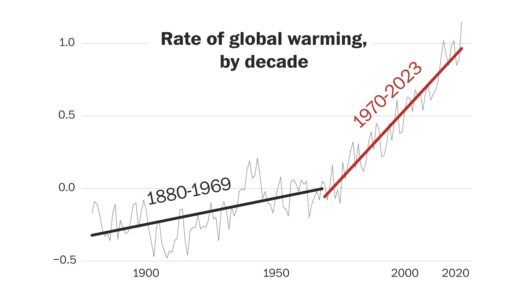

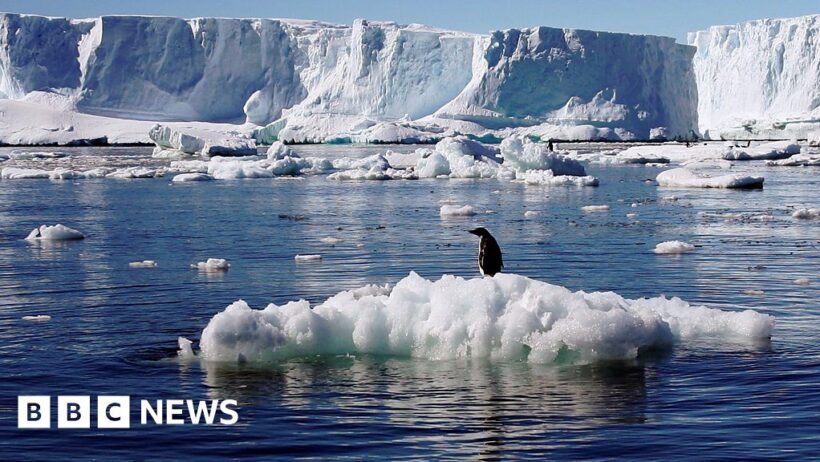

As humanity traverses the twenty-first century, a profound existential dilemma looms large: the melting of the ice caps, colossal bastions of frozen water, is not merely a tale of ecological transformation but a poignant narrative that unveils the stark realities of global warming. These titanic natural formations, often likened to the resilient and stoic giants of the Earth’s surface, now find themselves under relentless siege from the rising temperatures of a rapidly changing climate.
The ice caps serve as the planet’s thermoregulators, akin to the heart that pumps life through the very veins of our environment. Their extensive glaciers reflect sunlight, helping to maintain the Earth’s temperature. However, as human activity releases copious amounts of greenhouse gases into the atmosphere, the delicate equilibrium is disrupted. The balmy embrace of our planet’s atmosphere grows inexorably warmer, and these majestic glaciers that once symbolized Earth’s permanence are slowly but inexorably succumbing. The giants are melting.
In the Arctic, the scene is nothing short of catastrophic. In recent decades, satellite imaging has documented a staggering reduction in summer sea ice extent. The glow of scientific data reveals that Arctic sea ice is today approximately 40% thinner than it was in the 1980s. This thinning is not merely a fleeting statistic; it portends dire consequences for global weather patterns, marine ecosystems, and indigenous communities whose lives have been intricately entwined with the ice for millennia.
The disintegration of the ice caps invokes visceral imagery, akin to the collapse of a mighty fortress, where ancient walls crumble and once-impregnable gates yield to the relentless assault of time. As these ice giants surrender to the warming embrace of our atmosphere, the repercussions expand far beyond the polar regions. The loss of reflective ice means that more sunlight is absorbed by the ocean and land, which further exacerbates global temperature increases in a devastating cycle of feedback, resulting in increasingly severe weather patterns worldwide.
A critical aspect of this phenomenon lies in the contribution of the melting ice caps to rising sea levels. As the ice flows and glaciers release their precious freshwater into the oceans, communities that have flourished on coastlines from Miami to Venice find themselves in peril. Predictions suggest that, by the end of this century, global sea levels could rise by up to six feet, a scenario that threatens to displace millions and irrevocably alter cityscapes and entire nations.
Furthermore, the melting giants release not just water, but centuries-old permafrost—a frozen reservoir of carbon and methane. As this once-stable ice thaws, it unleashes storied greenhouse gases that had been securely locked away, further aggravating the climate crisis. This release is akin to opening Pandora’s box, where long-buried secrets transform into immediate threats, radically intensifying the spiral of global warming.
Yet, the narrative of the melting ice caps is not merely one of loss and devastation; it is also infused with the potential for resilience, innovation, and unparalleled awareness. The plight of these glaciers has galvanized a movement across the globe, inspiring grassroots activism and fostering unprecedented collaboration among scientists, policymakers, and concerned citizens alike. Individuals are awakening to the realities of climate change, united in their quest not merely to survive, but to thrive in a world forever altered by the consequences of our actions.
Moreover, advancements in climate science provide opportunities for mitigation and adaptation. Innovations in engineering and renewable energy technology present pathways for humanity to minimize its ecological footprint. From solar panels harnessing sunlight to wind farms capturing the power of the breeze, humankind possesses the tools to forge a sustainable future. Transitioning to renewable energy sources, enhancing energy efficiency, and promoting sustainable land use practices are pivotal elements in this transformative journey.
As the ice caps continue to wane, the urgency amplifies. The metaphorical giants remind humanity of the fragility of existence in an interconnected world where local actions have global repercussions. Awareness campaigns illuminate the imminent challenges and rally communities around the fact that conservation and sustainable practices can mitigate such catastrophic outcomes. The fight against melting ice is a clarion call, imploring society to reconsider its relationship with nature, to seek harmony rather than dominance.
Moreover, education plays an essential role in combating climate change. Schools and universities are evolving curricula to include environmental studies, instilling a sense of stewardship in the next generation. Each learner is empowered to become an advocate for change, nurturing a fundamental understanding of the interconnectedness of ecosystems and the consequences of anthropogenic actions.
In essence, the melting of the ice caps is a clarion call for humanity to acknowledge its footprints on this planet. These majestic leviathans serve as both a cautionary tale and a foundational narrative for a more sustainable future. The language of ice is one not just to be observed, but to be interpreted as a compendium of warnings and learning, a chronicle that urges society to act decisively. As we facilitate dialogues around climate action, the memory of these colossal giants will not fade into the annals of history; instead, their legacy will be a catalyst for a profound transformation in how humanity coexists with the Earth.
Thus, while the giants may be melting under the weight of humanity’s carbon footprint, the potential for impactful change rests within collective hands. By embracing this opportunity, societies may very well forge a new narrative of renewal, ensuring that these icons of frozen grandeur are not just memories, but symbols of resilience in the face of climate change.