
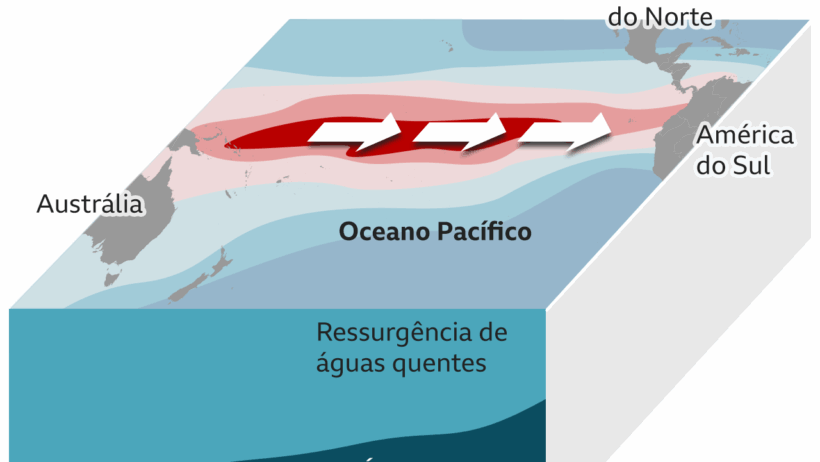

El Niño, a climate phenomenon characterized by the periodic warming of sea surface temperatures in the central and eastern Pacific Ocean, exerts a profound influence on global weather patterns. Though frequently simplified to mere weather variations, the interconnectedness between El Niño and global warming reveals a much more intricate narrative—one that demands our attention and understanding. This relationship is emblematic of our broader climate crisis and highlights the urgent necessity to comprehend these shifts from a variety of perspectives.
To appreciate the complexity of this relationship, it is essential to first grasp the mechanics of El Niño. The phenomenon typically manifests every two to seven years and lasts for several months, causing drastic changes in atmospheric circulation. The resulting alterations can lead to significant weather anomalies, including droughts, heavy rainfall, and shifting storm patterns. The effects are multifaceted, impacting agriculture, ecosystems, and human health on a global scale.
Yet, as our climate continues to warm due to anthropogenic activities, the interactions between El Niño and global temperature fluctuations are increasingly pivotal. The question that arises is not merely how El Niño affects weather patterns, but rather how these events intertwine with the broader umbrella of climate change. There exists a growing body of evidence suggesting that warmer ocean temperatures—a direct consequence of global warming—may exacerbate the intensity and frequency of El Niño events. This presents a dual challenge: heightened weather extremes and a diminishing capacity for natural ecosystems to adapt to these rapid changes.
One of the most troubling implications of this relationship lies in its potential to disrupt established agricultural practices. Regions reliant on predictable weather patterns for crop production may find themselves grappling with unpredictability. For example, prolonged drought conditions due to El Niño can devastate staple crops, leading to food insecurity not just on a local scale, but globally. The cascading effects of these disruptions ripple through economies, further complicating the already precarious balance of food supply chains—a phenomenon that illustrates the deeper consequences of viewing El Niño merely as a weather event.
Moreover, the socioeconomic ramifications of El Niño events cannot be overlooked. Vulnerable populations, particularly in developing nations, often lack the resources necessary to adapt to rapid changes in climate. Disparities in adaptive capacity magnify the impacts of El Niño, as those who are least responsible for climate change are often the most affected by its consequences. This interlinkage highlights a profound ethical dimension to climate discourse, demanding that strategies for mitigation and adaptation be equitable and inclusive.
Another pivotal aspect of the intersection between El Niño and global warming is the role of ocean currents and heat distribution. The oceans are essential in regulating global climate; they act as a massive heat sink, absorbing excess warmth from the atmosphere. However, as global temperatures rise and the melting of polar ice caps accelerates, we are beginning to witness the destabilization of these currents. Such disruptions can lead to feedback loops, where altered ocean dynamics amplify the frequency and severity of El Niño events, creating a vicious cycle of climatic extremes.
Additionally, the scientific community is now turning its attention to the concept of teleconnections—remote responses in weather patterns across different regions of the globe caused by El Niño. For instance, conditions in the Pacific can have profound impacts on weather in the North Atlantic, resulting in altered hurricane patterns and unexpected winter storms. Understanding these connections is crucial in enhancing predictive models and preparations for extreme weather events, ultimately improving resilience in the face of an uncertain future.
Addressing the realities of El Niño and its relationship with global warming necessitates a shift in perspective. No longer can these phenomena be treated as isolated events; the complexity of their interactions calls for an integrated approach that encompasses environmental science, socioeconomic policies, and community engagement. Policymakers and stakeholders must collaborate to develop adaptive strategies that consider both immediate needs and long-term sustainability.
Education plays a vital role in fostering this new perspective. By increasing public awareness of the intricate linkages between El Niño, global warming, and weather variability, we can engender a more informed citizenry equipped to advocate for sustainable practices. This education should extend beyond environmental science into the realms of economics, public policy, and social justice, thus creating a holistic narrative that bridges disparate disciplines.
In conclusion, El Niño serves as a potent reminder of the intricate web of interdependencies that govern our planet’s climate systems. As climate change continues to unfold, it is crucial to expand our understanding beyond simplistic explanations of weather phenomena. By navigating the complexities of El Niño’s relationship with global warming, we can foster resilience and adaptation strategies that not only address immediate concerns but also lay the foundation for a sustainable future. The stakes have never been higher, and the time for a paradigm shift in how we perceive and respond to climate impacts is now.