

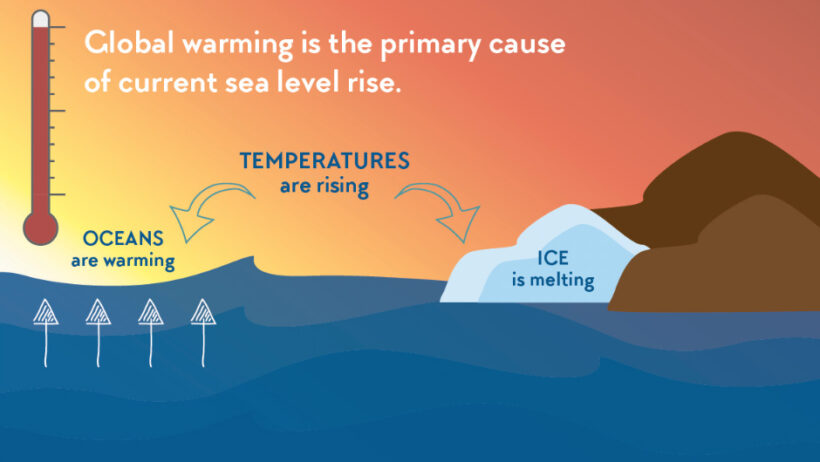

As global temperatures ascend, a consequential and alarming phenomenon emerges: rising sea levels. This unsettling reality is not merely an abstract concept but a tangible threat that reverberates through coastal ecosystems, human infrastructures, and societal fabrics. The correlation between climate change and sea level rise represents a multifaceted challenge that warrants comprehensive scrutiny. The mechanisms fueling this rise include thermal expansion of seawater, melting polar ice caps, and glacial retreat—all interlinked facets that compound the urgency of tackling climate change.
One of the most prominent contributors to rising sea levels is the thermal expansion of ocean waters. As the Earth’s atmosphere warms due to greenhouse gas emissions, water bodies absorb much of this heat. Water, unlike many substances, expands when warmed, resulting in an increase in volume. This physical phenomenon, coupled with the influx of melted ice, accelerates the rate at which sea levels surge. According to current projections, global sea levels could rise by over two feet by the year 2100 if climate change continues unchecked. This stark forecast portends dire consequences for coastal communities.
The melting of polar ice sheets and glaciers represents another critical facet in the discourse on rising sea levels. The Greenland and Antarctic ice sheets harbor immense quantities of freshwater, locked in icy permanence for millennia. However, as temperature increases, these ice masses face accelerated melting, contributing significantly to sea level rise. In Greenland, for instance, recent studies reveal that the ice sheet is melting at an alarming rate, with an estimated loss of approximately 280 billion tons of ice annually. Similarly, Antarctic glaciers are retreating, contributing to a perilous situation for coastal regions worldwide. The juxtaposition of these two processes highlights the urgency of meaningful action to mitigate climate change’s effects.
Coastal ecosystems are particularly vulnerable to the ramifications of rising sea levels. Mangroves, marshlands, and coral reefs serve as crucial buffers against storm surges and act as invaluable habitats for myriad species. However, as sea levels rise, these ecosystems are at risk of inundation or saltwater intrusion, leading to a decline in biodiversity and habitat loss. For instance, research indicates that coastal wetlands could lose up to 50% of their area by 2100 if current trends persist. This scenario not only jeopardizes native fauna and flora but also undermines the services these ecosystems provide, such as carbon sequestration and water filtration. Preserving these vital habitats is fundamental to enhancing resilience against climate change impacts.
Urban centers situated along coastlines stand on the frontline of this encroaching threat. Cities like Miami, New Orleans, and New York are grappling with the dual challenges of managing freshwater resources and confronting the specter of saltwater intrusion. Infrastructure built on the premise of historical sea levels is now besieged by flooding, necessitating costly adaptations or retrofits. Major metropolitan areas are racing to implement seawalls, elevated roadways, and improved drainage systems to stave off the advancing tides. However, the adaptation strategy must not only focus on building barriers but also embrace ecological solutions, such as restoring natural buffers like wetlands, ensuring a holistic approach to resilience.
Moreover, the social implications of rising sea levels cannot be overstated. Changes in landscape and habitat will inevitably lead to human displacement, making climate refugees a stark reality for millions. Vulnerable communities, often the least equipped to combat such disruptions, will bear the brunt of this crisis. Disparities in socio-economic status amplify the risks, as marginalized populations may lack the resources to relocate or adapt. Policymakers must prioritize equitable solutions by investing in infrastructure that protects both high-risk communities and vital ecosystems.
In response to the growing concerns surrounding rising sea levels, international coalitions and local governments are mobilizing efforts to address this existential threat. The Paris Agreement, an essential framework for global climate action, emphasizes the necessity for collective commitment to limit global warming and mitigate associated impacts, including sea-level rise. Many countries are developing national adaptation plans that encompass diverse strategies, from sustainable land management to disaster preparedness. Local initiatives involving community engagement are also gaining traction, demonstrating that grassroots activism can be a powerful catalyst for change.
As the science behind climate change efforts grows increasingly precise, so too must the dialogue surrounding solutions. Innovative technologies such as artificial reefs and climate-resilient infrastructure are emerging tools in the arsenal against rising tides. Furthermore, greater emphasis on sustainable urban development can foster resilience, blending natural systems with modern design to create adaptable landscapes. The convergence of scientific understanding and community action offers a roadmap toward sustainability in the face of daunting challenges.
In conclusion, the societal, ecological, and global repercussions of rising sea levels necessitate immediate and sustained action. The intertwining themes of climate change, social justice, and ecological preservation compel us to rethink our approaches and foster collaboration across disciplines. With rising tides come rising concerns; yet through informed action and decisive policy-making, we can strive to mitigate the tide of climate change and secure a sustainable future for generations to come.