

In the vast tapestry of our planet’s atmosphere, two fundamental phenomena vie for attention: weather and climate. While these terms are often used interchangeably, they encapsulate distinctly different concepts. Understanding their similarities and differences can illuminate our approach to environmental challenges, especially in an era where climate change looms large.
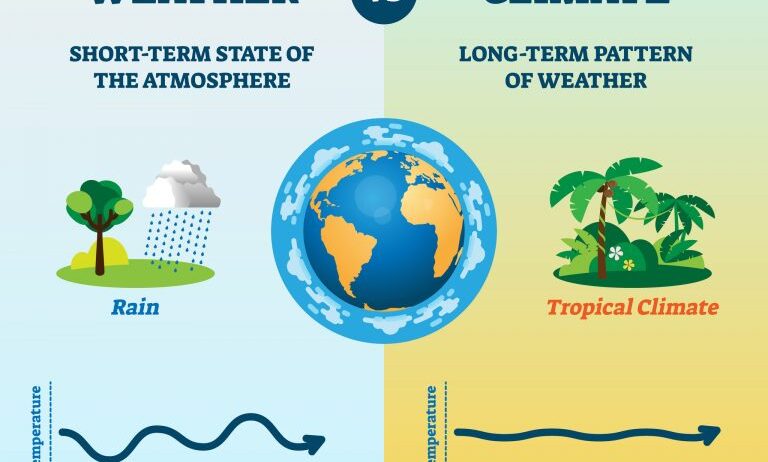
Weather is the ever-shifting condition of the atmosphere at a specific time and place. Think of it as the surface of a lake, rippling and disturbed by gusts of wind, sunlight, and the unseen pressures of the atmosphere. It encompasses aspects such as temperature, humidity, precipitation, cloud cover, and winds. Weather can change from one moment to the next, transforming from a sunny afternoon to a thunderstorm in a matter of minutes. This transient nature makes weather fascinating but also capricious—an unpredictable dance governed by myriad factors.
On the other hand, climate is the long-term pattern of weather in a given region, akin to the deep currents of an ocean that dictate its character over years, decades, and even centuries. It involves the average conditions experienced over an extended period—commonly 30 years or more. Climate reflects a more stable narrative shaped by geography, natural processes, and human activities. While weather may be chaotic, climate is the seasoned storyteller, weaving tales of seasonal transitions and enduring trends.
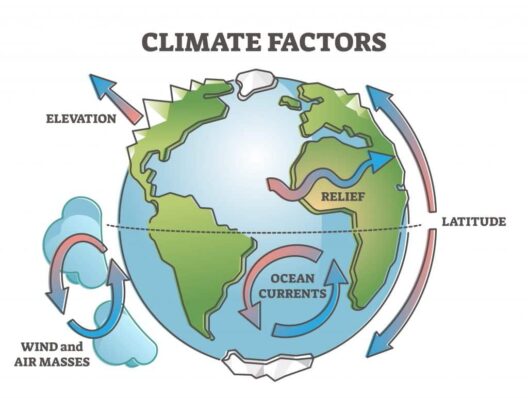
Despite their differences, weather and climate share an intrinsic connection. Both are influenced by similar atmospheric processes and physical laws. For instance, the fundamental elements of temperature and moisture are present in both weather and climate. Each operates within the same framework of meteorological dynamics, where the sun’s energy is the pivotal force driving their intricacies. Differences in pressure systems lead to the formation of storms (weather), while shifts in ocean currents can initiate broader climatic changes. Thus, while weather is the daily chapter of an atmospheric narrative, climate provides the overarching narrative arc.
To deepen our understanding, consider the role of human activity in this interplay. As industries burgeon and urban landscapes expand, greenhouse gas emissions alter both weather patterns and climatic stability. Increased carbon dioxide levels can contribute to more intense storms, heatwaves, and precipitation events, blurring the boundaries between daily weather fluctuations and longer-term climatic trends. The consequences are stark: the weather becomes less predictable, and the climate shifts toward extremes, demonstrating how interwoven these phenomena truly are.
Moreover, an intriguing metaphor arises from their relationship: envision weather as the relationship between a couple discussing their day’s events, while climate is akin to the couple’s history, intertwined with memories, habits, and shared experiences. The couple’s daily discussions—mirroring weather—vary with moods and context, yet their past—reflecting climate—shapes their identity and future interactions.
Understanding the distinction between weather and climate is crucial in addressing the pressing issue of climate change. Misinterpretations can lead to policy missteps and a general apathy towards the long-term ramifications of our actions. For instance, a particularly cold winter might lead individuals to dismiss the realities of global warming, forgetting that climate change can manifest as extreme weather variations, including colder winters. This disconnect hampers meaningful action against climate crises, perpetuating a cycle of inaction.
Moreover, the societal implications of this distinction are vast. Communities across the globe are adapting to shifting climatic conditions, from rising sea levels to altered precipitation patterns. The recent phenomena of ‘climate refugees’—individuals displaced by climate-related disasters—illustrates how climate transcends the ephemeral nature of weather. These refugees are seeking not just immediate shelter but a prolonged existence in a world increasingly characterized by upheaval and uncertainty.
Climate science thus becomes essential in forecasting future scenarios and informing policy. Comprehensive data collection and analysis enable scientists to model potential changes, offering insights that underscore the urgency of the situation. This predictive capability can guide communities in planning for extreme weather events, infrastructure adjustments, and emergency preparedness. Additionally, understanding climate shifts fosters innovation in mitigating impacts and adapting practices across sectors—from agriculture to urban development.
For individuals, recognizing the nuance between weather and climate cultivates a greater sense of responsibility towards environmental stewardship. Simple actions—reducing energy consumption, advocating for sustainable practices, supporting policies aimed at reducing emissions—become crucial components of combating climate adversity. Increased awareness can transform individual behavior, sparking collective action that has far-reaching implications. Advocacy drives change, as informed citizens demand accountability and solutions from their leaders.
In conclusion, while the terms weather and climate may seem synonymous, they encapsulate a complex interplay that influences our lives in profound ways. Weather is the day-to-day phenomenon, that captivates and sometimes confounds us, while climate provides a long-term perspective that demands our attention and action. Embracing both concepts enriches our understanding of environmental dynamics and equips us to confront the realities of climate change with knowledge, urgency, and a commitment to sustainability. By recognizing the intricate relationship between weather and climate, we can foster a future where informed decisions lead to a healthier planet.