
The terms “weather” and “climate” are often used interchangeably in casual conversation, leading to a pervasive misunderstanding of their distinct meanings. At first glance, they may appear to represent similar concepts, both deeply intertwined with the atmospheric conditions of our planet. However, delving deeper reveals that they are fundamentally different phenomena that warrant careful distinction. Understanding this dissociation is crucial; it encapsulates not only meteorological science but also touches on critical implications for environmental policy, public perception, and our collective response to climate change. This article elucidates the variances between weather and climate, highlighting the broader significance of these differences beyond mere semantics.
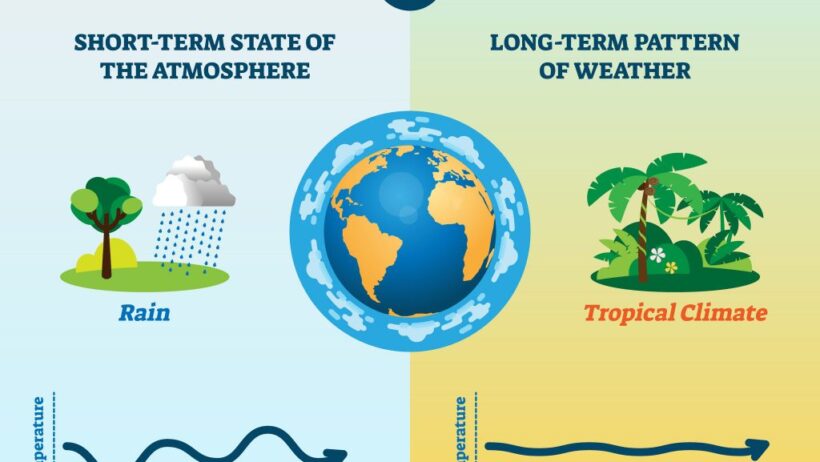
To commence, it is imperative to define both terms. Weather refers to the short-term atmospheric conditions in a specific location at a particular time. This encompasses factors such as temperature, humidity, precipitation, wind speed, and atmospheric pressure. For instance, when one checks the local forecast and learns it is raining in their area, this is a reflection of the weather. Weather patterns change frequently and can vacillate dramatically over short intervals—hours, days, or weeks.
Conversely, climate represents the long-term average of weather patterns in a broader geographical area over extended periods, typically over 30 years or more. For example, the climate of a region might be classified as arid or tropical based on statistical weather data over decades. Climate provides a broader framework that characterizes regions and influences ecosystems, agriculture, and human settlement. Thus, while one may experience a chill on a particular day affecting their immediate comfort, the climate aligns with narratives of historical data and long-term trends affecting global systems.
This nuanced distinction leads to a significant observation: the misunderstanding between these two terms can have profound implications for public discourse on environmental issues. When individuals conflate weather with climate, they might dismiss long-term climatic changes as merely the result of temporary fluctuations in weather patterns.
Such misconceptions can lead to a dangerous complacency in addressing climate change. Many might see a cold snap in winter or an unusually warm summer and attribute these events to natural variations, dismissing the broader context of climate science which clearly illustrates that human activity is catalyzing these long-term shifts. The reality is that these temporary weather phenomena can obscure a more alarming narrative of climatic disruption driven by increasing greenhouse gas emissions.
Moreover, this semantic confusion seeps into policy debates, shaping laws and regulations regarding environmental protections and energy usage. If policymakers rely on weather patterns rather than the broader climatic context, they are ill-equipped to craft effective responses to climate-related challenges. Decision-making based on short-term weather can result in insufficient adaptation measures, ineffective disaster response policies, and inadequate resource allocation for future contingencies. For instance, preparing for a flood requires not just an understanding of the immediate weather forecast but a comprehensive grasp of climate trends indicating rising sea levels and increased precipitation over time.
Another salient point is the psychological and cultural fascination with weather. Weather events—storms, heatwaves, and other meteorological phenomena—often dominate headlines and engage public interest. They are visceral, tangible experiences that individuals can witness and relate to in their daily lives. This ongoing engagement fosters a perception that weather is more relevant or significant than climate, further perpetuating the misconception. National conversations, media coverage, and social media often focus on sensational weather events, diverting attention from the more gradual yet equally pressing issues of climate change.
The fascination with extreme weather events feeds into the narratives constructed around climate, often conflating reactive and proactive measures. While communities rally together during disasters, much of this effort is reactive to immediate conditions rather than proactive in addressing the chronic instability posed by long-term climatic shifts. Understanding this distinction can invoke calls for deeper, sustained action rather than reliance on short-lived enthusiasm that follows high-profile weather incidents.
Furthermore, integrating education on the distinction between weather and climate in curricular frameworks can empower individuals and communities to engage with these topics more critically. A populace that comprehends the complexity of climate science is more likely to mobilize for comprehensive environmental initiatives. School systems and community programs can play an instrumental role in fostering an informed citizenry equipped to advocate for climate resilience, thereby transforming fascination with immediate weather phenomena into a sustained commitment toward addressing climatic challenges.
It is evident that the differences in weather and climate extend beyond mere definitions; they embody a larger narrative about how society interacts with, understands, and responds to our environment. These distinctions hold powerful implications for public policy, educational systems, and the resilience of our communities in the face of climate change. As we grapple with these environmental issues, it is essential to cultivate an awareness that places the emphasis on climate—historical, statistical, and algorithmic—rather than succumbing to merely reactive weather patterns that distract from the overarching narrative. The future of our planet hinges not only on accurately interpreting these terms but also on fostering a cultural shift that acknowledges their divergent significance in our understanding of environmental stewardship.