


The interplay of factors that govern our climate is a complex and mesmerizing dance, akin to an intricate clockwork mechanism where each cog and wheel plays a vital role in the grand tapestry of Earth’s environmental systems. Among the most pivotal elements in this choreography are Earth’s axial tilt and ocean currents, both of which wield significant influence over temperature, precipitation, and atmospheric dynamics.
To fathom the intricacies of climate, one must first acknowledge the significance of Earth’s axial tilt, which is approximately 23.5 degrees. This tilt is the reason for the rhythm of the seasons—spring, summer, autumn, and winter glide in a perpetual cycle, shaping ecosystems and influencing the biosphere’s flourishing diversity. When the Northern Hemisphere tilts toward the sun, it bathes in warmth, promoting growth and biological activity, while the Southern Hemisphere languishes in cooler temperatures, resulting in a contrasting seasonal experience. This axial inclination provides a unique lens through which to understand regional climates; for example, the temperate latitudes experience marked seasonal variations, while equatorial regions remain relatively stable year-round.
The relationship between axial tilt and solar insolation illuminates the subtleties of local climates. As sunlight strikes different latitudes at varying angles, the intensity and duration of daylight fluctuate. Consider a seedling: in the sun-drenched summer, it thrives under the bounteous rays, but as winter approaches and the sun’s arc narrows, the same seedling faces dormancy. Such cyclical patterns establish not merely temperature variations but also precipitation changes, leading to diverse conditions ranging from arid deserts to lush, tropical rainforests. Hence, climate is not a static entity but a dynamic interplay sculpted by these celestial mechanics.
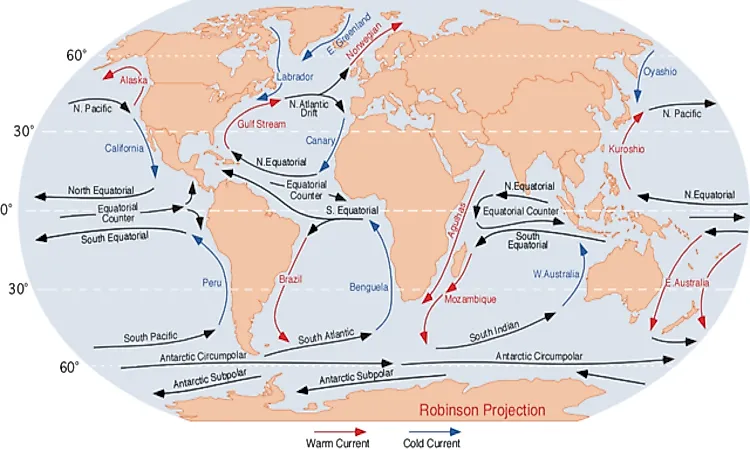
Yet, the story of climate does not end with the tilting of our planet. Ocean currents, those colossal rivers of water that traverse the globe, are equally influential in determining climatic conditions. They operate akin to the blood coursing through a living organism, vital for regulating temperature and distributing energy across vast distances. The interplay between ocean currents and atmospheric conditions is often described as a symbiotic relationship—an ecosystem of its own, where movements beneath the water’s surface orchestrate vast shifts in weather patterns.
Take, for instance, the Gulf Stream. This warm current flows from the Gulf of Mexico up the eastern coast of North America and across the Atlantic towards Europe, embodying the essence of warmth that transforms the climate of regions it touches. Without it, much of Northwestern Europe would yield to a harsher climate, echoing a far more frigid narrative. The enveloping warmth from the Gulf Stream creates a temperate environment, allowing for fruitful agriculture and a verdant landscape, reinforcing the notion that ocean currents are crucial players in climatic conditions that define human civilization.
Conversely, colder currents, such as the Humboldt Current off the coast of South America, usher in a different climatic story. The cool water fosters nutrient-rich ecosystems, contributing to one of the most prolific fishing grounds on the planet. Yet, it also delivers a paradox; while it supports marine biodiversity, it simultaneously creates arid conditions in the coastal deserts of Chile and Peru. This duality illustrates how ocean currents can yield both prosperity and adversity, shaping not only the natural environment but also human societies dependent on these resources.
The interaction between ocean currents and climate is not merely a one-way street. Climate change, a phenomenon increasingly influenced by anthropogenic actions, threatens the delicate balance maintained by these currents. As global temperatures rise, so too does the ocean’s temperature, leading to the alteration of current patterns and, consequently, the climate they help regulate. The once predictable routes might lead to unforeseen climatic consequences; as currents weaken or shift, regions may face floods or droughts, radically disrupting established ecosystems and human livelihoods, eliciting a need for profound comprehension and adaptive action.
Furthermore, the phenomenon of El Niño and La Niña exemplifies the dramatic fluctuations in climate linked to ocean currents. These climatic oscillations, fueled by variations in ocean temperatures in the equatorial Pacific, can unleash unprecedented weather patterns across the globe. El Niño often brings excessive rainfall to some regions, while other areas battle drought. La Niña, with its cooler ocean temperatures, can reverse those effects, leading to a complex web of consequences that impact food security, natural habitats, and economic stability. It is a jarring reminder of our interconnectedness within the Earth’s systems, wherein the ocean acts as both a catalyst and a regulator for climate.
In conclusion, understanding what affects climate involves a nuanced appreciation of both Earth’s axial tilt and the dynamics of ocean currents. These factors interlace to weave a rich tapestry, influencing everything from weather patterns to the intricate relationships within ecosystems. As the climate crisis unfurls, it becomes imperative to comprehend these mechanisms deeply and advocate for sustainable practices that address the root causes of climate change. The fate of our planet hinges on our awareness and action, reminding us that we are not mere observers of these climatic forces but active participants in the preservation of our environment. The clockwork of climate is ours to protect.