

Energy conservation is a core principle in physics and environmental science. The term “conserved quantity” refers to physical properties that remain constant in a closed system despite various transformations or events. Understanding what it means for energy to be a conserved quantity is crucial, not just for scientific comprehension but also for practical applications in everyday life and policymaking. This essay will delve into the fundamental concepts of conservation laws, explore different types of energy, and discuss their implications for our planet.
Defining Conserved Quantities
Conserved quantities are defined as physical properties that do not change despite the interactions within the system. The most recognized example is energy, which can shift among various forms but remains constant in a closed system. Conservation laws are crucial for explaining the fundamental behavior of energy, momentum, and other physical variables. The first law of thermodynamics, which states that energy cannot be created or destroyed, only transformed, is the cornerstone of this concept. This law underscores the notion that the sum total of energy in an isolated system remains invariant over time.
Types of Energy and Their Transformations
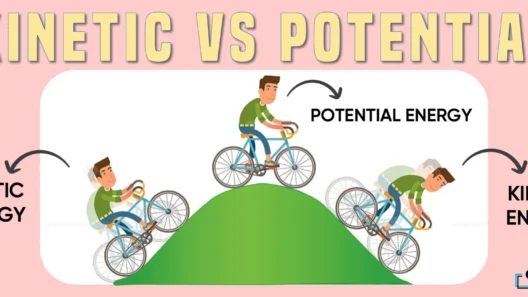
Energy manifests in multiple forms: kinetic, potential, thermal, chemical, and electromagnetic, to name a few. Kinetic energy is the energy of motion, whereas potential energy is stored energy based on an object’s position. When a roller coaster climbs to the top of a hill, it has maximum potential energy, which converts to kinetic energy as it descends. This transformation exemplifies energy conservation in action.
Thermal energy, related to temperature, is another critical form. When you boil water, the chemical energy from the heat source converts to thermal energy, ultimately converting the liquid water into steam. During this process, energy remains conserved, although it changes forms from one type to another. Understanding these transformations is vital for advancements in energy efficiency, which is particularly relevant in the contemporary conversations about climate change and resource management.
Implications of Energy Conservation
The implications of energy being a conserved quantity extend beyond theoretical physics; they permeate various sectors, including engineering, environmental science, and economic policies. For instance, in engineering, the foundational principles of conservation laws guide the design of machines, vehicles, and buildings to ensure optimal energy use while minimizing waste. This rigor in design enables us to create systems that align with sustainable practices, which are increasingly vital given contemporary environmental challenges.
Moreover, the understanding of conservation laws allows scientists and policymakers to develop more effective energy policies. Renewables like wind and solar energy are gaining traction not solely because they are cleaner alternatives, but because they leverage the principle of energy conservation efficiently. As nations strive to reduce their carbon footprints, acknowledging energy conservation laws helps in optimizing energy sources and minimizing energy losses, leading to a more sustainable future.
Real-World Applications of Conservation Laws
The principles of conservation are ubiquitous in real-world applications. One prominent example is the concept of energy audits in residential and commercial buildings. By assessing how energy flows through systems—electricity, heating, and cooling—homeowners and businesses can identify areas of waste and implement changes that result in substantial energy savings. Mechanical systems, such as pulleys or levers, also exemplify energy conservation. When lifting a weight, the energy expended is conserved by changing its energy state instead of being wasted.
The impact of conservation laws especially resonates in the field of renewable energy. For instance, when studying wind turbines, one can analyze the conversion of kinetic energy from wind into mechanical energy and then into electrical energy. By employing the conservation of energy principle, engineers can enhance the efficiency of these systems, making renewable options more viable and attractive.
Challenges to Conservation Laws
Despite their robust applicability, the principles of energy conservation do face challenges, especially from nonlinear systems and external forces that disrupt closed systems. For example, friction, air resistance, and other dissipative forces can result in energy loss, leading to the misconceptions that energy is not conserved when, in fact, it has simply transitioned to a less useful form. Understanding these losses is crucial for developing strategies to mitigate waste and enhance overall system efficiency.
Conclusion
In summary, the concept of energy as a conserved quantity is foundational to our understanding of the natural world and plays an imperative role in informing sustainable practices. From physical systems to technological applications, the implications of conservation laws are extensive and influence myriad facets of modern life. By grasping how energy transitions between forms while remaining constant in a closed system, societies can harness this knowledge to innovate, create efficiencies, and adopt more sustainable practices that are vital for the preservation of our planet. The journey toward sustainability is multifaceted, but a strong grasp of conservation laws will undoubtedly illuminate our path forward.