


The Law of Conservation of Energy is a fundamental principle in various scientific disciplines, including chemistry. It asserts that energy cannot be created or destroyed; it can only be transformed from one form to another. This tenet, while seemingly simple, underpins an intricate web of interactions at the molecular level, revealing profound implications for chemical reactions, thermodynamics, and the overall dynamics of natural systems. So, what happens to energy during chemical reactions, and how does it influence molecular behavior?
To begin unraveling this question, consider the classic example of combustion, where the energy stored in chemical bonds is released as heat and light. When a fuel like propane (C₃H₈) combusts in oxygen (O₂), it undergoes a series of transformations. The chemical bonds in the reactants break, requiring energy input, and new bonds form in the products, releasing energy. The balance of this energy exchange is governed by the conservation law, dictating that the energy released during the formation of combustion products equals the energy consumed in breaking the original bonds. This intricate dance of energy transformation is the essence of chemical processes.
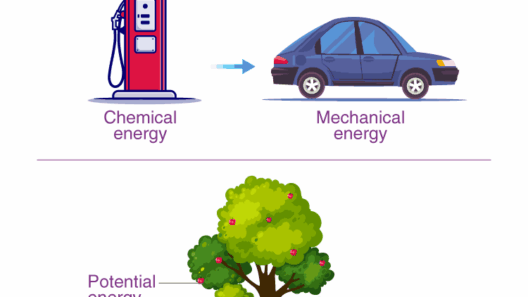
Let’s delve deeper into the molecular insights that define these transformations. At a microscopic scale, energy exists in various forms, such as kinetic energy, potential energy, and thermal energy. In chemistry, potential energy holds particular significance. It is the energy stored within chemical bonds, which represents the potential for a system to do work as the molecules interact with one another. For example, bond energy is a crucial aspect of understanding why certain reactions release more heat than others. The stronger the bonds formed in the products compared to the reactants, the greater the energy released during the reaction.
The concept of enthalpy (H) arises from this potential energy paradigm and is vital in chemical thermodynamics. Enthalpy reflects the total heat content of a system and is instrumental in assessing whether a reaction is exothermic (releases heat) or endothermic (absorbs heat). When analyzing a system through the lens of the Law of Conservation of Energy, the change in enthalpy (ΔH) provides a quantitative measure of energy transfer during a chemical reaction. A key challenge for chemists lies in precisely calculating these energy changes, necessitating a thorough understanding of both bond strengths and molecular interactions.
Furthermore, the interplay of energy conservation with entropy—a measure of disorder—introduces additional layers of complexity to the analysis of chemical reactions. The Second Law of Thermodynamics states that in an isolated system, total entropy can never decrease. Hence, while energy is conserved, its transformation might lead to an increase in entropy. This gives rise to spontaneous reactions, where, despite the conservation of energy, the system evolves towards a state of greater disorder. An illustrative example of this is the reaction of ice melting into water: even though heat energy is conserved, the transition from a more ordered solid state to a less ordered liquid state represents an increase in entropy.
The notion of spontaneity in reactions fosters an interesting inquiry: could there be instances where energy transformation defies typical expectations? Consider catalytic reactions. Catalysts provide an alternative pathway with a lower activation energy, facilitating a reaction without altering the overall energy balance. They effectively shuffle energy around within the confines of the law. What does this mean for the conservation principle? Catalysts do not create or destroy energy; instead, they optimize energy transformation efficiency, allowing reactions to proceed at a more favorable rate. This realization presents an inspiring challenge: how can we harness catalytic processes to drive sustainable energy practices in a world reliant on fossil fuels?
Energy conservation also extends beyond individual chemical reactions; it encompasses chemical processes in biological systems. For instance, during cellular respiration, glucose (C₆H₁₂O₆) undergoes oxidation. Here, energy stored in the glucose molecules is released and captured in the form of adenosine triphosphate (ATP), a molecule that cells use as a primary energy currency. The beautifully orchestrated flow of energy—from glucose to ATP and, ultimately, to cellular processes—highlights the pervasive nature of energy transformation in sustaining life. The application of the conservation principle presents a multifaceted opportunity to explore how biological systems optimize energy usage. In what ways can these natural processes inform our efforts to design efficient energy systems?
In conclusion, the Law of Conservation of Energy operates as a cornerstone principle in chemistry, manifesting through molecular interactions and transformations. It demands a comprehensive understanding of bonds, enthalpy, and entropy, illuminating the nuanced dynamics that govern chemical reactions. Moreover, this principle spurs ongoing questions regarding sustainability and how we can creatively apply our knowledge of energy conservation to address the pressing energy challenges facing society today. The dance of energy among molecules is not just a theoretical exercise; it underpins practical applications that direct our future. How can we, as stewards of the environment, engage with these insights to foster a more sustainable world?