


Have you ever wondered where all the energy goes when it seems to vanish into thin air? Imagine tossing a ball into the air, watching it soar, and then plummet back to the ground. The question arises: Does the energy just dissipate? This notion brings us to a fundamental principle in physics known as the Law of Conservation of Energy. According to this law, energy cannot be created or destroyed; it merely transitions from one form to another. This concept is foundational to both physics and environmental science. But what empirical evidence underpins this principle? Let’s embark on an exploration of the scientific rationale behind the Law of Conservation of Energy, examining its implications across various sectors, including everyday phenomena, advanced technologies, and even ecological interactions.
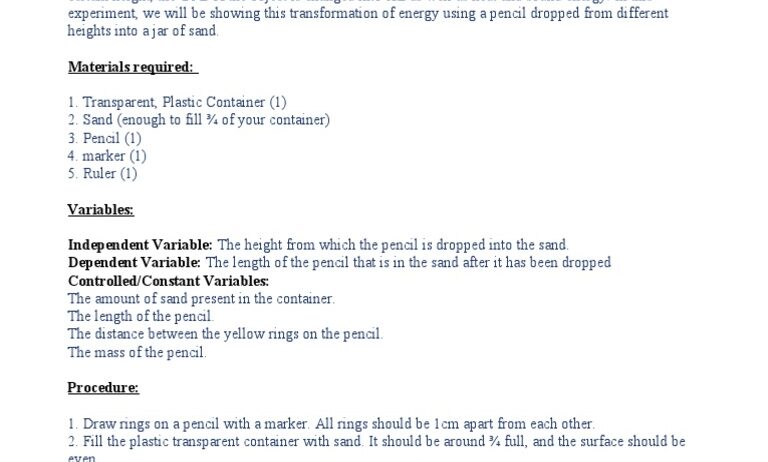
To elucidate the law’s validity, one can look at a quintessential example: a pendulum. When a pendulum swings, it exhibits the conversion of potential energy (at its zenith) into kinetic energy (at its nadir). As the pendulum ascends and descends repeatedly, it continues this energy exchange. Observers may notice a gradual decline in amplitude, eventually halting the swing. This deceleration can be attributed to external forces such as friction and air resistance, which transform the mechanical energy into thermal energy. Thus, while it may appear that energy is “lost,” it is instead transformed and dispersed in accordance with the conservation principle.
Another compelling illustration can be found in the realm of chemical reactions. Consider the process of combustion, such as when a log burns in a fireplace. In this scenario, the chemical potential energy stored in the wood is released as heat and light energy. This transformation underscores the law, as it confirms that while the original potential energy appears to vanquish, it transmutes into another form, reinforcing the idea that energy simply shifts rather than ceases to exist.
In the field of thermodynamics, the First Law explicitly encapsulates the Law of Conservation of Energy. Thermodynamics deals with heat and temperature’s relation to energy and work. This principle holds that the internal energy of an isolated system remains constant, as energy transfers within the system do occur. For example, in a closed container where gas is heated, the internal energy increases due to heat input, yet the total energy of the system remains unchanged. It transforms into forms recognizable through work done or heat produced. This law is not merely theoretical; it has been rigorously tested through myriad experiments, confirming that energy is conserved even under diverse conditions.
Moreover, the conservation of energy is not confined to physics alone; it has significant ecological ramifications. Ecosystems depend on energy transformations to maintain balance. For instance, during photosynthesis, plants convert solar energy into chemical energy stored within glucose molecules. Animals then consume plants, utilizing this stored energy for growth and activity. This cyclical exchange exemplifies energy flow and conservation in a biological context, showcasing the interconnectedness of life and the formulation of ecological networks.
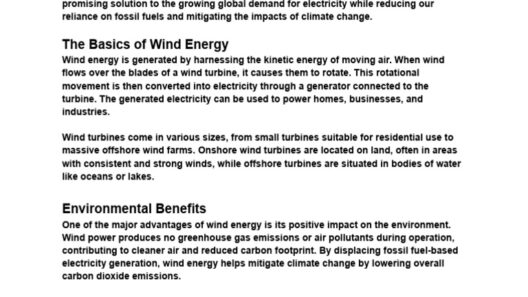
At a more advanced level, scientists have employed physics to commercialize energy efficiency and scrutinize renewable energy sources. Wind turbines harness kinetic energy from the wind, converting it into electrical energy. This process adheres to the Law of Conservation of Energy, as the energy extracted from wind is not lost; it simply transmutes. Similarly, solar panels convert sunlight into electrical energy. In both instances, not only is energy conserved, but its application advances toward mitigating the dire consequences of fossil fuel dependency.
In engineering, the principles of the conservation of energy guide innovations across various sectors. For instance, in designing vehicles, aerodynamics plays a crucial role in enhancing fuel efficiency. Engineers meticulously analyze energy transfers to minimize wasted energy, thereby optimizing performance and reducing emissions. This principle transcends mere conservation and blooms into a commitment towards sustainable development.
While the evidence supporting the Law of Conservation of Energy is robust, one might posit a challenge to its universality. Are there scenarios where energy appears to vanish? Consider black holes, those enigmatic celestial bodies that possess gravitational forces so strong that even light cannot escape them. In such cases, it seems as though energy becomes irretrievable. However, theoretical physics posits intriguing concepts such as Hawking radiation, suggesting that energy is not ultimately lost; rather, it is transformed or redistributed in undetermined ways. This dilemma stimulates debate and inquiry within the scientific community, challenging researchers to redefine parameters of energy conservation.
As we dissect the myriad applications of the Law of Conservation of Energy, it becomes evident that it remains a cornerstone of scientific understanding. From basic mechanics to advanced theoretical constructs, its pervasiveness underscores its importance in educational frameworks. Moreover, as society grapples with climate change and resource depletion, the imperative to embrace energy conservation and efficiency becomes ever more pressing. The continued exploration of energy forms not only enhances our understanding but also cultivates a sense of responsibility towards environmental stewardship.
In conclusion, the Law of Conservation of Energy is far more than a theoretical principle; it is an essential axiom that governs physical interactions, biological processes, and technological advancements. The evidence supporting this law is embedded in everyday experiences, scientific principles, and ecological systems. As we ponder the challenges it presents, our enduring quest for knowledge regarding energy’s role in the universe remains pivotal in driving forward sustainable practices and innovative solutions for a prosperous future.