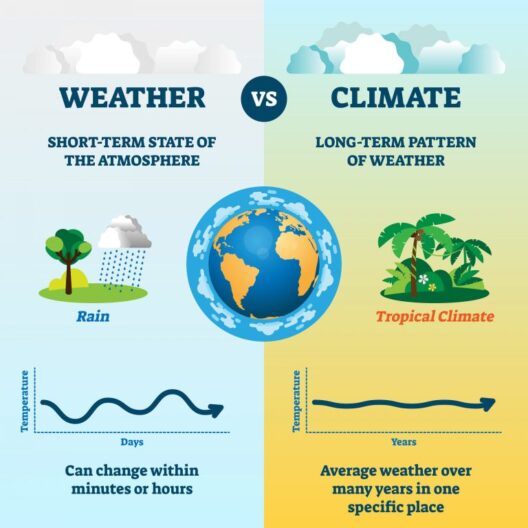

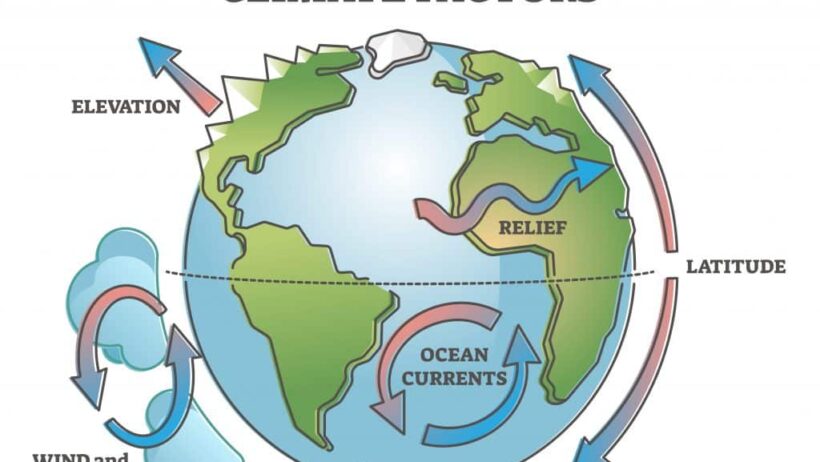

The climate of our Earth is a complex interplay of various elements, primarily influenced by the interactions of the sun, wind, and water. Understanding these factors is paramount in unraveling the intricacies of weather patterns and climate change. This article aims to expound upon the fundamental elements that modulate our climate while weaving through the evidence of scientific inquiry.
The Role of the Sun
At the forefront of climate influencers is the sun, the ultimate source of energy for the Earth’s systems. Solar radiation drives atmospheric processes and ocean currents. The sun emits varying wavelengths of radiation, which the Earth absorbs, transforming it into heat. This process occurs unevenly across the planet due to factors such as latitude, season, and time of day, creating temperature disparities that are pivotal in climate formation.
Solar Variability and Climate
Beyond the steady energy output, the sun experiences cycles of variability. Solar flares and sunspots have been known to cause fluctuations in the amount of solar energy that reaches Earth. Although these variations are minor when compared to anthropogenic impacts, they still contribute to long-term climate patterns. In periods of reduced solar activity, such as the Maunder Minimum, cooler climatic conditions have been documented in historical records.
Atmospheric Circulation
Once solar energy interacts with the Earth’s surface, the heat is redistributed by atmospheric circulation systems. Wind, a direct result of the uneven heating of the Earth, carries warm and cool air masses across the globe. This movement is critical in forming weather patterns. For instance, the Hadley cells, Ferrel cells, and Polar cells dictate climate zones, influencing precipitation and temperature distributions around the planet.
Ocean Currents and Climate
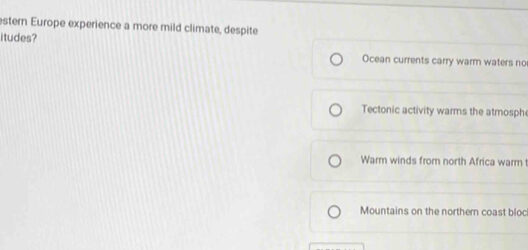
Water is another significant player in the climate narrative. The oceans store vast amounts of solar energy, releasing it slowly and moderating temperatures across coastal regions. Ocean currents, driven by wind patterns and the Earth’s rotation, facilitate heat exchange between the equator and poles. The Gulf Stream, for example, enhances warmth in Northern Europe, while the cold Humboldt current influences the west coast of South America.
Phenomena like El Niño and La Niña
Furthermore, climatic phenomena such as El Niño and La Niña have profound implications on global weather patterns. El Niño, characterized by the warming of oceanic waters in the central and eastern Pacific, disrupts normal weather systems, leading to unusual droughts and floods worldwide. Conversely, La Niña embodies cooler Pacific waters and has an opposite effect. These oscillations not only underscore the complexities of climate interactions but also highlight the need for robust climate models to predict impacts accurately.
Influence of Topography
Topography adds another layer to the climate equation. Mountains, valleys, and plains can influence local climatic conditions significantly. The orographic effect, where moist air ascends over mountain ranges, cools and precipitates as rain on the windward side while creating arid conditions on the leeward slope, vividly exemplifies this. This phenomenon is crucial in understanding regional climates, especially in areas with significant elevation changes.
Human Activity: A Perturbation Factor
Of particular urgency is the role of humans in climate modulation. From industrial emissions to land use changes, human activities have substantially altered the natural balance of climate influencers. The accumulation of greenhouse gases in the atmosphere traps heat, leading to global warming and triggering cascading effects on weather patterns. Deforestation, urbanization, and agricultural practices can exacerbate local climates, further complicating existing systems.
Feedback Mechanisms
The relationship between climate factors is often mediated by feedback mechanisms. For instance, as polar ice melts due to rising temperatures, less sunlight is reflected back into space, resulting in further warming—this is known as the albedo effect. Similarly, increased atmospheric moisture from warming oceans can lead to more intense storm systems, further altering precipitation patterns globally.
The Implications of Climate Change
The synthesis of these factors elucidates the profound implications of climate change. With the interaction of solar energy, atmospheric dynamics, oceanic currents, and human influences, our planet faces unprecedented challenges. Rising temperatures, shifting rainfall patterns, and extreme weather events are becoming more commonplace, threatening ecosystems and human livelihoods alike. Societies must now respond with comprehensive strategies to mitigate these effects and adapt to a changing climate.
Conclusion: Interconnectedness of Climate Factors
In conclusion, the intricate web of factors affecting climate—from the radiant heat of the sun to the movements of wind and water—shapes not only our immediate environment but also the global community. Recognizing the interconnectedness of these elements is essential for addressing and countering the implications of climate change. Only through an informed and holistic approach can we begin to navigate the complexities of our evolving climate.