



Neptune, the eighth planet from the Sun, is often shrouded in mystery due to its immense distance from Earth and its distinctive composition. Given its classification as an ice giant, one may be led to question what constitutes Neptune’s climate. Unraveling the intricate climate system of this distant world offers a unique opportunity to expand our understanding of planetary atmospheres and the broader implications of climate beyond Earth.
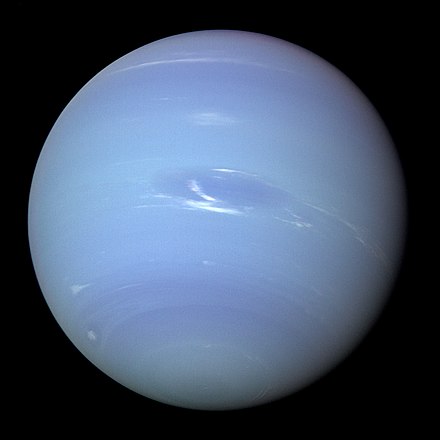
Neptune’s atmosphere is primarily composed of hydrogen, helium, and a significant quantity of methane. The presence of methane is particularly notable, as it absorbs red light and reflects blue light, giving Neptune its stunning azure hue. This striking coloration invites comparison to Earth’s vast oceans, yet the climate of Neptune is starkly different. The planet’s atmosphere features dynamic weather systems that are far more extreme than anything experienced on Earth.
As we delve deeper into Neptune’s meteorology, it becomes evident that the planet experiences some of the most extreme wind speeds in the solar system. Wind gusts can reach a staggering 1,500 miles per hour (2,400 kilometers per hour), far surpassing the strongest hurricanes terrestrial civilization has ever encountered. Such fierce winds are influenced by Neptune’s internal heat, which radiates from its core and contributes to the overall energy dynamics of the atmosphere.
Much like our own climate models, understanding Neptune’s winds is vital to comprehending its wider meteorological patterns. The planet’s rapid rotation—completing a full turn in just under 16 hours—further complicates these atmospheric phenomena. This swift rotation not only contributes to the formation of dynamic weather systems, but it also leads to the creation of immense storm systems that can persist for years. These cyclonic storms, often hundreds of times larger than Earth, showcase the dramatic interplay of temperature and wind, revealing just how vibrant and chaotic Neptune’s climate can be.
Temperature gradients play an essential role in shaping the atmospheric conditions on Neptune. Unlike terrestrial weather systems where solar energy drives climate, Neptune’s energy is predominantly derived from the residual heat emanating from its formation billions of years ago. The average temperature on Neptune hovers around -214 degrees Celsius (-353 degrees Fahrenheit), but temperatures can fluctuate significantly with altitude and atmospheric pressure, reaching warmer conditions deeper in the atmosphere.
Exploring Neptune’s atmospheric layers presents an opportunity to elucidate the complex interactions that govern planetary climates on a broader scale. The upper atmosphere is characterized by a distinct lack of clouds, a factor that might suggest more homogenous weather patterns. However, deeper layers reveal that thick clouds, composed primarily of ammonia ice crystals, dominate. This dichotomy provides insights into thermal stratification and the varying physical processes occurring at different altitudes.
However, Neptune’s climate is not solely defined by its tempestuous winds and frigid temperatures. The planet hosts fascinating seasonal changes. With its tilted axis, similar to Earth’s, Neptune undergoes seasonal variation that lasts nearly 40 Earth years. Observations have shown that these seasons influence atmospheric dynamics, leading to the formation of bright, storm-like features that appear and disappear in rhythm with the planet’s orbital period. This cyclical behavior surprises scientists, as it suggests more complex climate systems than previously considered.
On the topic of planetary climates, Neptune serves as a case study that inspires critical thought about climate change within our own atmosphere. The disparity between the highly dynamic atmospheric conditions on Neptune and the more stable systems on Earth underscores the importance of understanding climate change on a global scale. As climate scientists endeavor to unravel the intricacies of our own changing climate, they must also consider how other celestial bodies exemplify planetary evolution influenced by dynamic processes.
A particularly striking example of this is the ongoing study of Neptune’s Great Dark Spot, a massive storm akin to Jupiter’s Great Red Spot. First observed during the Voyager 2 flyby in 1989, this storm was notable for its size and intensity. However, like many climate patterns, it proved to be transient; subsequent observations showed that the Great Dark Spot had vanished by the late 1990s. This fluidity in planetary weather systems serves as a reminder that even the most extreme conditions are subject to change, which is relevant to understanding our own planet’s increasingly volatile climate.
The investigations into Neptune’s climate also draw attention to the role of telemetry and remote sensing technology in modern astrophysics. Through the use of powerful telescopes and instruments located both on Earth and in space, astronomers have begun to piece together clues regarding the atmospheric composition and dynamics of Neptune. These advances raise the prospect of enhanced future collaboration between planetary scientists and climate researchers, offering pathways to devise models that cater to better forecasting on a cosmic scale.
In summary, Neptune’s climate stands as a complex and ever-evolving tapestry of weather patterns, revealing rich insights into the workings of ice giants that can enrich our understanding of planetary science. By studying the intense winds, temperature differentials, and seasonal changes, scientists challenge existing paradigms while drawing parallels to Earth’s climate system. This exploration of Neptune’s tumultuous weather not only piques curiosity about the dynamics of our solar system but also encourages critical discourse about the atmospheric entanglements shared across planets. As we continue to explore this distant ice giant, we are reminded of the vastness of the cosmos and the myriad of phenomena waiting to be understood.