


Understanding semi-arid climates expands our comprehension of the planet’s diverse ecosystems and the challenges posed by climate change. Situated on the cusp of aridity and temperance, semi-arid regions offer a unique interplay between dryness and moderated environmental conditions. This intricate balance unveils an ecological landscape rich in biodiversity, while simultaneously posing significant challenges for human habitation and agriculture.
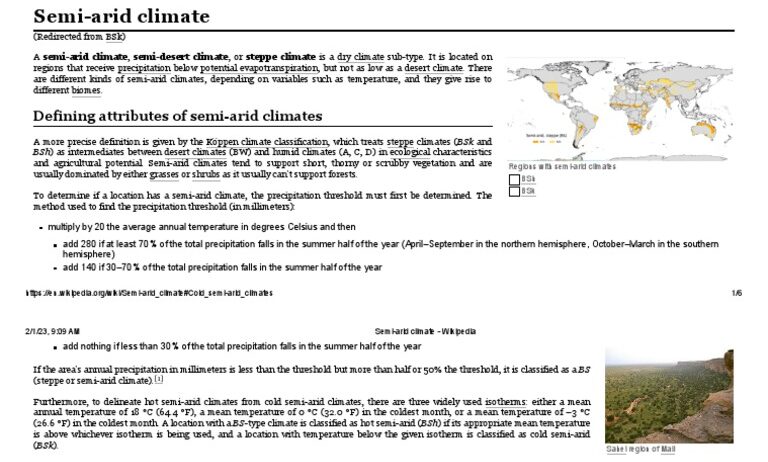
At its core, a semi-arid climate is characterized by a steppe-like environment, situated between arid deserts and more humid climates. The Köppen climate classification system designates semi-arid climates with the code “BSh” in tropical zones and “BSk” in temperate zones. These regions typically experience annual precipitation ranging from 10 to 20 inches (250 to 500 mm). Such meager rainfall sets the stage for a distinctive blend of flora and fauna, often adapted to endure prolonged dry spells.
One of the quintessential features of semi-arid regions is their seasonal variability. Unlike fully arid deserts, which maintain a consistently dry atmosphere, semi-arid climates often experience pronounced wet and dry seasons. These fluctuations can lead to a brief surge in vegetation and wildlife during the wet periods, manifesting in vibrant wildflowers and verdant grasses. However, the subsequent dry season may starkly contrast, transforming the landscape into a seemingly inhospitable expanse. This dichotomy fosters unique adaptations among species, leading to a dynamic ecological tapestry.
The geographical distribution of semi-arid climates spans continents and latitudes, encompassing diverse landscapes such as the grasslands of North America, the savannahs of Africa, and the steppes of Central Asia. Notable examples include the Great Plains in the United States, the Pampas in Argentina, and the Mongolian Grasslands. Each region showcases its own distinctive climate patterns, soil types, and biodiversity, creating localized ecosystems that are both resilient and fragile.
However, semi-arid climates are not without challenges. The limited rainfall can severely restrict agricultural practices, demanding innovative farming techniques to sustain crops and livestock. Farmers in these regions must often rely on drought-resistant crop varieties and implement sustainable water management strategies to mitigate the impacts of water scarcity. This necessity for ingenuity highlights the broader implications of climate resilience, urging communities to adapt and thrive amidst changing environmental conditions.
Climate change exacerbates many of the challenges facing semi-arid environments. Rising global temperatures can alter precipitation patterns, often leading to prolonged droughts. Such changes also risk enhancing desertification, where fertile land degrades into barren desert. As this transformation occurs, the possibility of food insecurity looms larger, challenging existing agricultural methods and compelling regions to grapple with new realities.
Despite these adversities, semi-arid regions are not devoid of hope. The adaptability of indigenous communities and the rich agricultural potential inherent in these landscapes underscore the resilience of both people and ecosystems. Through sustainable practices and innovative technologies, such as drought-resistant crop development and efficient irrigation systems, communities are finding pathways to secure their livelihoods while maintaining ecological integrity.
Additionally, ecological restoration projects offer a promising avenue to revive degraded landscapes within semi-arid regions. By reintroducing native species and employing regenerative agricultural practices, these initiatives can enhance biodiversity, stabilize soils, and restore water cycles. Such efforts underscore the need for a shift in perspective, recognizing that semi-arid regions can serve as critical players in the larger narrative of climate adaptation and mitigation.
The role of policy and governance cannot be underestimated in fostering sustainable development within semi-arid climates. Collaborative strategies involving local governments, environmental organizations, and community stakeholders can cultivate an environment conducive to sustainable practices. Building awareness around the environmental challenges faced by these regions elevates the importance of informed decision-making, promoting resilient strategies that benefit both the ecosystem and society at large.
Furthermore, the allure of semi-arid landscapes extends beyond their ecological roles. The stark beauty found in these regions captivates the imagination, revealing a world where resilience and fragility coalesce. The undulating terrain, dotted with resilient shrubs and grasses, paints a picture of survival against the odds. This aesthetic, when combined with an understanding of the intricate ecosystems, fuels curiosity and fosters a deeper appreciation for the delicate balance between human activity and environmental stewardship.
In conclusion, the examination of semi-arid climates presents an opportunity to reframe our perceptions of environmental resilience and sustainability. As the line between dry and mild continues to blur, it becomes imperative to recognize the potential of these landscapes in the broader context of climate change. The challenges posed by semi-arid climates compel us to innovate, adapt, and reimagine our relationships with these unique ecosystems. By cultivating curiosity and embracing collaborative efforts, we can navigate the complexities of semi-arid environments, fostering a future that honors both the earth and its inhabitants.