

Mexico City, the bustling capital of Mexico, nestles in a high-altitude valley surrounded by mountains. With an elevation of approximately 2,240 meters (7,350 feet) above sea level, this vibrant metropolis boasts a unique climate characterized by its altitude, urban sprawl, and geographical intricacies. Understanding the climate in Mexico City requires a multifaceted approach: one must consider factors such as temperature fluctuations, precipitation patterns, air quality, and the inevitable influence of urban development.
The climate in Mexico City is classified as a subtropical highland climate, also known as a temperate climate. This classification is largely attributable to its elevated position. The city experiences moderate temperatures year-round. However, due to its vast urbanization, there’s a distinct phenomenon known as the urban heat island effect, where cities can become significantly warmer than surrounding rural areas.
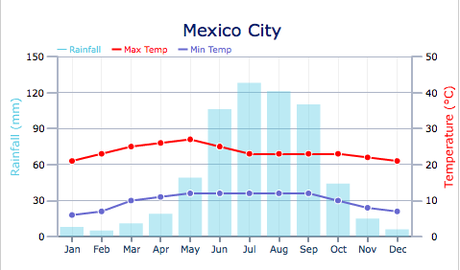
To dissect the subtropical highland climate of Mexico City, one must first examine its annual temperature variations. The average high in the summer months (June to August) can reach up to 26°C (79°F), while winter months (December to February) experience average temperatures around 19°C (66°F). It’s fascinating to note that the diurnal temperature variation can be quite pronounced—temperatures can swing noticeably between day and night, especially in winter when nights can be notably chilly.
Precipitation is another vital climate component. Mexico City has a distinct wet and dry season, with most of the rainfall occurring between June and September. During these months, thunderstorms are common, delivering a significant portion of the city’s annual precipitation. The rainy season facilitates lush vegetation on the outskirts of the city; however, it also contributes to flooding during intense downpours—a stark reminder of the challenges posed by climate change and urban planning.
Yet, climate change’s inexorable advance puts Mexico City’s unique climatic balance at risk. The frequency of extreme weather events is on the rise. As the highland climate becomes increasingly unpredictable, urban infrastructure faces mounting pressures. The interplay of higher temperatures, reduced rainfall, and intensified flooding events places enormous strains on the city’s water supply and drainage systems.
Additionally, the intricacies of urban air quality cannot be overlooked. Mexico City has struggled with air pollution for decades, primarily due to emissions from vehicles, industrial activities, and geographic limitations. Surrounded by mountains, the city’s bowl shape traps pollutants, leading to smog formation. On certain days, the air quality deteriorates, prompting health advisories that suggest limiting outdoor activities. The reduction of aerosol particles, however, has shown a correlation with improved air quality, signifying progress can be made with policy changes and public awareness.
Urban heat exacerbates these pollution problems. Structures, asphalt, and vehicles all absorb and radiate heat, creating a stark difference between urban and rural areas. The creation of green spaces and the promotion of urban reforestation can help combat these issues, providing much-needed respite from the sweltering heat and purifying the air.
Encouragingly, both the residents and the government are beginning to adopt practices focused on sustainability and climate resilience. Initiatives that promote electric public transportation, green architecture, and renewable energy are gradually reshaping the urban landscape. Within the greater context of climate adaptation, public awareness and community engagement are pivotal. The convergence of environmental consciousness with local customs creates a fertile ground for change.
If we pivot our gaze towards the future, Mexico City has incredible potential to serve as a model for other urban environments grappling with climate-related challenges. The commitment to large-scale infrastructural shifts, such as improvements in water management systems and diversification of energy sources, could transform the city. It would not just dilute the impacts of climate change, but also serve as a beacon for active climate governance globally.
To comprehend climate in Mexico City goes beyond mere temperature checks and precipitation data. It is an intersection of ecology, community, and technology that offers rich insights into the challenges of urban living. Observing and analyzing these dynamics can ignite curiosity about how cities adapt in the face of environmental strife. As the world keeps shifting towards greater urbanization, exploring the climatic nuances of Mexico City’s highland environment invites us to rethink our relationship with the planet.
In closing, let us contemplate the juxtaposition of environmental fragility and urban strength within Mexico City. As it grapples with ascendant temperatures, air quality issues, and water scarcity, there exists an underlying promise of transformation. Reflecting on this unique climate offers opportunities not just for adaptation but for understanding the interconnectedness of urban existence and natural ecosystems. The title ‘Urban Heat with Altitude Attitude’ encapsulates a narrative not merely of survival, but of becoming—a narrative worth engaging with as we navigate future climates together.