
Tropical savannas are unique biomes characterized by distinct climatic conditions that offer a feast for ecological and geographical inquiries. Nestled between tropical rainforests and arid deserts, these ecosystems embody an intriguing confluence of wet and dry seasons, resulting in expansive grassy plains punctuated by sporadic tree cover. This article embarks on an exploration of the climate prevalent in tropical savannas, encapsulating the nuances of their wet seasons and the ecological intricacies of their grassy expanses.
The climatic essence of tropical savannas is dictated by two primary seasons: the wet season and the dry season. Each of these periods significantly influences the flora and fauna, as well as the overall ecological dynamics. To comprehend the subtleties of these seasonal transitions, it is imperative to first understand the climatic parameters that define tropical savannas.
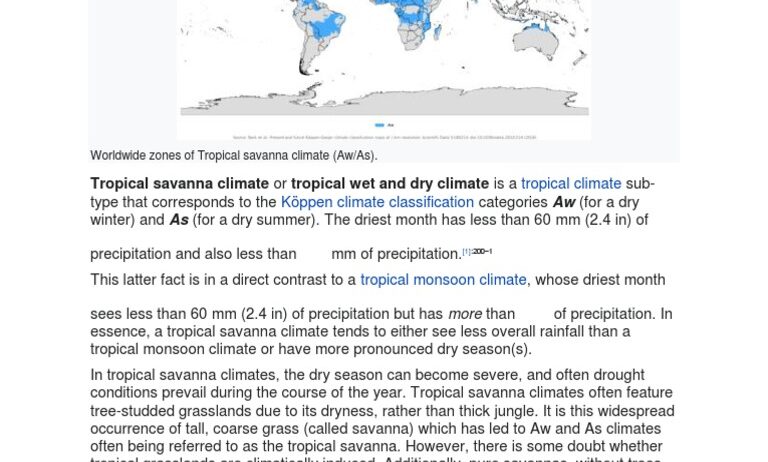
Generally, tropical savannas are located between 5° and 20° latitude, straddling the equatorial region. This geographical positioning results in a warm climate characterized by ample sunlight, with average temperatures ranging from 20°C to 30°C (68°F to 86°F) year-round. However, the defining factor of these regions lies in their precipitation patterns, which create a bi-modal rainfall system. This means that the savanna experiences two distinct periods of rainfall and drought within a single year.
The wet season, typically occurring during the summer months, is marked by substantial precipitation, often exceeding 1,000 millimeters (39 inches) annually. During this time, lush vegetation thrives, creating a striking contrast against the dry landscape that characterizes the intervening months. Rainfall during the wet season is often intense, coming in the form of monsoonal downpours that can transform the parched earth into verdant expanses almost overnight. This surge in moisture availability supports an enormous diversity of plant life, ranging from robust grasses to resilient acacia and baobab trees.
Grasses dominate the flora of tropical savannas, often growing to impressive heights. Their adaptability enables them to flourish amid fluctuating moisture levels, while their extensive root systems mitigate soil erosion and assist in nutrient retention. In tandem with the grasses, one can find scattered trees, which provide shade and a vital habitat for a myriad of animal species. The interplay between grass and trees fosters a unique habitat, conducive to both herbivorous grazers and their carnivorous predators, showcasing a balanced ecosystem.
As the wet season begins to wane, a gradual transition into the dry season ensues. The reduction in precipitation gives way to prolonged periods of drought, which can last several months. The landscape, once vibrant and alive, undergoes a poignant metamorphosis; the lush grasses retreat under the harsh glare of the sun, and the earth becomes cracked and dry. This seasonal shift is not merely a natural phenomenon; it is a critical period for the ecosystem, compelling both flora and fauna to adapt or perish.
During these dry months, many animal species exhibit remarkable resilience and ingenuity. Herbivores must travel greater distances in search of remaining grasslands and water sources. In contrast, predators, too, adjust their hunting strategies as the visibility of their prey changes in the desiccated environment. For many species, this struggle for survival illustrates the harsh realities of life in a tropical savanna, where the balance of nature is finely tuned, revealing the intricacies of evolutionary adaptation.
Fire, an often-overlooked element, plays a pivotal role in the ecology of tropical savannas. While it may seem counterintuitive, natural wildfires, which may arise from lightning strikes during the dry season, serve as a catalyst for renewal. These fires rejuvenate the grasses, allowing for regrowth and the cyclic resurgence of the ecosystem. Furthermore, certain plant species have evolved to thrive post-fire, demonstrating an impressive capacity for recovery.
Understanding the climate of tropical savannas invites a broader dialogue about their significance in the context of climate change. As global temperatures continue to rise, patterns of precipitation and temperature are projected to fluctuate, potentially affecting these fragile ecosystems. A warming climate could exacerbate dry conditions, leading to increased drought frequencies and intensifying the challenges faced by both the flora and fauna. Moreover, the shifting boundaries of savanna habitats could result in loss of biodiversity, compounding the ecological ramifications.
From a broader perspective, tropical savannas are not merely ecologically significant; they hold profound cultural importance as well. Many indigenous communities depend on the resources provided by these regions for sustenance and livelihood. The intricate relationship between humans and their environment has been forged over millennia, highlighting the importance of conserving these ecosystems not just for their biodiversity, but for the cultural heritage they sustain.
In conclusion, the climate of tropical savannas is emblematic of a complex interplay between wet and dry seasons, influencing the myriad life forms that inhabit these expansive grassy landscapes. The ecological phenomena that emerge during wet and dry seasons serve as a dynamic reminder of nature’s resilience and adaptability. This intricate system draws attention to the pressing need for conservation and stewardship in a rapidly changing world, urging us to consider our role in preserving the ecological integrity of these remarkable landscapes.