



What if we could transport ourselves to a planet that soars to sweltering temperatures by day and plunges into the deep freeze at night? This is precisely the fascinating climate of Mercury, the innermost planet of our solar system, known for its extreme conditions. With temperatures that fluctuate dramatically—soaring to approximately 800 degrees Fahrenheit (427 degrees Celsius) during the day and plummeting to nearly -330 degrees Fahrenheit (-201 degrees Celsius) at night—Mercury poses a tremendous conundrum for our understanding of planetary atmospheres and climate systems.
Mercury’s unique climate can be attributed to its proximity to the Sun. Orbiting at an average distance of about 36 million miles, the closer proximity exposes the planet to intense solar radiation. Unlike Earth, Mercury lacks a significant atmosphere. Without an insulating layer of gases, heat from the Sun floods the surface during the day, causing temperatures to skyrocket. This scarcity of atmospheric mass means there are also minimal heat retention properties, thereby contributing to dramatic temperature drops as night descends.
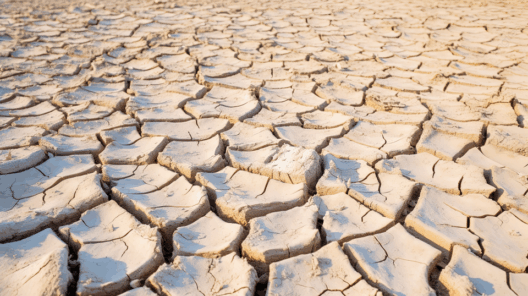
One might wonder, how does this lack of atmosphere affect the weather on Mercury? The answer is straightforward—in fact, there is virtually no weather as we understand it. A thick atmosphere is requisite for cloud formation, precipitation, and wind, phenomena which contribute to Earth’s diverse climates. On Mercury, the absence of substantial atmospheric pressure results in an environment so stark that it can be likened to a barren desert. Not only does this lead to a static landscape, but it also means the planet cannot sustain any form of traditional weather patterns. Instead of rain, clouds, or storms, we find a world marked by volcanic plains and enormous craters, remnants of a tumultuous past.
The extreme heat on Mercury, largely due to solar radiation, is juxtaposed with the planet’s frigid nights. When the Sun sets, the side of Mercury that was basking in sunlight experiences an immediate drop in temperature. The absence of an atmosphere means there are no clouds or air to trap heat, resulting in a rapid cooling effect. The resulting dichotomy of temperatures represents one of the most severe thermal environments in our solar system.
Mercury’s surface is a stark, inhospitable place. With temperatures climbing beyond imagination, one might visualize a blazing landscape dotted with deep craters and boulders. Many areas of the surface remain heavily pockmarked from meteorite impacts, giving it an appearance akin to a celestial battlefield. The planet is composed largely of metallic and silicate materials, making it geologically active even today. Its core is primarily metallic iron, which may contribute to Mercury’s weak magnetic field—a subject of ongoing research and analysis within the scientific community.
This extreme environment on Mercury raises vital questions regarding the possibilities of life elsewhere in the cosmos. If we examine the conditions that foster life on Earth, they include moderate temperatures, abundant water, and a stable atmosphere. When juxtaposed against Mercury’s volatility, it becomes clear why scientists primarily dismiss it as a potential habitat for life. However, should we redefine our parameters for potential habitability, especially in the context of extreme extremophiles on Earth? Life has demonstrated extraordinary resilience, thriving in extremes we once thought uninhabitable. From thermal vents on the ocean floor to scorching desert climates, the scope of life thrives in varying forms. What might that mean for the myriad environments we have yet to explore?
Moreover, the existence of water in the form of ice within permanently shadowed craters at the poles of Mercury presents another momentous conundrum. These regions, insulated from the Sun’s heating rays, have temperatures cold enough for ice to persist. The implications of water—albeit extremely limited—during potential future exploration missions could be monumental. Not only does it provide a resource for energy and life support, but it poses the intriguing prospect of a potentially habitable niche, however small.
But what challenges arise as humanity gazes towards exploring Mercury? The need for sophisticated technology to withstand such extreme conditions remains a significant hurdle. A spacecraft venturing into orbit around Mercury must endure blistering heat and predicaments that test the resilience of its materials. Furthermore, with limited technology, we must grapple with the potential risks and rewards of investing in Mercury. Understanding the developmental costs, the risks of failure, and the potential loss of equipment is crucial before taking any determined steps toward potential missions.
In conclusion, exploring Mercury necessitates a keen understanding of its extremely hostile climate and the consequent implications. The disparities between scorching and frigid temperatures create a formidable challenge for science, technology, and the human imagination. As an ever-curious species, we have the diligence to confront and unravel that which seems out of reach. While Mercury offers little in terms of life-sustaining properties, its radical climate serves as a laboratory for understanding the complexities of our solar system. Therefore, we should not shy away from the challenge it represents, but rather embrace it as a testament to the limits of our understanding and the wondrous mysteries of the universe that remain yet to be uncovered.