


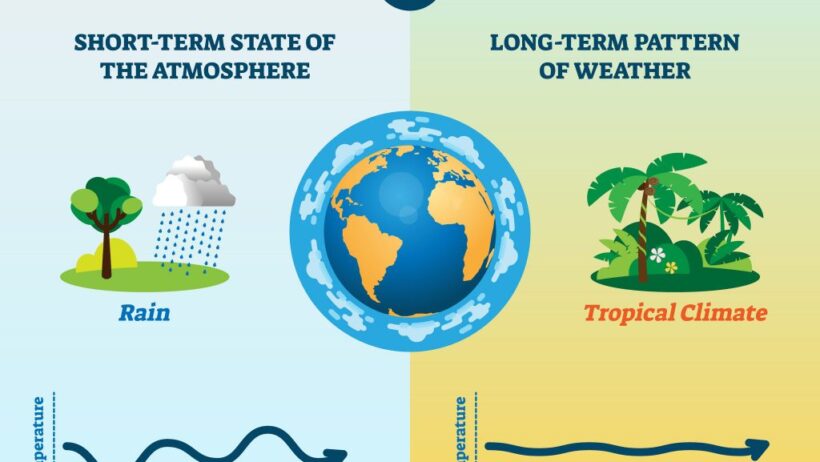

Understanding the distinction between weather and climate is vital for grasping the dynamics of our planet’s atmosphere and the implications of climate change. While both terms are frequently used interchangeably in everyday conversation, they represent fundamentally different concepts. This article aims to elucidate the differences seamlessly, providing clarity on this pertinent issue.
Defining Weather
Weather encapsulates the short-term atmospheric conditions in a specific region at a particular time. It includes a plethora of elements such as temperature, humidity, precipitation, visibility, and wind speed. Weather can change from moment to moment, hour to hour, and day to day, resulting in a mosaic of conditions that are often spontaneous or unpredictable. Common descriptors include sunny, rainy, chilly, warm, and stormy.
For instance, one might experience a sunny morning that rapidly transitions into an afternoon thunderstorm, illustrating the ephemeral nature of weather. Meteorologists typically report on weather conditions by examining satellite images, radar, and weather stations that provide real-time data.
Defining Climate
In contrast, climate refers to the long-term average of weather conditions over extended periods, typically 30 years or more, within a defined geographical area. It encompasses the statistical aggregate of weather elements, revealing patterns and trends that provide insights into regional and global atmospheric behaviors. Climate is characterized using terms like tropical, arid, continental, and polar.
For instance, one can assert that the Mediterranean climate experiences warm, dry summers and mild, rainy winters. Understanding climate is paramount for predicting long-term shifts and preparing for future environmental changes, making it an essential consideration in fields such as agriculture, urban planning, and environmental conservation.
The Interplay Between Weather and Climate
While fundamentally different, weather and climate are interconnected. Weather patterns can influence climatic conditions, particularly on a localized scale. For example, a series of unseasonably warm weather events could prompt a more extensive analysis of the climate, leading to discussions about global warming trends. Conversely, prolonged shifts in climate can alter regional weather patterns over time, resulting in more frequent extreme weather events like hurricanes or droughts.
The relationship between these two phenomena is dynamic and complex. Climate scientists often use historical weather data to discern patterns that inform forecasts about future climate conditions. This relationship underscores the importance of monitoring both weather and climate for understanding natural processes and preparing for potential disruptions caused by climate change.
Human Impact and Climate Change
The distinction between weather and climate takes on critical implications when considering the effects of human activities on the environment. Climate change has emerged as a significant concern, driven largely by anthropogenic activities such as deforestation, fossil fuel combustion, and industrial emissions. These actions have intensified the greenhouse effect, leading to observed shifts in climate patterns globally.
While weather events can appear erratic or isolated, their frequency and intensity may correlate with overarching climatic trends. Rising global temperatures can result in increased instances of extreme weather, including heatwaves, powerful storms, and flooding. Understanding these changes requires more than a cursory glance at daily weather reports; it necessitates a holistic understanding of long-term climate trajectories and the broader ramifications of climate dynamics.
Real-world Examples of Weather vs. Climate
To further illustrate the differences between weather and climate, consider the following examples:
- Weather Example: A city may experience an unseasonably high temperature of 85°F in February. This fluctuation forms part of a typical weather pattern and does not alter the overall climate classification of a cold region.
- Climate Example: Conversely, a region may exhibit a gradual increase in average temperature over several decades, indicating a change in climate that could signal the onset of warmer weather patterns to come.
The Importance of Distinguishing Between Weather and Climate
Recognizing the difference between weather and climate is essential for various domains, including education, science, policy-making, and environmental advocacy. Understanding these concepts enables individuals and organizations to formulate informed decisions regarding disaster preparedness, infrastructure development, and resource management. Moreover, it fosters awareness about the scope of climate change and its potentially profound consequences for both natural ecosystems and human societies.
Conclusion
In summary, while weather speaks to the immediate conditions of the atmosphere and is subject to rapid change, climate encapsulates the long-term averages and trends that define a region’s environmental character. Both elements are crucial for understanding the world we inhabit, particularly in the face of escalating climate challenges. As we delve deeper into the complexities of our planet’s systems, distinguishing between these two concepts becomes increasingly essential for fostering informed discourse and action regarding environmental stewardship.