

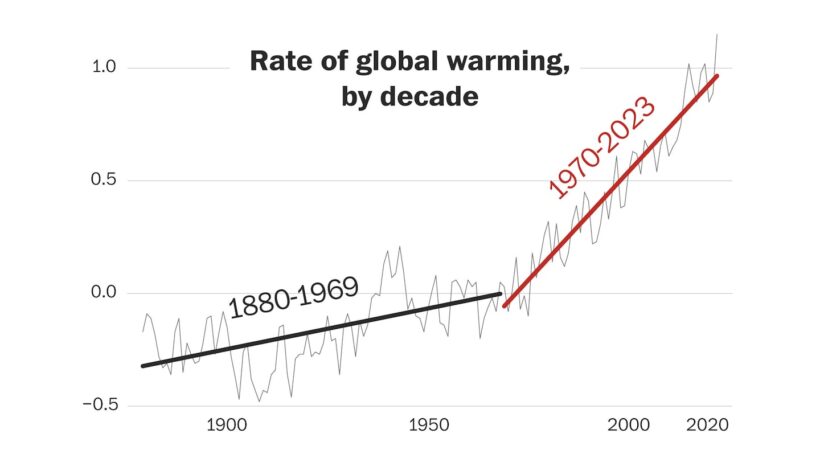

As the planet’s temperature steadily rises, a question looms: Can we combat the insidious threat of global warming effectively? This inquiry lays bare the urgency of the climate crisis, compelling scientists worldwide to devise innovative strategies to mitigate its disastrous effects. Through earnest research, technological advances, and collaborative initiatives, the scientific community endeavors to orchestrate a sustainable future.
To understand the multifaceted approach scientists are taking, one must first appreciate the underlying mechanics of global warming. The phenomenon primarily arises from the greenhouse gases (GHGs) emitted through human activity. Carbon dioxide (CO2), methane (CH4), and nitrous oxide (N2O) trap heat within the Earth’s atmosphere, generating a warming effect. Strikingly, the concentration of CO2 has surged by more than 40% since the Industrial Revolution. Consequently, efforts to decelerate this alarming trend hinge on both reducing emissions and enhancing carbon sequestration techniques.
In the realm of emission reductions, researchers are investigating the efficiency of renewable energy sources. Solar, wind, and hydropower stand at the forefront of the renewable energy revolution. Solar energy, in particular, has emerged as a viable contender. Advances in photovoltaic technology have resulted in more efficient solar panels, which now convert up to 22% of sunlight into usable energy—a remarkable feat. Furthermore, by harnessing wind energy through sophisticated turbine designs, scientists can capture kinetic energy from air currents more effectively. These developments make renewable energy resources increasingly accessible, enabling a transition away from fossil fuels.
A pivotal aspect of this transition involves the electrification of transportation. With vehicles contributing significantly to global CO2 emissions, there has been a substantial push towards electric vehicles (EVs) and alternative fuel technologies. Researchers are striving to improve battery efficiency and reduce costs, making EVs a practical choice for consumers. Furthermore, the development of charging infrastructure, alongside government incentives, is essential to encourage the mass adoption of these cleaner alternatives. What if one day, the roads were not populated by gas-guzzling vehicles, but rather by silent, efficient electric cars? The prospect of such a future is tantalizing, yet challenges remain in scaling up production and ensuring sustainable sourcing of battery materials.
Equally important is the role of carbon capture and storage (CCS) technologies, which aim to sequester carbon emissions before they can enter the atmosphere. This technique involves capturing CO2 directly from industrial processes and storing it underground in geological formations. Intriguingly, some scientists are exploring the potential of utilizing minerals to absorb atmospheric CO2, a process known as mineral carbonation. While this technology is still in nascent stages, it could prove invaluable in the quest for a carbon-neutral future. What if we could turn the very problem of excess CO2 into a solution, using Earth’s natural resources to our advantage?
Another promising avenue is the enhancement of natural carbon sinks, such as forests, wetlands, and oceans. Through reforestation and afforestation efforts, scientists aim to improve the planet’s capacity to absorb atmospheric CO2. Notably, initiatives focusing on protecting and restoring biodiversity are paramount. Healthy ecosystems not only capture carbon but also strengthen resilience against climate impacts. By safeguarding habitats and implementing sustainable land management practices, scientists can concurrently support biodiversity and climate stability. The delicate interplay of nature illustrates the profound interconnectedness of the biosphere.
Multi-disciplinary collaborations are also crucial in addressing the climate crisis comprehensively. Scientists are engaging across various domains, pairing climate science with economics, health, and social sciences. By integrating these fields, researchers can better understand the socio-economic implications of climate policies and devise equitable solutions. The challenge, however, lies in disseminating this knowledge widely and fostering community involvement in climate action. How can society as a whole invigorate its commitment to combating climate change beyond the confines of academia and governmental institutions?
Moreover, innovation in agriculture presents another avenue for curbing greenhouse gas emissions. Scientists are working on developing sustainable farming practices that maximize yields while minimizing environmental impacts. Techniques such as precision agriculture, which use technology to optimize field-level management, can lead to reduced chemical use and increased efficiency. Furthermore, research into plant-based diets and alternative protein sources could facilitate considerable reductions in methane emissions traditionally associated with livestock farming.
Lastly, education plays an instrumental role in the fight against global warming. By elevating public awareness about the science of climate change and fostering a culture of sustainability, individuals can adopt more environmentally conscious behaviors. Educational programs aimed at youths can ignite a passion for environmental stewardship, potentially cultivating a generation more attuned to climate issues. If students become custodians of the Earth, what transformative impacts could they initiate in their communities and beyond?
While the challenge posed by global warming appears daunting, the collective fervor of the scientific community offers a flicker of hope. Through innovative research, technological advancements, and inclusive collaborations, strides are being made toward a sustainable, resilient future. It is imperative that these efforts are bolstered by societal engagement, investment in green technologies, and a shared vision for a planet where nature and humanity coexist harmoniously. Can we rise to the occasion and embrace the changes necessary to safeguard our environment for generations to come? Every action counts; resilience will rely on collective commitment in the face of climate change.