

The earth’s climate has undergone a plethora of changes throughout its extensive geological history, punctuated by both gradual transformations and sudden perturbations. Understanding when climate change occurred provides critical insight into contemporary phenomena, making it imperative to examine the intricate relationship between natural processes and human activity in relation to the planet’s temperature fluctuations.
Climate change is not a novel occurrence; rather, it has been an intrinsic part of the Earth’s narrative. The planet has seen significant shifts in temperature, occasioned by various driving forces, including astronomical variations, volcanic activity, plate tectonics, and, more recently, anthropogenic influences. This complexity prompts reflections not just on the timeline of these changes, but also on the underlying mechanisms that have precipitated such shifts.
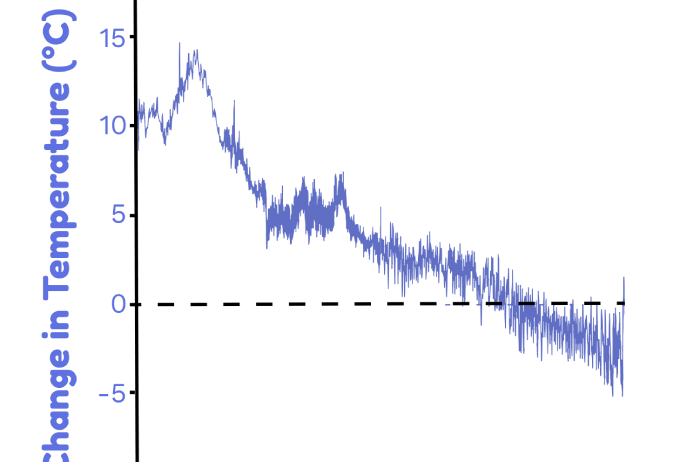
To elucidate, one must journey back to the most recent glacial-interglacial cycles that have significantly influenced global temperatures. The Quaternary period, spanning the last 2.6 million years, is particularly relevant. During this epoch, the Earth experienced alternating glacial and interglacial periods, with substantial temperature variances. For instance, the Last Glacial Maximum, occurring around 20,000 years ago, witnessed ice sheets stretching across continents, encapsulating vast areas in frigid temperatures. In contrast, the Holocene epoch, which commenced approximately 11,700 years ago, marked an interglacial period characterized by a gradual increase in temperatures leading to a stable climate during which human civilization began to flourish.
This transition from ice-locked landscapes to warmer climates enabled humans to exploit agrarian practices, significantly affecting both local ecosystems and social structures. Yet, it is critical to recognize that the climatic variations experienced throughout this period were primarily dictated by natural phenomena, such as the Milankovitch cycles—changes in Earth’s orbit and axial tilt—which modulated seasonal insolation patterns. Such cyclical transformations have compelled ecosystems to adapt, flourish, or decline, demonstrating the symbiotic relationship between climate and life.
Fast forwarding to the recent geological past, one encounters the Little Ice Age, a period from approximately the 14th to the mid-19th century when Europe and North America experienced notably cooler temperatures. This phase showcases how climatic episodes can significantly shape agricultural practices, societal structures, and even geopolitical dynamics. The cooling trend resulted in crop failures, famines, and significant socio-economic ramifications, underscoring the profound interdependencies between climate and humankind.
However, while natural fluctuations have occurred autonomously over millennia, the current phase of climate change, attributed predominantly to human actions, is unprecedented. The advent of the Industrial Revolution in the 18th century marked a pivotal juncture, initiating an era characterized by a pronounced increase in greenhouse gas emissions. The combustion of fossil fuels, deforestation, and industrial activities catalyzed a discernible rise in atmospheric concentrations of carbon dioxide and methane, leading to erratic climate patterns.
To grasp the gravity of contemporary climate change, one must consider the alarming rate of temperature increase observed since the late 19th century. The planet’s average surface temperature has surged by approximately 1.1 degrees Celsius since the pre-industrial era. This seemingly modest figure belies catastrophic consequences, from enhanced extreme weather events to accelerated sea-level rise. Such manifestations of climate change have profound implications for biodiversity, resource availability, and human health.
One cannot ignore the implications of climate change on the global landscape. Ecosystems that have thrived for centuries face unprecedented stresses. Coral reefs, often dubbed the “rainforests of the sea,” are particularly vulnerable, with ocean acidification and rising sea temperatures leading to widespread bleaching events and biodiversity loss. This deterioration not only threatens marine life but also the livelihoods of millions dependent on these ecosystems for sustenance and economic stability.
Moreover, climate change has led to a cascade of social justice issues, as marginalized communities bear the brunt of environmental degradation despite contributing the least to the problem. Vulnerable populations, often located in low-lying coastal areas or arid regions, face displacement, food insecurity, and health risks. Thus, climate change is not merely a scientific issue; it is a profound moral and ethical challenge.
As the world grapples with these profound shifts, a clarion call for resilience and adaptability becomes essential. The historical context of climate fluctuations underscores the necessity for melding traditional ecological knowledge with contemporary scientific understanding. Mitigating the impacts of climate change necessitates concerted efforts—global cooperation, innovative technology, and community engagement are paramount in crafting sustainable solutions.
Engagement in climate action is not merely an environmental prerogative; it is a multifaceted opportunity encompassing economic advancement, social equity, and global stewardship. To catalyze change, societies must not only mitigate emissions but also cultivate adaptive strategies that enhance community resilience. This includes investing in renewable energy, promoting sustainable agricultural practices, and enforcing policy changes that hold corporations accountable for their environmental footprint.
In conclusion, the phenomenon of climate change spans a broad temporal spectrum, reflecting both natural and anthropogenic influences. Understanding its historical context provides invaluable lessons for addressing contemporary challenges. The urgency with which climate change manifests cannot be overstated; it demands an unwavering collective response rooted in informed action and ethical responsibility. To preserve the integrity of the planet for future generations, there is an urgent need for a paradigm shift—one that respects the delicate balance of our ecosystems while nurturing human innovation and cooperation in the face of adversity.