

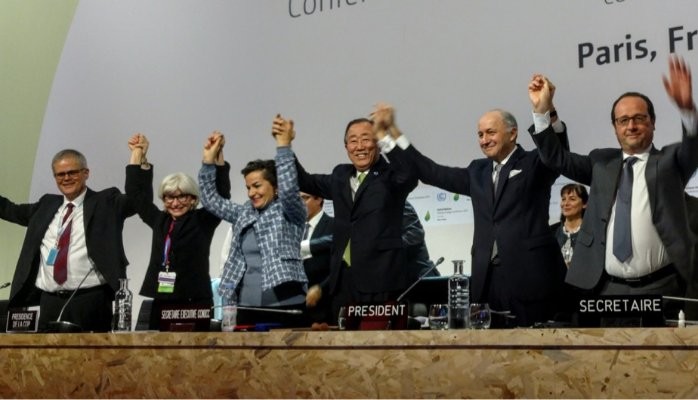

The Paris Climate Agreement, adopted in 2015, represents a monumental commitment by countries to collectively address the pressing issue of climate change. However, despite its widespread endorsement, a few nations remain conspicuously absent from this global accord. Understanding which countries did not sign the Paris Agreement and the underlying reasons for their abstention is crucial for comprehending the geopolitical landscape of environmental politics.
Signatories and Non-Signatories: An Overview
As of the latest reports, there are fewer than 200 nations that have signed the Paris Agreement, indicating a robust global consensus towards combating climate change. However, notable exceptions exist, including countries such as the United States, Iran, and Turkey, each with unique motivations for not joining. The ramifications of their absence are profound, not only for their own environmental policies but also for global climate initiatives.
United States: A Case of Withdrawal
The United States initially played a pivotal role in the formation of the Paris Agreement; however, it announced its withdrawal in 2017 under the Trump administration. This decision stemmed from a confluence of factors, chiefly a perceived economic disadvantage. The administration argued that the accord imposed undue financial burdens on the American economy, particularly in relation to industrial output and energy production. The focus on fossil fuel independence and job creation in traditional energy sectors became central to its policy. Additionally, divergent views on scientific consensus regarding climate change and skepticism about the efficacy of international agreements further complicated the U.S. position. This withdrawal had a ripple effect, weakening the collective commitment of other nations.
Iran: Political and Economic Concerns
Iran’s non-participation in the Paris Agreement is intertwined with intricate political and economic circumstances. The nation has been subject to international sanctions, which have exacerbated its energy sector’s vulnerabilities. Iran argues that such sanctions hinder its ability to invest in cleaner technologies and renewables. Moreover, the government props up a narrative of self-reliance and national sovereignty that prioritizes domestic oil production over international obligations. This posture reflects a broader reluctance to engage with global initiatives that may be perceived as infringing on its national interests, indicative of its geopolitical stance.
Turkey: Balancing Act Between Development and Responsibility
Turkey’s hesitation to fully commit to the Paris Agreement stems from its concerns regarding economic development and the responsibilities assigned by the accord. As a rapidly developing nation, Turkey is caught between the necessity for economic growth and the imperative to reduce carbon emissions. It has sought to negotiate more favorable terms within the framework of the Agreement, arguing for recognition of its unique developmental context. Turkey’s position highlights a recurring theme in discussions on climate justice, where developing nations often seek equity in climate responsibilities that do not inhibit their growth potential. This tension remains an obstacle in achieving universal compliance.
Impact of Non-Signatories on Global Climate Goals
The absence of these nations from the Paris Agreement poses significant challenges to the global climate goals established in the accord. The commitments outlined in the agreement are fundamentally reliant on the participation of the largest greenhouse gas emitters. Without the involvement of the U.S., Iran, and Turkey, the global emissions reduction targets become increasingly elusive. Their continued reliance on fossil fuels not only undermines regional efforts to transition to sustainability but also sets a precedent for other nations to hesitate in their commitment. If influential countries resist signing or fulfilling their pledges, it can engender a lack of accountability, leading to a domino effect of defection.
Future Prospects: Potential for Engagement
While the current landscape may appear daunting, there are avenues for reinvigorating international collaboration. Diplomatic efforts can play a pivotal role in re-engaging non-signatories. For instance, leveraging incentives such as financial aid or technology transfer could encourage nations like Iran and Turkey to align their policies with the goals of the Paris Agreement. Moreover, the rise of grassroots movements and public advocacy for climate action can exert pressure on governments to reconsider their positions. As environmental awareness grows globally, even the most reluctant nations may find themselves compelled to participate in international frameworks that aim to mitigate climate risks.
Conclusion: The Ongoing Challenge
The journey towards climate mitigation is fraught with complexities, particularly when navigating the diverse motivations of countries regarding their participation in global agreements like the Paris Accord. Understanding the specific reasons behind the abstention of countries such as the United States, Iran, and Turkey offers valuable insights into the broader dynamics of international climate politics. As the world grapples with the escalating impacts of climate change, fostering dialogue, building trust, and ensuring that the voices of all nations are heard will be paramount in enhancing global collaboration. The future of the planet depends heavily upon uniting efforts across borders, forging paths towards a sustainable coexistence for generations to come.