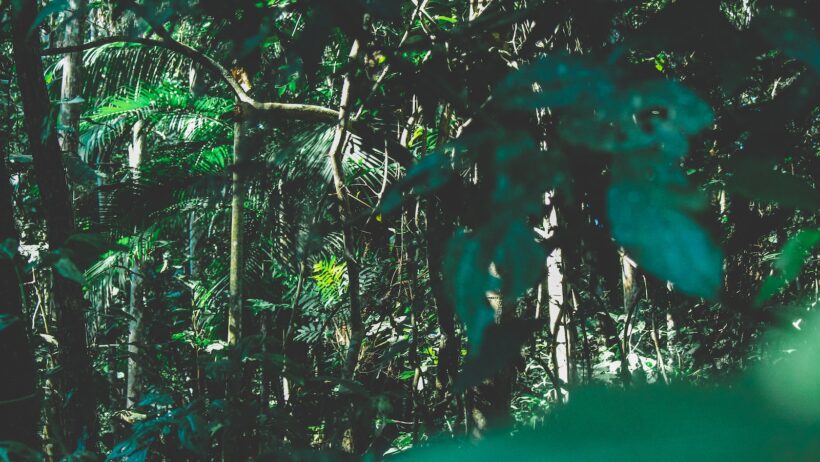

When one envisions a verdant expanse teeming with life, a vivid tapestry of green unfurls in the mind’s eye. Yet, two terms often arise in this captivating imagery—rainforests and jungles. Are these ecosystems merely synonyms, or do they boast substantive distinctions? In this exploration, we shall unravel the intricate thread that separates these two vibrant realms, much like delineating the nuanced strands of a complex, yet beautiful, tapestry.
Defining the Terms
To embark on our journey, it is imperative to grasp what constitutes a rainforest and a jungle. Rainforests are lush ecosystems, often categorized into tropical and temperate variants, where rainfall is abundant—typically exceeding 1750 millimeters annually. These ecosystems proliferate around the equator, yielding a warm and humid environment conducive to an incredible variety of flora and fauna.
Conversely, jungles are a particular type of dense, tangled vegetation found typically at the edge of rainforests. While the terminology can be nebulous, jungles tend to emerge in areas where sunlight reaches the ground, resulting in a thicket of underbrush. Thus, jungles can be described as a component of the broader rainforest framework, yet they possess distinct characteristics that demand our attention.
Climate: The Breath of Life
The climatic conditions serve as a vital primer to understanding the dichotomy of these ecosystems. Rainforests thrive in a climate that manifests consistent humidity and temperature, often oscillating between 20°C to 25°C. This equable climate is punctuated by torrential rainfalls that nourish the diverse biological family that has evolved over millennia.
Jungles, alternatively, find themselves in a more dynamic climate, varying significantly based on their geographic context. While they require warmth and substantial rainfall, they often experience seasonal variations where dry spells can punctuate the lush greenery. This fluctuation fosters a drastically different ecosystem, promoting a more robust undergrowth, where plants vie for sunlight with fervent ambition.
Biodiversity: The Symphony of Life
When it comes to biodiversity, rainforests reign supreme. They are considered the world’s biodiversity hotspots, hosting approximately 50% of the planet’s species, despite occupying a mere 6% of its land surface. Here, towering trees, creeping vines, and an array of fungi create a layered environment, from the towering canopy to the forest floor, each harboring myriad species that have formed intricate interdependencies.
In stark contrast, jungles cannot boast the same degree of diversity, though they are not to be underestimated. The flora is more concentrated and often includes various shrubs and young trees that have adapted to flourish in the filtered light that penetrates the canopy. Wildlife in jungles, while still prolific, tends to be more elusive and specialized due to the dense underbrush, creating an environment where survival is a daily dance, steeped in both challenge and beauty.
Structure: The Architectural Marvels
The structural differences between these two ecosystems paint a picture of architectural grandeur. Rainforests are often characterized by their stratified layers, each functioning like an intricate story in a grand edifice, from the emergent layer that breaks through the clouds to the scrubby forest floor brimming with life. This multilayered design facilitates various ecological niches, leading to a stunning array of adaptations.
Jungles, however, can be likened to chaotic labyrinths. The prevalence of dense undergrowth creates interference in movement, challenging both flora and fauna to adapt uniquely. The tangled plants and sprawling vines often intertwine, generating an almost impenetrable expanse wherein only the most tenacious species thrive. This structural distinction not only shapes survival strategies but also influences the experiences of those who traverse these wild realms.
Human Impact: The Fragile Balance
Human encroachment presents a compelling narrative for both rainforests and jungles. Rainforests have garnered significant attention in conservation dialogues due to deforestation, logging, and agriculture, threatening their delicate equilibrium. The loss of such environments compels us to confront the reality of our impact on biodiversity and climate change, as these forested giants play a crucial role in carbon sequestration.
Jungles, while perhaps less recognized, are equally susceptible to human influence. Expansion into jungle territories for agricultural purposes often leads to habitat fragmentation and biodiversity loss. The tangled understory, once a sanctuary for myriad species, risks becoming a mere echo of its former vibrancy as development creeps relentlessly onward.
Conclusion: Bridging the Gap
As we draw the curtain on this exploration, it becomes abundantly clear that rainforests and jungles, while intertwined in their ecological narratives, are distinctly different entities. The lushness of a rainforest invites reverence, while the chaotic beauty of a jungle demands respect. Understanding these differences deepens our appreciation for these ecosystems, their interdependent relationships, and the vital roles they play on our planet. In our pursuit of preservation, let us honor the unique appeals of both rainforests and jungles, ensuring their stories echo through the ages, guardians of Earth’s rich tapestry of life.