


In the grand tapestry of nature, forests are the verdant threads that weave life, balance, and beauty into our world. Yet, these lush canopies are not impervious to destruction. When wildfires rage uncontrollably, they transform thriving ecosystems into charred remnants, sparking a complex narrative about loss and renewal. The journey from vibrant flora to ashen desolation and, subsequently, toward potential rebirth unveils the intricate and multifaceted environmental impacts of forest fires.
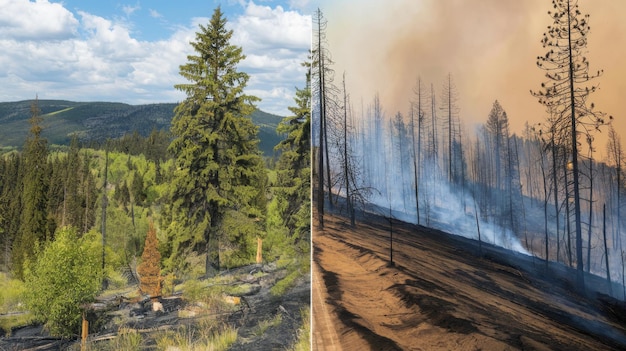
To comprehend the implications of a forest fire, it is vital to first examine its immediate aftermath. The initial toll is stark: the towering trees, which once served as steadfast sentinels of biodiversity, often stand reduced to blackened skeletons. In this altered landscape, the air is thick with the acrid scent of smoke, a tangible reminder of life extinguished and habitats demolished. Fauna, both large and small, flee the encroaching inferno, leaving their homes and, in many cases, their lives behind. Birds that once sung sweetly from branch to branch are now silenced, while ground-dwelling creatures scurry in terror, seeking refuge from the conflagration engulfing their world.
The transformation of a forest into a charred expanse serves as an emblematic representation of the broader ecological crisis. Soil, rendered sterile due to the intense heat, becomes unproductive and prone to erosion. The once-rich humus layer that supports a diverse web of roots and organisms is often charred away, leaving behind a nutrient-deficient landscape that struggles to sustain life. Streams that once flowed with clarity may now bear the brunt of increased runoff, carrying sediment and pollutants into waterways as the land is stripped bare. Such changes illustrate the domino effect of forest fires, where the devastation extends beyond the immediate vicinity to impact entire watersheds and regional ecosystems.
However, the narrative of destruction is not the final chapter in this saga. Nature possesses a remarkable capacity for regeneration, and in many instances, the rebirth of a forest is as awe-inspiring as its initial flourishing. The cycle of life, however cruelly interrupted, paves the way for a new beginning. Within months of a fire, resilient species such as fireweed often emerge, defiantly coloring the blackened landscape with patches of vibrant green. These pioneer plants not only stabilize the soil but also prepare the ground for more diverse ecosystems to take root once again.
Time plays an essential role in this regenerative process. As the seasons shift, some trees possess the uncanny ability to sprout anew from their charred remains. The stoic lodgepole pine, for instance, has adapted to rely on fire for propagation, with its serotinous cones releasing seeds only in response to the heat of flames. This natural choreography of destruction and renewal epitomizes an exquisite resilience embedded in the fabric of forest ecology.
The transition from devastation to regeneration also invites an exploration of the broader environmental implications of forest fires. Most acutely, they play a role in the carbon cycle. While fire releases stored carbon dioxide into the atmosphere, contributing to greenhouse gas emissions, this release is often counteracted by the regrowth of forests which sequester carbon as they develop. Thus, there exists a duality in this phenomenon; fire can act as both a catalyst for release and a facilitator of healing, underscoring the intricate relationships within ecosystems.
Moreover, forest fires often serve as a crucible for change, highlighting the necessity for adaptive management and informed ecological practices. Understanding fire dynamics can lead to improved land stewardship. Prescribed burns, for example, are increasingly recognized for their role in preventing uncontrollable wildfires and maintaining healthy ecosystems. These intentional fires can mimic natural fire cycles, reducing excess underbrush and promoting biodiversity.
It is critical to recognize that forest fires are not merely destructive forces; they are elements of a larger ecological narrative. They signify instances where nature reasserts its control, pushing us to reconsider our relationship with the land. This perspective challenges us to confront the origins of environmental strife, which are often rooted in human practices, such as climate change exacerbated by fossil fuel consumption and deforestation. Consequently, acknowledging our role in this cycle is imperative in fostering a sustainable future.
The comparison of environments before and after a forest fire is not merely a depiction of loss, but rather a testament to resilience—a poignant reminder that even in our darkest hours, life has an astonishing ability to regroup and flourish. Ecosystems, like the phoenix rising from the ashes, can transform devastation into renewal, echoing an age-old truth: from destruction, new life can emerge, embodying the cyclical nature of existence.
In conclusion, the journey from before and after a forest fire intricately unfolds the multifaceted environmental impact, revealing a continuous interplay between destruction and rebirth. As stewards of the earth, we hold the responsibility to respect these ecosystems, advocate for sustainable practices, and promote awareness of the dual nature of fire, recognizing that in its wake lies both loss and an indomitable potential for regeneration. Embracing this duality enables a deeper appreciation of the profound resilience found within nature’s tapestry, encouraging us to foster a future where forests thrive once more.