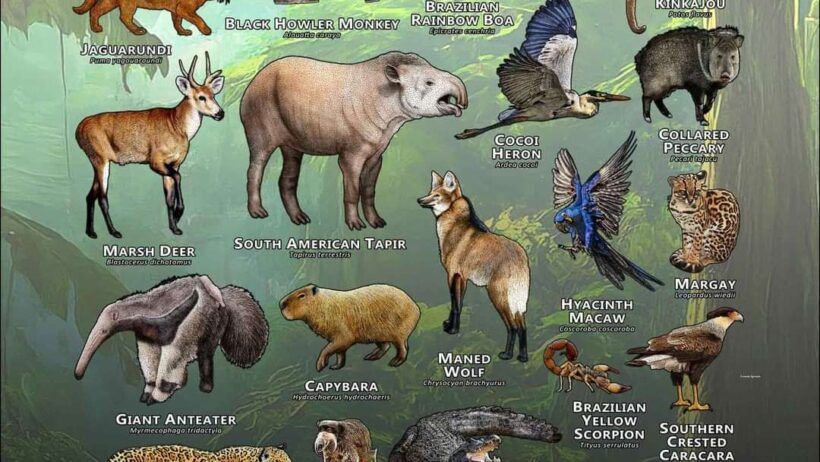

Brazil is synonymous with biodiversity, particularly when it comes to its rainforests. The lush canopies teem with extraordinary wildlife, from vibrant birds that flit among the leaves to elusive mammals that roam the forest floors. Have you ever pondered the sheer variety of animal species that call this verdant jewel home? This exploration will not only illuminate the incredible wildlife present in Brazil’s rainforests but also challenge us to consider the fragility of these ecosystems and the responsibilities we share in their preservation.
Among the iconic denizens of the Brazilian rainforest is the jaguar, an apex predator that embodies strength and grace. With its distinctive coat of rosettes, the jaguar stands out in the underbrush, where it prowls silently in pursuit of prey. What is fascinating about these magnificent beasts is their adaptability; they are equally comfortable in water as on land. They are vital to their ecosystem, keeping populations of herbivores in check and thus maintaining the balance of their habitat. However, the challenge lies in their dwindling numbers due to habitat destruction and poaching. How do we reconcile our development needs with the survival of such a crucial species?
Not far behind the jaguar in the hierarchy of the rainforest is the capybara, the world’s largest rodent. Characterized by its semi-aquatic lifestyle, the capybara is often found lounging near waterways, basking in the sun with its distinctively social demeanor. These creatures exhibit remarkable sociability, living in groups that can range from a few to dozens. Their herbivorous diet contributes significantly to the plant life within their ecosystem, as they help maintain the healthy regrowth of aquatic vegetation. Yet, their idyllic existence is increasingly threatened by urban expansion and hunting. How can we ensure that these gentle giants continue to thrive amid encroaching civilization?
The magnificent scarlet macaw is another jewel of the Brazilian rainforest. This bird is not only visually captivating, with its brilliant red, yellow, and blue plumage, but also plays a crucial role in seed dispersal, thereby contributing to the health of the forest. These intelligent and social birds often form lifelong pairs, showcasing complex social structures and communication skills. However, their populations face peril from illegal trafficking and habitat destruction. As we marvel at their beauty, are we also contributing to their decline through our actions?
No discussion of Brazilian wildlife would be complete without mentioning the playful and mischievous howler monkey, one of the loudest creatures in the jungle, known for its distinctive vocalizations that resonate through the treetops. Howler monkeys live in troops and are primarily arboreal, showcasing remarkable agility as they swing from branch to branch. Their diet consists primarily of leaves, which are abundant in their habitat, allowing them to thrive in the diverse foliage. However, habitat fragmentation poses a significant threat to their populations, forcing them into smaller territories. Can we innovate to create wildlife corridors that allow these creatures to coexist with human development?
In the undergrowth, the enigmatic Amazonian poison frog reveals a world of vibrant colors and toxic defenses. These diminutive amphibians sport an array of hues, from bright yellow to striking blue, warning potential predators of their toxicity. Their vibrant coloration serves as a remarkable evolutionary adaptation, ensuring survival in the rich yet perilous tapestry of the rainforest. This frog’s presence is intricately tied to the health of its environment, often indicating the quality of its habitat. As we witness environmental changes, can we recognize these shifts through the changes in their populations?
The river dolphin, or boto, presents a fascinating case of adaptation within Brazil’s vast waterways. This freshwater cetacean is known for its playful behavior and remarkable intelligence. With their characteristic pink hue, these dolphins are not only a symbol of the Amazon but also serve as indicators of the ecological health of the river systems. However, like many species, their fate hangs precariously, caught in the crosshairs of pollution and habitat disruption. How do we balance our need for progress with the preservation of these intelligent creatures?
Looking upward to the towering trees, one might catch a glimpse of the elusive sloth, an emblem of lethargy yet a crucial participant in the rainforest’s ecological dynamics. Sloths spend most of their lives hanging upside down in the canopy, and their slow movements are an adaptation to avoid detection by predators. They have a symbiotic relationship with the algae that grow on their fur, contributing to their camouflage as well. However, like many other species, sloths are vulnerable to habitat loss and climate change. As we witness their sluggish plight, are we ready to take an active role in safeguarding their world?
In summary, the Brazilian rainforest hosts an astonishing variety of wildlife, each species performing unique roles within its ecosystem. From the majestic jaguar to the playful boto, every animal weaves a crucial thread in the fabric of this biodiverse paradise. The poignant challenge we face is multi-faceted: it encompasses recognizing the intrinsic value of these species, confronting the environmental predicaments wrought by human actions, and taking meaningful steps toward conservation. It is imperative that we now pause to consider how our choices affect the astonishing wildlife of Brazil’s rainforests. Are we prepared to champion their cause?