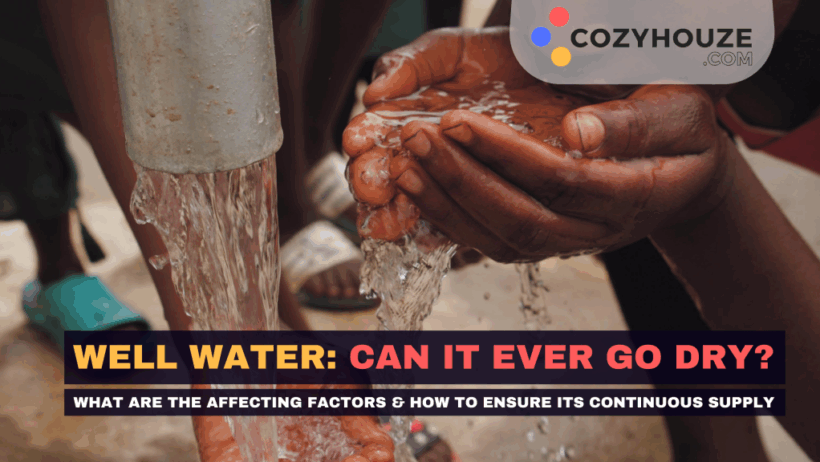

Well water is often perceived as a reliable source of freshwater, particularly in rural areas where municipal water systems are nonexistent. However, a troubling question emerges: can well water run dry? Understanding the nuances surrounding this inquiry unveils not only the mechanics of groundwater but also the proactive measures that can be taken to avert such a crisis.
To comprehend whether well water can truly run dry, it is essential to understand the dynamics of aquifers. Aquifers are underground layers of permeable rock or sediment that hold water. They act as natural reservoirs, feeding wells and springs. The sustainability of these systems hinges on a delicate balance between recharge—the process by which water returns to the aquifer—and discharge, which represents the water being extracted from it.
At the heart of this discussion lies abstraction. Abstraction is the removal of water from groundwater sources. It is a necessary action for agricultural irrigation, domestic use, and industrial purposes. However, when abstraction consistently surpasses the natural recharge rate, the aquifers begin to deplete. This phenomenon is not merely theoretical; it is happening worldwide. Various regions have reported alarming drops in water levels due to over-extraction. The question then surfaces: how do we reach such a precarious state?
Several factors contribute to the depletion of well water. One primary cause is climatic variability. Extended periods of drought can severely impact aquifer recharge, diminishing groundwater levels. In these arid spells, the rain that would typically replenish the aquifers is absent, leaving a vacuum that can lead to dwindling water reserves. Climate change exacerbates this issue, altering precipitation patterns and increasing the frequency of extreme weather events.
Another essential consideration is land use practices. Urbanization, for instance, tends to alter the landscape in ways that inhibit water from soaking back into the ground. When permeable surfaces are replaced with asphalt and concrete, the natural infiltration of water is obstructed, further reducing aquifer recharge potential. Agricultural practices, particularly those relying on excessive irrigation, also contribute to the problem. In an effort to optimize crop yields, farmers may extract more water than is sustainable, drawing down the aquifer to perilous levels.
Pumping technology has also influenced well water availability. Improvements in drilling techniques have made it easier to access deeper aquifers. While this advancement has enabled many to maintain access to water, it can also mask the extent of surface-level depletion. If deep aquifers are tapped without consideration of recharge rates, regions may find themselves in an even more precarious position.
It is crucial to consider not only the reasons well water might run dry but also the profound consequences of such a depletion. With dwindling water resources, communities may face significant challenges: economic burdens from increased water costs, health risks associated with reduced water quality, and strain on local ecosystems that rely on a stable groundwater supply. Hence, the importance of proactive measures cannot be overstated.
Prevention is a multifaceted endeavor. To secure water sustainability, communities must adopt responsible water management practices. Implementing water conservation techniques can substantially reduce abstraction rates. Simple changes such as installing low-flow fixtures, repairing leaks promptly, and employing drought-resistant landscaping can lead to significant water savings. Education plays a vital role in disseminating knowledge about best practices, encouraging individuals and communities to switch to more sustainable habits.
Moreover, groundwater monitoring and management policies are necessary to safeguard aquifers. These measures should include regular assessments of water levels and usage, enforcing limits based on scientific studies rather than assumptions. Moreover, collaboration among stakeholders—government officials, agricultural producers, and community members—will foster an integrated approach to groundwater management, ensuring that all perspectives are considered and respected.
Investing in aquifer recharge initiatives can also yield significant benefits. This involves creating systems that facilitate the infiltration of water back into the ground, thus enhancing the natural recharge process. Techniques can range from constructing rain gardens to managing stormwater run-off more effectively. Building these systems not only aids in groundwater replenishment but also mitigates flooding and improves overall water quality.
As climate change continuously reshapes our environment, adapting to the new normal is vital for groundwater sustainability. Developing resilient water systems that are better equipped to handle variations in climate will help ensure that well water does not become an unsustainable resource. Continuous research and innovation in water-saving technologies and methods will play a significant role in this effort.
The question of whether well water can run dry invites a broader contemplation of how humans interact with and depend on natural resources. It challenges us to rethink our relationship with water and demands immediate action for sustainable practices. As the world grapples with the realities of water scarcity, the answer rests not only in recognizing the threats to our groundwater but also in the fundamental commitment to preserving this precious resource for generations to come.
Ultimately, understanding the intricacies behind well water depletion and implementing preventive measures empowers individuals and communities. Through conscientious practices, proactive engagement, and emphatic education, the specter of dry wells can become a relic of the past. Transformation lies within our grasp—what begins with curiosity can indeed blossom into a renewed commitment to water sustainability.