



Global warming is often perceived solely through the lens of its tangible effects: rising sea levels, melting ice caps, and increasingly erratic weather patterns. Such phenomena are undeniable and alarming, yet they merely skim the surface of a far more intricate narrative interlaced with human activity, ecological interdependencies, and planetary systems. As we delve deeper into the causes, implications, and future trajectories of global warming, we uncover a web of interconnected factors that merits our attention. This exploration serves not only to inform but also to evoke a sense of urgency and responsibility regarding our shared environment.
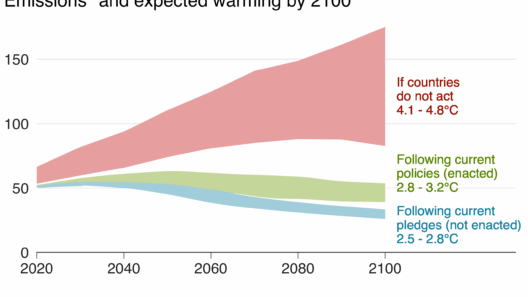
The phenomenon of global warming is predominantly induced by the ubiquitous increase in greenhouse gas (GHG) emissions, largely stemming from industrial activities, deforestation, and unsustainable agricultural practices. The primary culprits—carbon dioxide (CO2), methane (CH4), and nitrous oxide (N2O)—trap solar energy within the earth’s atmosphere, leading to a gradual increase in global temperatures. Perhaps one of the most disconcerting aspects of this reality is the inertia of the climate system; the effects of emissions released today will reverberate for decades, if not centuries. This lag time compels urgent action, lest we push our planet past critical tipping points.
Addressing the phenomenon’s geographical disparities illuminates further complexities. Developed nations, having historically contributed the largest share of emissions, exhibit higher per capita footprints compared to developing regions. Conversely, many of the latter endure the greatest consequences of climate change despite their minimal contributions to the problem. These inequities prompt questions about justice and equity in climate action, raising the critical notion that discussions about global warming must also tackle issues of responsibility and reparative measures.
Curiously, the topic of global warming often invokes polarized opinions—a stark dichotomy between skeptics and believers. This division typically stems from the intricate interplay between science and socio-political ideologies. While empirical data from climatologists and atmospheric scientists provide an overwhelming consensus concerning the urgency of climate action, misinformation and conflicting narratives pervade public discourse. The role of media in shaping public perception cannot be overstated; sensationalized headlines can distort scientific findings, leading to confusion and complacency. Thus, enhancing scientific literacy is indispensable for fostering a well-informed populace capable of navigating this complex issue.
One fundamental aspect often overlooked in discussions on climate change is the psychological dimension. The phenomenon of “solastalgia,” a term coined by philosopher Glenn Albrecht, encapsulates the anxiety and distress felt when one’s environment is irrevocably altered. Such emotional reactions can hinder proactive engagement, causing individuals to retreat into denial or apathy. Cultivating an emotional connection to the environment, and recognizing it as a shared entity rather than a mere backdrop, can mobilize community action and foster resilience in the face of impending ecological shifts.
This emotional engagement is further amplified through the exploration of biodiversity loss as a consequence of global warming. The intricate web of life, where each species fulfills a unique role within ecosystems, faces existential threats as habitats are altered or destroyed. The warming climate catalyzes shifts in species distributions, with some unable to adapt rapidly enough. The decline of pollinators and apex predators exemplifies the cascading effects that can result from climate disturbances, leading not only to ecological degradation but also jeopardizing food security and human health. Such interlinked crises accentuate the need for holistic approaches to environmental conservation.
Moreover, the consequences of global warming exacerbate existing social inequalities. Vulnerable populations—often characterized by socio-economic instability—are disproportionately affected by climate disasters. Access to resources, healthcare, and recovery mechanisms is significantly compromised, illustrating that climate change is not simply an environmental issue; it is inherently a human rights issue. Efforts to combat global warming must, therefore, be rooted in a framework of social equity, ensuring that the voices of marginalized communities are amplified in the climate conversation.
Mitigation strategies, however, can present their own array of challenges. Transitioning from fossil fuels to renewable energy sources is paramount in curtailing GHG emissions. However, such transformations necessitate political will, technological innovation, and substantial financial investment. The fossil fuel industry’s entrenched interests often obstruct meaningful policy changes. Grassroots movements have emerged as catalysts for change, compelling governmental entities to adopt renewable initiatives and embrace sustainability. Collective action demonstrates a powerful antidote to the ambiguities surrounding global warming, fostering hope even amid daunting challenges.
Yet, adaptation strategies are just as vital. As certain consequences of climate change are now inevitable, communities must prepare for the changes that lie ahead. Resilient infrastructure, disaster response planning, and ecosystem preservation are critical components for mitigating risks associated with climate-related events. By embracing adaptive strategies while simultaneously working to reduce emissions, society can navigate toward a more sustainable trajectory, characterized by harmony between humanity and the natural world.
As we confront the multi-faceted nature of global warming, a renewed sense of responsibility becomes paramount. The narratives surrounding climate change are not merely scientific or abstract; they are deeply personal, intertwined with our daily lives and futures. Each individual holds the potential to make impactful choices, whether through lifestyle changes, advocacy, or supporting policies that prioritize environmental sustainability. It is the cumulative effect of these myriad actions that will determine the path forward, shaping not only our immediate environment but also the world that future generations shall inherit. Our footprint today will loom large in the climate story of tomorrow; it is our duty to tread with care and foresight.