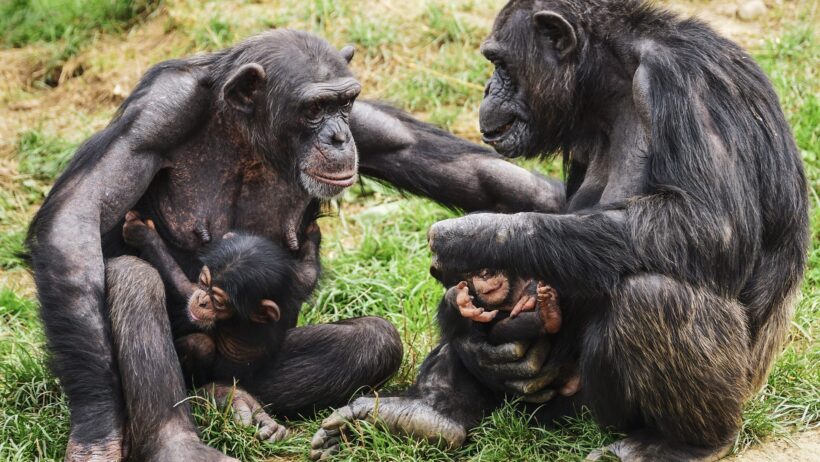

Chimpanzees, our closest living relatives, have long fascinated scientists and the general public alike. These remarkable primates share about 98% of our DNA, leading to a plethora of similarities in behaviors, emotions, and social structures. In this article, we will explore 100 fun facts about chimpanzees that encompass their biology, behavior, social dynamics, and their broader significance in our world. You can anticipate a deeper understanding of these incredible creatures as we delve into this engaging topic.
Physical Characteristics
1. Chimpanzees possess long arms and a versatile range of motion. Their arms are generally longer than their legs, facilitating a graceful swing through the trees.
2. Adult male chimpanzees typically weigh between 90 to 150 pounds, while females weigh approximately 70 to 100 pounds.
3. Chimpanzees have a strong, powerful build, with muscles that lend themselves to impressive feats of strength.
4. Their facial expressions are incredibly expressive, capable of conveying a wide array of emotions from joy to anger.
5. Black hair covers most of their bodies, which can gradually turn gray as they age—similar to human hair.
Behavioral Insights
6. Chimpanzees are primarily arboreal, spending the majority of their lives in trees, where they feel safest.
7. They are omnivores, consuming a varied diet that includes fruits, leaves, seeds, and at times, small mammals and insects.
8. Tool use among chimpanzees is highly sophisticated; they often create tools like sticks for extracting ants from mounds.
9. Social grooming is crucial in chimpanzee society as it strengthens bonds and reduces stress.
10. Playful interactions are frequent among young chimpanzees, indicating their social learning and the importance of play in development.
Social Structures
11. Chimpanzees live in communities ranging from 20 to over 100 individuals, forming complex hierarchies.
12. Males tend to dominate social structures, but females also hold significant roles, especially in nurturing the young.
13. Communication is key; they use vocalizations, body language, and even facial expressions to convey different messages.
14. Chimpanzees exhibit a form of leadership, where an alpha male leads but must maintain his position through strength and social alliances.
15. The concept of friendship is evident amongst chimpanzees, who form lifelong bonds with particular individuals.
Emotional Depth
16. Chimpanzees are capable of expressing empathy, often comforting one another in distressing situations.
17. Their ability to feel grief is profound; they mourn the loss of group members, sometimes exhibiting behaviors that mirror human mourning.
18. Laughter is a shared experience among chimpanzees, particularly during playful antics.
19. They show signs of self-awareness, a trait once believed to be unique to humans—this was demonstrated through mirror tests.
20. Jealousy can manifest in chimpanzee interactions, particularly when competing for resources or attention.
Reproductive Behavior
21. Female chimpanzees typically give birth every four to five years after a gestation period of about 230 to 240 days.
22. Males may copulate with multiple females, while females select mates based on social dominance and genetic fitness.
23. Infants are exceptionally dependent on their mothers for the first few years, fostering strong maternal bonds.
24. Chimpanzees practice infant carrying during the early stages of development, a crucial aspect of maternal behavior.
25. Adolescence among chimpanzees can be tumultuous, characterized by social struggles and the initiation of adult behaviors.
Habitat and Conservation
26. Found primarily in the tropical forests of West and Central Africa, the loss of these habitats poses a significant threat to their survival.
27. Chimpanzees can adapt to a variety of forest types, including montane and lowland forests, but they are greatly affected by deforestation.
28. They are classified as endangered, with populations declining due to habitat destruction, hunting, and disease.
29. Conservation efforts are critical; numerous organizations work tirelessly to preserve their habitats and protect these magnificent creatures.
30. Ecotourism has emerged as a pivotal tool in conservation, providing funds that continue to protect chimpanzee populations.
Cultural Impact and Representation
31. Chimpanzees have appeared in various forms of media, from films to documentaries, often highlighting their intelligence and emotional capacity.
32. Educational programs capitalize on their likeness to engage children in learning about biology and conservation.
33. They have been the subject of significant psychological studies, helping researchers unravel the complexities of primate behavior.
34. Artistic representations of chimpanzees reflect their playful and human-like qualities, further ingraining them in our cultural narrative.
35. The fascination with chimpanzees inspires many to advocate for wildlife protection and environmental conservation.
Unique Adaptations
36. Chimpanzees exhibit remarkable dexterity, allowing them to handle tools with precision typically reserved for humans.
37. Their opposable thumbs grant them the ability to grasp and manipulate objects effectively.
38. In a remarkable adaptation, chimpanzees participate in ‘ant dipping,’ using tools to collect insects for nourishment.
39. Their social learning capabilities rival those of humans, as they can learn from one another through observation.
40. Chimpanzees can adapt their foraging strategies based on their environment, showcasing their intelligence in resource acquisition.
Connection With Humans
41. Research studies involving chimpanzees have led to advancements in understanding human evolution and behavior.
42. Their emotional intelligence invites reflection on our own connections with the animal kingdom.
43. They can learn sign language, demonstrating a complex understanding of communication and cognition.
44. Despite their similarities, the critical differences highlight the necessity for conservation rather than companionship.
45. The establishment of sanctuaries has become crucial, offering rescued chimpanzees a place to thrive away from exploitation.
Concluding Thoughts
In conclusion, chimpanzees embody the intricacies of the animal kingdom, serving as a bridge between humans and our evolutionary past. Their intelligence, social structures, and emotional capacities reveal layers of complexity that invite admiration and urgency for conservation efforts. As we navigate our coexistence with these incredible beings, we find a reflection of ourselves in their communities, behaviors, and desires.
By appreciating these 100 fun facts about chimpanzees, we cultivate a deeper respect for the life forms that share our planet. Each fact not only informs us but also urges a commitment to protect their habitats and ensure that future generations can witness the marvels of chimpanzees thriving in their natural environments.