

Nuclear fission, an extraordinary scientific phenomenon, holds the potential to redefine our energy landscape. This unique process splits atomic nuclei, releasing an immense amount of energy in the form of heat. Such energy can be harnessed for electricity generation, thus offering the world an alternative to fossil fuels. However, alongside its benefits, nuclear fission bears significant drawbacks. This exploration delves into both its advantages and disadvantages, aimed at providing a dual-sided perspective on this potent energy source.
Advantages of Nuclear Fission
1. High Energy Density
The energy produced from nuclear fission is staggering. Just a small amount of nuclear fuel can generate a colossal amount of energy. For instance, a single uranium fuel pellet can produce energy equivalent to that generated from several tons of coal. This remarkable energy density allows for more efficient power generation, reducing the volume of fuel required and minimizing the footprint of energy facilities.
2. Low Greenhouse Gas Emissions
In a world grappling with climate change, nuclear fission offers a beacon of hope. Unlike coal and natural gas plants, nuclear power plants emit negligible amounts of greenhouse gases during operation. By substituting fossil fuels with nuclear energy, countries can significantly diminish their carbon footprints and contribute to the mitigation of global warming. The transition to nuclear energy could prove pivotal in achieving international climate goals.
3. Reliability and Consistency
Nuclear power plants operate at high capacity factors, often exceeding 90%. This means they can consistently generate electricity regardless of weather conditions, unlike renewable sources such as wind or solar energy, which are contingent upon environmental factors. This reliability makes nuclear energy a stable and trustworthy source of power, capable of consistently meeting baseline energy demands.
4. Long-Term Sustainability
Nuclear fission utilizes uranium, which is relatively plentiful and can be sourced from various regions worldwide. Furthermore, technological advancements have led to the exploration of breeder reactors and thorium fuel cycles, promising to extend the lifespan of nuclear energy. While current fuel sources may deplete, innovative strategies in nuclear technology suggest a sustainable future for fission energy.
5. Economic Potential
The construction and operation of nuclear power plants create numerous jobs in various sectors, from engineering to maintenance. Furthermore, the energy produced has the potential to stabilize electricity prices over the long term due to lower operational costs once the infrastructure is established. Investments in nuclear technology can spur economic growth, especially in regions where energy insecurity is a pressing concern.
Disadvantages of Nuclear Fission
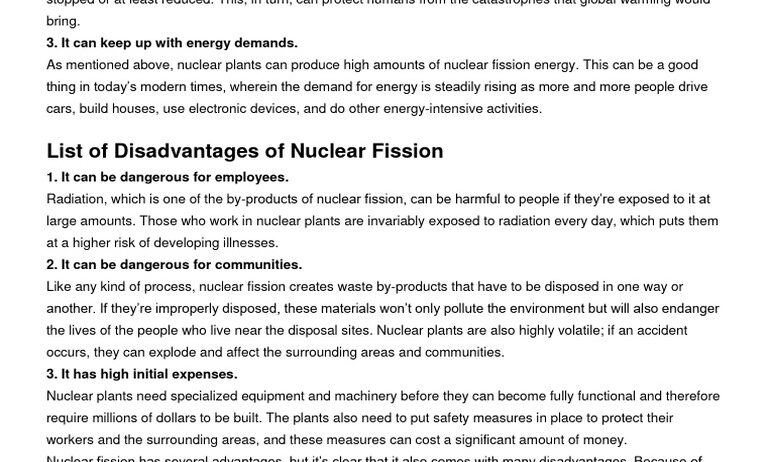
1. Radioactive Waste
One of the most contentious issues surrounding nuclear fission is the long-term disposal of radioactive waste. The byproducts of nuclear reactions remain hazardous for thousands of years, necessitating stringent management and containment strategies. Current storage solutions are contentious and present a significant challenge for the nuclear industry, raising environmental and safety concerns that cannot be ignored.
2. Risk of Accidents
High-profile accidents, such as Chernobyl and Fukushima, loom large in the public consciousness. Though statistically rare, the implications of a nuclear accident can be catastrophic, leading to long-lasting environmental damage and devastating health consequences. This inherent risk cultivates fear and skepticism around nuclear energy, often outweighing the benefits in the eyes of communities and policymakers alike.
3. High Initial Costs
The financial investment required to construct a nuclear power plant is substantial, often amounting to billions of dollars. Regulatory requirements, safety protocols, and technological complexity further inflate these costs. For many investors, the long reimbursement timeline and upfront expenditure may deter engagement in the nuclear energy sector, opting instead for more immediate returns from renewable resources.
4. Limited Fuel Supply
Though uranium is comparatively abundant, it is still a finite resource. The extraction process poses environmental challenges and incurs significant ecological disruption in mining regions. Moreover, the concentration of uranium supplies in specific countries can lead to geopolitical tensions, making energy security precarious and vulnerable to disruption based on international relations.
5. Public Perception and Acceptance
The societal apprehension surrounding nuclear fission is palpable. Misinformation, historical accidents, and cultural narratives contribute to a general skepticism about nuclear energy. To enjoy long-term viability, the nuclear industry must engage in transparent communication, emphasizing the advancements in safety and technology aimed at protecting public health and the environment.
Conclusion
Nuclear fission emerges as a double-edged sword, showcasing impactful advantages alongside significant disadvantages. While it holds the key to a sustainable, low-emission energy future, the challenges of waste management, accident risk, and public perception remain formidable obstacles. A shift in perspective is paramount, driven by diligent research, technological innovation, and open dialogue. By embracing the complexities of nuclear energy, society can make informed decisions that shape a balanced and sustainable energy portfolio for generations to come.