


Coal has been a cornerstone of energy generation for centuries, serving as a driving force behind industrial growth and economic development. However, in recent decades, the discourse surrounding its use has shifted dramatically. The allure of coal arises from its abundance and availability, yet the associated environmental impacts cannot be overlooked. In this exploration, we will delve into the multifaceted advantages and disadvantages of coal as an energy resource, thereby providing a comprehensive overview of its implications on society and the environment.
Advantages of Coal as an Energy Resource
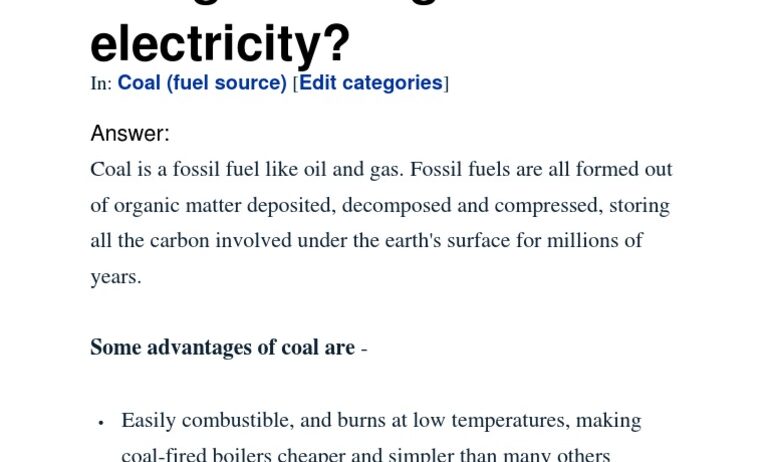
To appreciate the debate over coal, one must first acknowledge its numerous benefits. A primary advantage lies in its resource availability. Unlike some alternative energy sources, such as solar and wind, coal is plentiful and often situated in regions with established mining practices. As the world transitions toward energy independence, the availability of local coal reserves offers a tangible means for nations to enhance their energy security. Coal, after all, is the most abundant fossil fuel and has contributed significantly to global energy production.
Furthermore, the cost-effectiveness of coal underscores its attractiveness as an energy source. The infrastructure for coal extraction and combustion is well-established, resulting in reduced operational costs compared to newer technologies. This cost-effective nature of coal has made it a foundational energy source for many developing economies, allowing for a more gradual energy transition.
In terms of energy output, coal boasts a high energy density, meaning it can produce substantial amounts of electricity per unit. This characteristic facilitates consistent and reliable energy generation, which is essential for baseload power supply. In regions reliant on stable energy sources, coal has often been the go-to solution to ensure uninterrupted electricity flow, supporting both residential and industrial needs.
Moreover, advancements in technology have led to improved methods of coal burning, rendering it more efficient. Modern coal power plants can utilize coal cleaner and more efficiently than ever before. Technologies such as carbon capture and storage (CCS) are beginning to make strides towards mitigating the greenhouse gas emissions traditionally associated with coal. Such innovations signal that, while the journey is fraught with challenges, a transition is plausible.
Disadvantages of Coal as an Energy Resource
Nevertheless, the advantages of coal do not eclipse the significant repercussions accompanying its use. Chief among these is the environmental degradation directly linked to coal mining and combustion. The extraction of coal often results in unsightly landscapes, with mountaintop removal and strip mining leading to habitat destruction, soil erosion, and water pollution. The long-term ecological consequences of these mining methodologies can be catastrophic, affecting not just local wildlife but entire ecosystems.
Furthermore, the combustion of coal remains one of the most significant sources of carbon dioxide emissions. In an era increasingly defined by climate change, the emphasis on reducing greenhouse gas emissions could not be more critical. Coal-fired power plants are notorious for their particulate emissions, contributing to air quality degradation and associated health issues. People residing near such facilities report increased cases of respiratory illnesses, emphasizing the human cost of reliance on coal.
In addition to carbon dioxide, coal burning releases other hazardous pollutants, including sulfur dioxide (SO₂) and nitrogen oxides (NOₓ), which can result in acid rain and smog formation. These byproducts of combustion further compound the environmental challenge, posing risks not only to human health but also to agricultural productivity and biodiversity.
The economic implications of coal reliance cannot be ignored either. As global energy policies shift towards more sustainable practices, investment in coal may lead to stranded assets. Countries heavily invested in coal infrastructure may find themselves at a disadvantage as renewable energy sources gain traction. This creates a challenge for workers and communities historically dependent on coal mining for their livelihoods, raising questions about the social ramifications of transitioning away from coal.
Moreover, as the world collectively strives for a sustainable future, coal’s viability is being increasingly scrutinized. The push for renewable energy sources, such as solar, wind, and hydroelectric power, poses competitive pressures that coal is ill-equipped to face. The era of coal dominance in the energy sector appears to be waning, creating an atmosphere of uncertainty. The overarching narrative is shifting towards cleaner alternatives, compelling economies to rethink energy strategies.
The Path Forward
Moving forward, juxtaposing the advantages and disadvantages of coal reveals a need for a transitional strategy. While coal’s historical role cannot be understated, it is imperative to recognize its limitations within the context of modern environmental challenges. Coal may serve a short-term necessity in certain regions, providing a bridge as policies and technologies evolve to favor greener alternatives. However, its long-term relevance remains tenuous at best.
In conclusion, understanding the complexities surrounding coal as an energy resource is essential for grasping the future of global energy policy. While coal presents undeniable advantages, the accompanying environmental, social, and economic disadvantages urge a critical reconsideration. As we navigate the energy landscape, the goal should be to cultivate robust solutions that promote sustainability while honoring the lessons learned from coal’s storied past. By embarking on a shift in perspective, we can begin to unlock the promises of a cleaner, more sustainable energy future.