
The vibrantly colorful underwater landscapes of coral reefs are not just enchanting; they are also vital ecosystems that support countless marine organisms. Yet, these breathtaking environments are increasingly marred by a phenomenon known as coral bleaching. This distressing occurrence raises an essential question: what catalyzes such a dramatic alteration in their health and appearance? Understanding the underlying causes of coral bleaching necessitates a deeper exploration of the factors that threaten these oceanic sanctuaries.
To grasp the complexities of coral bleaching, one must first comprehend the fundamental relationship between corals and the symbiotic algae, known as zooxanthellae. These microscopic organisms reside within the tissues of the corals, providing them with essential nutrients through photosynthesis. In exchange, the corals offer the algae a protective shelter and access to sunlight. This mutualistic relationship is critical for the nourishment of corals and the dazzling colors that characterize healthy reefs.
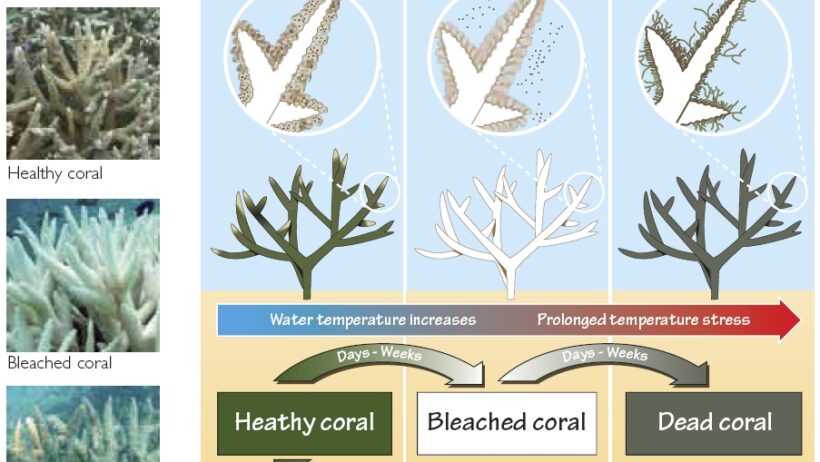
Despite this crucial interdependence, corals can become stressed due to various environmental changes, leading to a breakdown in this symbiosis. The principal cause of coral bleaching is thermal stress, primarily instigated by rising sea temperatures. Average global temperatures have increased due to climate change, resulting in ocean warming that has far-reaching consequences for marine ecosystems. The delicate balance of the coral-zooxanthellae partnership is disrupted when water temperatures exceed the corals’ thermal limits, causing the expulsion of zooxanthellae. This loss not only deprives the corals of their primary food source but also strips them of their vibrant colors, hence the term “bleaching.” Without these algae, corals appear stark white, resembling ghostly monuments rather than lively underwater habitats.
Another critical factor contributing to coral bleaching is ocean acidification, a result of increased atmospheric carbon dioxide levels. When CO2 is absorbed by seawater, it leads to the formation of carbonic acid, which lowers the pH of the ocean. This change in chemical composition reduces the availability of carbonate ions, essential for corals to build their calcium carbonate skeletons. As corals become physically weaker, their ability to withstand environmental stressors diminishes, rendering them more susceptible to bleaching events.
Furthermore, nutrient pollution exacerbates the challenge faced by coral reefs. Agricultural runoff, wastewater discharge, and industrial effluents introduce excessive nutrients—particularly nitrogen and phosphorus—into marine ecosystems. While these nutrients can stimulate growth in some marine organisms, such as phytoplankton, an overcrowding of algae can occur. Algal blooms can shade corals from sunlight and outcompete them for space and resources, leading to a decline in coral health and resilience. This phenomenon underscores the intricate balance of marine ecosystems; what may initially appear as a boon can quickly morph into a detriment.
Another aspect that contributes to coral bleaching is the increasing frequency and intensity of extreme weather events, such as hurricanes and heatwaves. These events, which have become more prevalent due to climate change, can physically damage coral structures and further stress the corals. For instance, a powerful storm can uproot corals from their substrates or break them apart, making them more vulnerable to disease and subsequent bleaching. Moreover, localized effects such as sedimentation from coastal development can smother corals, suffocating these fragile organisms and exacerbating the stress multiples times over.
Diseases and pathogens also pose a significant threat to coral health and can be exacerbated by the aforementioned factors. Stress from thermal changes or pollution can weaken corals’ immune systems, making them more susceptible to infections and diseases. For instance, the emergence of certain coral pathogens has been linked to the changing environmental conditions, resulting in a decline in coral populations and a subsequent surge in bleaching events.
The interplay of these causes reveals the intricate tapestry of challenges that coral reefs face. It is not merely one singular issue; rather, it is a convergence of stressors that culminates in the alarming observation of coral bleaching. The phenomenon serves as a poignant reminder of the fragility of marine life and the drastic changes our oceans are experiencing.
Efforts to mitigate coral bleaching have gained momentum as the urgency of the situation becomes more apparent. Strategies range from protecting marine areas, reducing carbon footprints, and regulating coastal development and pollution. Restoration projects that involve coral gardening, where fragments of corals are cultivated in nurseries before being reintroduced to their natural habitat, show promise in supporting reef recovery. However, without concerted global efforts to address the root causes of climate change and pollution, the wonders of coral reefs may continue to fade into oblivion.
In conclusion, the direct causes of coral bleaching are manifold and interconnected. From rising sea temperatures and ocean acidification to pollution and extreme weather events, the delicate balance of coral ecosystems is under siege. Each aspect weaves into a narrative of urgency, illustrating a need for immediate action and awareness. As stewards of the planet, acknowledging and addressing these causes is not only essential for the survival of coral reefs but for the health of our oceans and the myriad life forms they support. The time to act is now.