

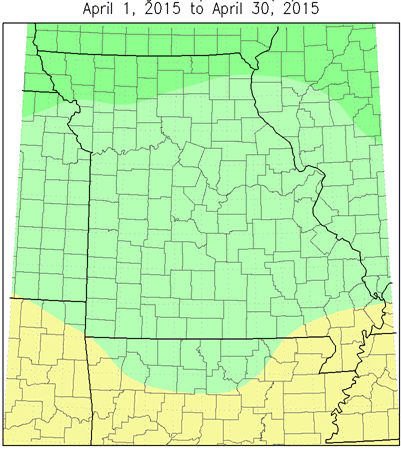

In the heart of America lies Missouri, a state often regarded as a confluence of climatic influences. Here, the warm embraces the cool, rendering it a fascinating microcosm of diverse weather patterns. The state’s unique climate zone can be primarily classified as humid continental, though its positioning exposes it to a blend of both humid subtropical influences in the southeast and semi-arid characteristics in the western reaches. This distinct mélange fosters a rich tapestry of ecological diversity, making Missouri an intriguing study in the principles of geography and climatology.
To embark upon the exploration of Missouri’s climate, one must first appreciate the geographical context in which it resides. Bordered by eight states, Missouri serves as a natural laboratory where different climatic systems converge. The Mississippi River, a lifeblood for both the environment and the economy, flows along its eastern edge, while the Ozark Mountains rise dramatically in the south. This geographical duality lays the groundwork for the state’s climatic diversity.
Missouri’s humid continental climate is characterized by four distinct seasons, each a brushstroke in nature’s masterpiece. Spring arrives like a long-lost friend, bringing warmth and vigor as it shatters winter’s icy chains. The optimistic flora bursts forth, carpeting the landscape with vibrant blooms, while wildlife stirs from its slumber. The transitional period can evoke a sense of wonder, as the air fills with the fragrance of budding flowers and fresh earth.
As summer unfolds, Missouri metamorphoses into a furnace, with temperatures often soaring into the 90s Fahrenheit (32 degrees Celsius) and above. This season, however, is not without its dramatic flair. Thunderstorms frequently roll across the plains, their rumbling crescendo providing a sense of awe at nature’s might. It is a time when humidity cloys the atmosphere, wrapping around the citizens like a thick blanket, yet the lush greenery remains a testament to the temperate abundance.
Come autumn, the state dons a golden cloak, as trees erupt in a kaleidoscope of red, orange, and yellow. This transformation serves as a visual symphony, celebrating the bounty of summer while announcing winter’s inevitable approach. The crisp air carries the scent of fallen leaves, invoking nostalgic memories as people relish the harvest season. With cool winds flowing in, outdoor activities flourish, from apple-picking to scenic hikes, as Missourians embrace the fleeting warmth before winter’s chill grips the land.
Winter in Missouri is a contrast, often quiet yet profound. Snow blankets the terrain, turning the scenery into a tranquil tableau. While temperatures can plunge into the teens Fahrenheit (-10 degrees Celsius), the stark beauty of frost-laden branches and glistening snowflakes captivates the heart. Winter storms, occasionally severe, challenge the resolve of residents, yet offer opportunities for introspection and cohabitation around warm hearths.
Beyond the whimsical dance of the seasons, Missouri’s climate reveals profound implications for its ecology. The state’s rich soils, nourished by the cycles of moisture, support a diverse array of plant and animal life. From the rolling prairies in the north to the lush forests in the south, these habitats present interdependent ecosystems, each playing a crucial role in maintaining ecological balance. The convergence of different climate zones preserves biodiversity, creating havens for species that thrive only under specific conditions.
However, as climatic changes sweep across the globe, Missouri’s unique climate is not immune to external pressures. The tales of warming temperatures and erratic weather patterns echo throughout the state. Greater frequencies of droughts and flooding events illustrate the fragility of this serene equilibrium. Agricultural practices, a cornerstone of Missouri’s economy, face difficulty adapting to the unpredictability of the climate. The effects on crop yields are profound, impacting both rural livelihoods and urban food systems, as the delicate balance between nature and human demand hangs by a thread.
Engaging with the intricacies of climate zones is not merely an academic enterprise; it serves as a call to arms for advocacy and environmental stewardship. Understanding Missouri’s weather systems equips citizens and policymakers with the knowledge necessary to confront these challenges head-on. Rainwater harvesting, drought-resistant crops, and sustainable land use practices emerge as critical strategies to bolster resilience in the face of impending climate change.
As one surveys the landscape and contemplates the climatic forces at play, it becomes evident that Missouri’s climatic identity is but a chapter in the larger narrative of Earth’s environmental chronicles. The juxtaposition of warm and cool creates a state rich in experiences, each season offering its unique joys and challenges. Missouri embodies the essence of resilience, showcasing that even in the face of environmental uncertainty, the interplay of warmth and cool continues to shape its inhabitants’ lives.
In conclusion, the inquiry into Missouri’s climate zone is more than an academic exploration; it is an intricate dance of ecological balance and human adaptation. It invites us to reflect on our relationship with nature and challenges us to foster sustainable practices that align with the rhythms of our environment. As the climate continues to evolve, understanding and appreciating Missouri’s unique climatic conditions becomes paramount in our collective journey towards environmental awareness and sustainability.