
As we march into an era of unpredictable climate patterns and incessant environmental degradation, the question arises: Can fusion power be the panacea for our escalating climate crisis? The audacious proposition of harnessing fusion energy may feel akin to traversing the cosmos for a mythical elixir, yet the scientific community is increasingly optimistic about this potential. Fusion power, the process that fuels the sun, could mark a pivotal shift in our energy paradigm if we can decipher the intricacies involved.
To grasp the significance of fusion energy, one must first understand its remarkable foundation. Fusion occurs when atomic nuclei collide at astonishing speeds, merging to form a heavier nucleus while releasing copious amounts of energy. This process contrasts starkly with fission, the technique currently employed in nuclear reactors, where heavy atomic nuclei split apart. Fusion promises a utopia of energy generation: abundant, virtually inexhaustible fuel sourced from isotopes like deuterium and tritium found in water and lithium. Moreover, the emissions from fusion are not only benign compared to fossil fuels but also produce minimal radioactive waste.
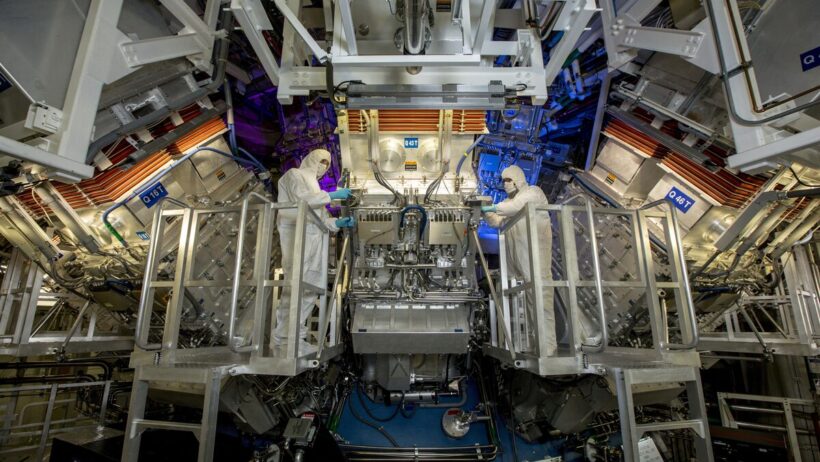
One might ponder: if fusion is so advantageous, why has it remained elusive? Herein lies the challenge. Achieving the requisite conditions for fusion is no small feat. The hydrogen isotopes must be heated to temperatures exceeding 150 million degrees Celsius, enveloped by immense pressure to facilitate the collisions necessary for fusion. Presently, projects like the International Thermonuclear Experimental Reactor (ITER) are at the forefront, experimenting with a tokamak design to confine plasma in a magnetic field. While these efforts signal progress, they also highlight a frustrating reality: we are advancing in increments, not leaps.
Moreover, the economic implications of ushering fusion into the mainstream cannot be overlooked. Transitioning to this new energy frontier demands an upfront investment in technology and infrastructure, an endeavor rife with uncertainties. Policymakers face the formidable challenge of channeling financial resources while balancing public expectations. Nevertheless, once adopted, the cost of fusion energy production is estimated to plummet, offering an unparalleled advantage over fossil fuels and even current renewable resources.
Fusion power’s allure lies not only in its futuristic characteristics but also in its environmental implications. As atmospheric carbon levels surge and temperatures rise, the urgent need for a sustainable energy source becomes increasingly apparent. Fusion energy, devoid of greenhouse gas emissions during operation, could mitigate the gravitational pull of climate change. The triumph of fusion power could render fossil fuels anomalous relics of our past, with clean energy shaping a resplendent future.
Pondering this transition, one must ask: what societal shifts are imperative for fusion to gain traction? Public perception plays a critical role in acceptance. Energy sources contest for legitimacy in an increasingly discerning landscape, demanding transparency and education. Engaging communities in dialogues about the intricacies and potential of fusion energy is paramount. Fostering an informed populace will breed the kind of national and international support necessary for pioneering advancements.
Furthermore, interdisciplinary collaboration is essential. Scientists, engineers, and policymakers must unite, weaving a tapestry that encompasses cutting-edge research, efficient funding strategies, and regulatory frameworks that prioritize fusion energy development. The stakes are high, and the collective effort required can only be harnessed through synergy across disciplines.
What would it mean for humanity if we could harness fusion energy? Such a paradigm shift could redefine modern civilization—imagine cities illuminated with clean energy, industries powered without carbon footprints, and electric vehicles charged without reliance on finite resources. The implications extend far beyond energy; a successful fusion initiative could spur technological advancements, from enhanced superconductors to breakthroughs in materials science.
However, skepticism abounds, and rightly so. The perennial question persists: amidst ambitious promises, can realistic solutions emerge? Critics remind us to temper our enthusiasm with pragmatism. While optimism is essential, history shows that scientific pursuits often expose unforeseen challenges. The pathway to a practical fusion reactor remains fraught with technological and philosophical hurdles—like grappling with the potential dichotomy of energy abundance and global equity in resource distribution.
In embracing fusion energy, we must navigate the intricate maze of ethics and governance. Who will control and govern this immense power? How will equitable access to this technological boon be ensured, particularly in developing nations where energy poverty remains rampant? As humanity stands on the precipice of an energy revolution, these questions demand vigilant consideration.
As we reflect on the prospects of fusion power, it becomes evident that optimism must intertwine with realism and innovation. The ambitions of the scientific community must resonate with urgency; addressing climate change is a global imperative, necessitating bold initiatives that align with our collective responsibility toward the planet. Fusion energy represents more than an engineering challenge; it could embody our most profound aspiration—a vibrant future without the specter of climate chaos.
In conclusion, while fusion power may not be the singular solution to every climate-related quandary, its potential to reshape our energy landscape presents an opportunity too significant to ignore. The continued pursuit of this enigmatic power source demands our attention, resources, and, perhaps most importantly, our hope. As we navigate the challenges and triumphs of this journey, we must ask ourselves: Are we prepared to embrace the promise of fusion, forge a sustainable future, and ultimately conquer the climate crisis?